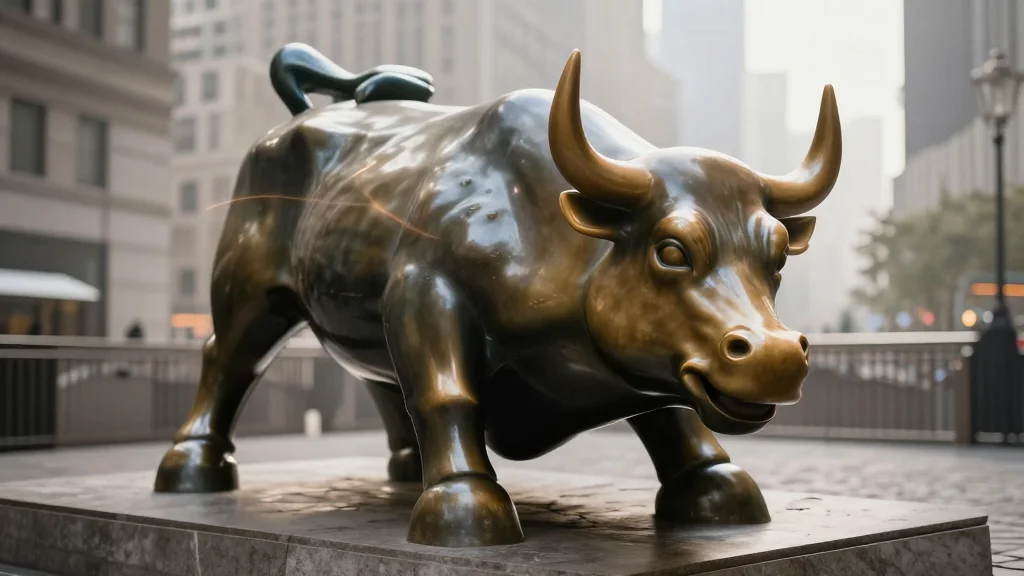
S&P 500 Extends Seven‑Week Streak, Then Slides 0.9% After Trump‑Xi Summit

Companies Mentioned
Why It Matters
The episode underscores two structural risks for American equities: the reliance on ultra‑low interest rates to justify lofty valuations for AI and tech giants, and the sensitivity of the market to geopolitical signals that fail to deliver tangible trade outcomes. A sustained rise in Treasury yields could force a broader re‑pricing of growth stocks, compressing the S&P 500’s upside even as the economy remains resilient. Moreover, the lack of concrete agreements from the Trump‑Xi summit leaves investors wary of supply‑chain disruptions and potential tariff escalations, especially for aerospace and semiconductor firms that dominate the index. The interplay between fiscal policy, rate expectations, and geopolitics will shape the trajectory of the S&P 500’s historic rally.
Key Takeaways
- •S&P 500 logged a 0.13% weekly gain, extending a seven‑week winning streak—the longest since Dec. 2023.
- •Index fell about 0.9% to ~7,430 points after Treasury yields jumped following the Trump‑Xi summit.
- •Trump claimed China agreed to order “approximately 200 planes” and up to 750 if performance is good, below Wall Street’s 500‑plane expectation.
- •Xi told U.S. CEOs the door to Chinese business would “open wider,” but no formal deals were announced.
- •Higher 10‑year Treasury yields forced a valuation reset for AI‑heavy mega‑caps, prompting a pullback in the SPY ETF.
Pulse Analysis
The S&P 500’s recent trajectory illustrates a classic tug‑of‑war between macro‑economic fundamentals and sector‑specific hype. The AI‑driven rally that propelled the index to fresh record highs is fundamentally anchored in expectations of sustained low rates, which keep the discount rate low and justify multi‑year earnings multiples for companies like Nvidia and Apple. As the Federal Reserve, now led by Kevin Warsh, signals a less accommodative stance, the market is forced to reconcile those lofty valuations with a higher cost of capital. Historically, each 100‑basis‑point rise in the 10‑year yield has shaved roughly 5‑7% off the price‑to‑earnings multiples of high‑growth stocks, a dynamic we are now witnessing.
Geopolitics adds another layer of volatility. The Trump‑Xi summit, while high‑profile, delivered little in the way of concrete trade commitments. The discrepancy between Trump’s public statements about a potential 200‑plane order and Wall Street’s expectation of 500 aircraft created a credibility gap that rattled investors, especially in aerospace. The summit’s ambiguous outcomes also left the semiconductor supply chain in limbo, a sector that has been the engine of the S&P’s recent gains. Without clear policy direction, firms like Boeing and Nvidia face a dual‑risk environment: higher financing costs and uncertain export permissions.
Looking ahead, the index’s ability to maintain its weekly streak will hinge on two variables: the Fed’s next policy move and any substantive progress on U.S.–China trade issues. A dovish pivot could reignite the AI rally, while a hawkish stance may accelerate a broader rotation into value‑oriented sectors. Meanwhile, investors will be watching for any concrete agreements—particularly in aerospace and chip sales—that could restore confidence in the megacap narrative that currently underpins the S&P 500’s performance.
S&P 500 Extends Seven‑Week Streak, Then Slides 0.9% After Trump‑Xi Summit
Comments
Want to join the conversation?
Loading comments...