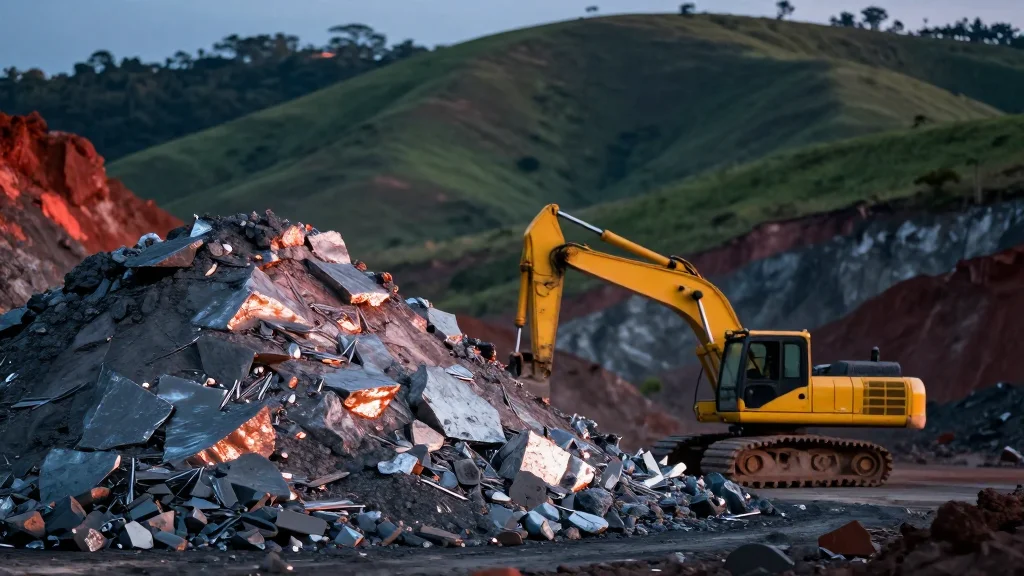
USA Rare Earth Commits $2.8 B to Brazil’s Serra Verde, Boosting U.S. Rare‑Earth Supply Chain

Companies Mentioned
Why It Matters
The acquisition directly addresses a long‑standing vulnerability in the U.S. technology and defense supply chain: reliance on a single foreign source for magnetic rare‑earths. By securing a mine that can produce all four key magnetic elements, USAR not only diversifies supply but also creates a domestic foothold that could lower costs and reduce geopolitical risk for manufacturers of electric vehicles, wind turbines, and advanced weaponry. For investors, the transaction highlights a broader trend of capital flowing into critical‑mineral projects as policymakers and corporations alike prioritize supply‑chain resilience. The $2.8 billion price tag, combined with the earlier $1.6 billion government funding, underscores the scale of financial commitment required to build a competitive alternative to China’s dominance, and it may set a precedent for future public‑private collaborations in the sector.
Key Takeaways
- •$2.8 billion acquisition of Brazil’s Serra Verde Group by USA Rare Earth.
- •Deal includes $300 million cash and 126.85 million newly issued shares.
- •Pela Ema mine is the only non‑Asian source capable of producing neodymium, praseodymium, dysprosium and terbium at scale.
- •USAR shares jumped >13%, adding roughly $617 million to market value.
- •Earlier this year USAR secured $1.6 billion in U.S. government financing.
Pulse Analysis
USA Rare Earth’s Brazil deal is a watershed moment for the U.S. rare‑earth ecosystem, moving the conversation from policy rhetoric to concrete asset acquisition. Historically, the United States has relied on China not only for raw material extraction but also for the high‑value processing that turns ores into usable magnet powders. By locking in a mine that can supply the full suite of magnetic rare‑earths, USAR reduces the upstream risk that has historically constrained domestic manufacturers. The transaction also signals to Wall Street that investors are willing to price in the strategic premium attached to supply‑chain security, a factor that could lift the entire sector’s valuation multiples.
However, the deal’s success hinges on downstream capabilities. Even with a reliable ore source, the United States still lacks sufficient processing capacity, a gap that could limit the economic upside of the acquisition. Policymakers may need to accelerate permitting and financing for rare‑earth refining plants, potentially through additional loan guarantees or tax incentives. Failure to close that gap could leave USAR with a valuable asset but limited market access, dampening the anticipated earnings uplift.
In the broader market context, the announcement is likely to buoy other rare‑earth and battery‑material stocks, as investors reassess the risk‑reward profile of companies positioned to benefit from a more diversified supply chain. The ripple effect may also pressure Chinese exporters to reconsider export restrictions, knowing that the U.S. is actively building alternatives. Over the next 12‑18 months, the performance of USAR’s stock will serve as a barometer for how quickly the industry can translate strategic investments into operational reality.
USA Rare Earth Commits $2.8 B to Brazil’s Serra Verde, Boosting U.S. Rare‑Earth Supply Chain
Comments
Want to join the conversation?
Loading comments...