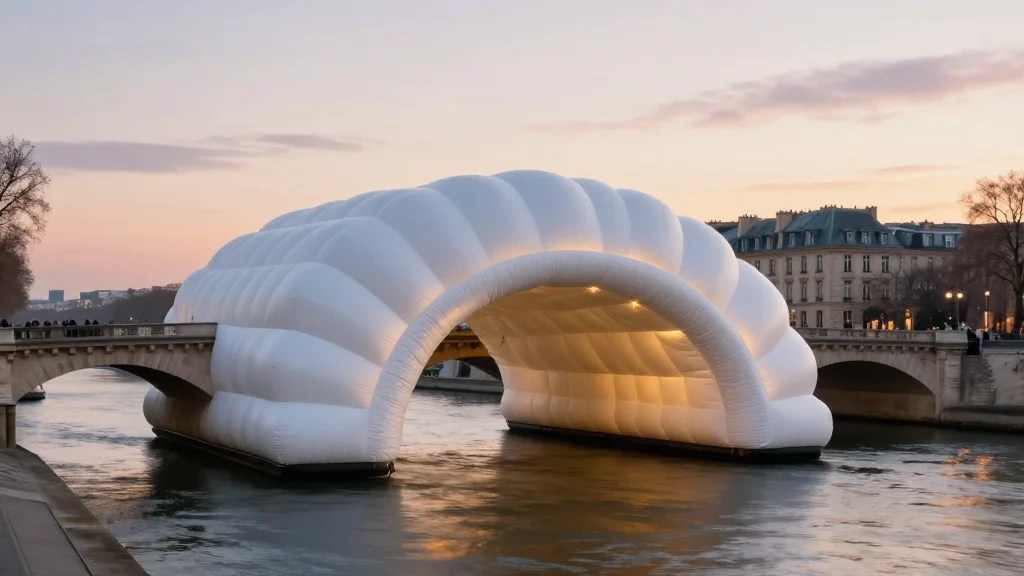
JR Unveils 120‑metre Inflatable Grotto on Paris’s Pont Neuf, Homage to Christo

Companies Mentioned
Why It Matters
La Caverne du Pont Neuf demonstrates how contemporary public art can simultaneously honor artistic lineage and push technical boundaries. By marrying inflatable architecture with augmented‑reality experiences and a high‑profile soundtrack, JR expands the possibilities for immersive, low‑impact installations in heritage contexts. The project also spotlights the growing role of corporate philanthropy in funding large‑scale art, raising questions about artistic independence and the commercialization of public spaces. If the installation proves both popular with visitors and respectful of the bridge’s structural integrity, it could inspire a wave of similar temporary interventions worldwide, reshaping how cities use art to attract tourism, engage citizens, and negotiate the tension between preservation and innovation.
Key Takeaways
- •JR’s La Caverne du Pont Neuf spans 120 m in length, 20 m wide and up to 18 m tall.
- •The inflatable uses 18,900 sq m of fabric and 20,000 cu m of pressurised air.
- •More than 800 volunteers and staff helped install and operate the work.
- •Funding came from Snap Inc., Bloomberg Philanthropies, Paris Aéroport, Salesforce and the L’Amicale des Ponts de Paris endowment.
- •The installation runs from 6 June to 28 June 2026, with an interior tunnel and a soundtrack by Thomas Bangalter.
Pulse Analysis
JR’s Pont Neuf cavern marks a turning point in the economics of public art. By leveraging corporate sponsors who see cultural projects as brand extensions, the artist sidesteps the traditional reliance on municipal budgets, allowing for a scale that would have been financially prohibitive a decade ago. This model, however, introduces a new power dynamic: sponsors gain visibility while artists must navigate potential compromises in creative control. JR’s explicit acknowledgment of Christo and Jeanne‑Claude’s legacy mitigates accusations of appropriation, positioning the work as a dialogue rather than a replica.
Technologically, the inflatable format signals a shift toward sustainability in monumental art. Traditional large‑scale installations often involve heavy steel frameworks and permanent alterations; JR’s air‑based structure reduces material consumption and eases removal, aligning with growing environmental expectations from both audiences and funders. The integration of augmented‑reality layers—provided by Snap employees—adds a digital dimension that extends the experience beyond the physical tunnel, hinting at a future where temporary works can have persistent virtual footprints.
Finally, the project redefines the public’s relationship with heritage sites. By temporarily cloaking a centuries‑old bridge in a contemporary, immersive environment, JR invites Parisians and tourists to re‑imagine familiar urban landmarks. This re‑contextualisation can rejuvenate civic pride and stimulate cultural tourism, but it also raises stewardship questions: how long should a historic structure be altered for artistic purposes, and what safeguards ensure its preservation? The answers will likely shape policy on future interventions, making JR’s Pont Neuf experiment a case study for cities worldwide.
JR unveils 120‑metre inflatable grotto on Paris’s Pont Neuf, homage to Christo
Comments
Want to join the conversation?
Loading comments...