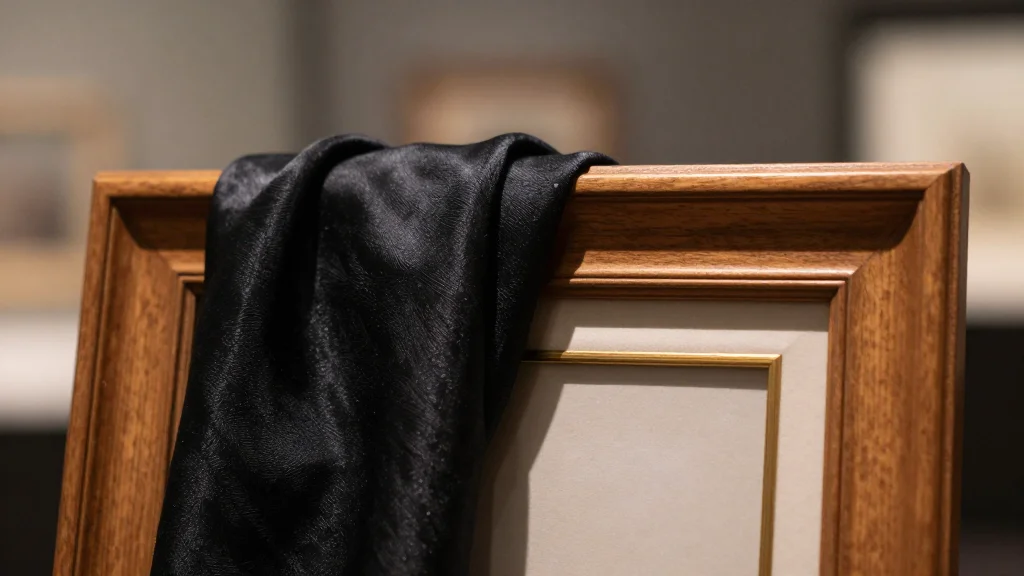
Lucian Freud’s ‘Man in a Black Scarf’ Authenticated and Unveiled in London

Companies Mentioned
Why It Matters
The confirmation of Man in a Black Scarf redefines the boundaries of Lucian Freud’s early oeuvre, offering scholars a rare glimpse into his formative techniques and subject choices. By anchoring the work in documented school records, the authentication also demonstrates the power of archival research to settle long‑standing provenance debates, a practice that could be replicated for other contested masterpieces. From a market perspective, the addition of a verified 1939 Freud to the catalogue expands the pool of high‑value works available to institutions and private collectors, potentially influencing auction forecasts and insurance valuations. The exhibition’s integration of the portrait with the broader story of the East Anglian School also elevates the historical significance of a relatively obscure artistic community, encouraging further investment in its preservation and study.
Key Takeaways
- •Lucian Freud’s 1939 portrait Man in a Black Scarf authenticated after 20‑year dispute
- •Authentication based on East Anglian School attendance register from the Cedric Morris Archive
- •Painting displayed at Garden Museum’s “Benton End: A Paradise of Pollen and Paint” exhibition until Sep 20, 2026
- •The work was inherited from former classmates Denis Wirth‑Miller and Richard Chopping, who originally opposed Freud’s authorship
- •Authentication may affect Freud’s market value and spur new scholarly research into his early years
Pulse Analysis
The Freud authentication underscores a broader shift in the art market toward data‑driven provenance verification. While traditional connoisseurship still plays a role, institutions now lean heavily on archival discoveries, forensic imaging, and even DNA analysis of pigments. The Garden Museum’s success in leveraging the Cedric Morris Archive illustrates how museums can become active participants in market dynamics, not just passive exhibitors.
Historically, Freud’s early works have been shadowed by his later, more celebrated portraits of the human form. By confirming a piece from his student days, scholars can trace stylistic continuities—such as his muted palette and focus on the sitter’s psychological presence—back to the East Anglian School’s curriculum. This may prompt a reevaluation of the school’s influence on post‑war British painting, positioning Benton End as a crucible for talent that extended beyond its horticultural reputation.
Looking ahead, the authentication could trigger a cascade of re‑examinations of other disputed works from the period, especially those linked to the tight‑knit community of Morris, Lett‑Haines, and their pupils. Collectors and auction houses will likely increase due diligence on provenance, potentially slowing the velocity of sales but enhancing confidence in high‑value transactions. For the Garden Museum, the exhibition not only boosts foot traffic but also cements its role as a steward of interdisciplinary cultural heritage, where art, horticulture, and education intersect.
Lucian Freud’s ‘Man in a Black Scarf’ Authenticated and Unveiled in London
Comments
Want to join the conversation?
Loading comments...