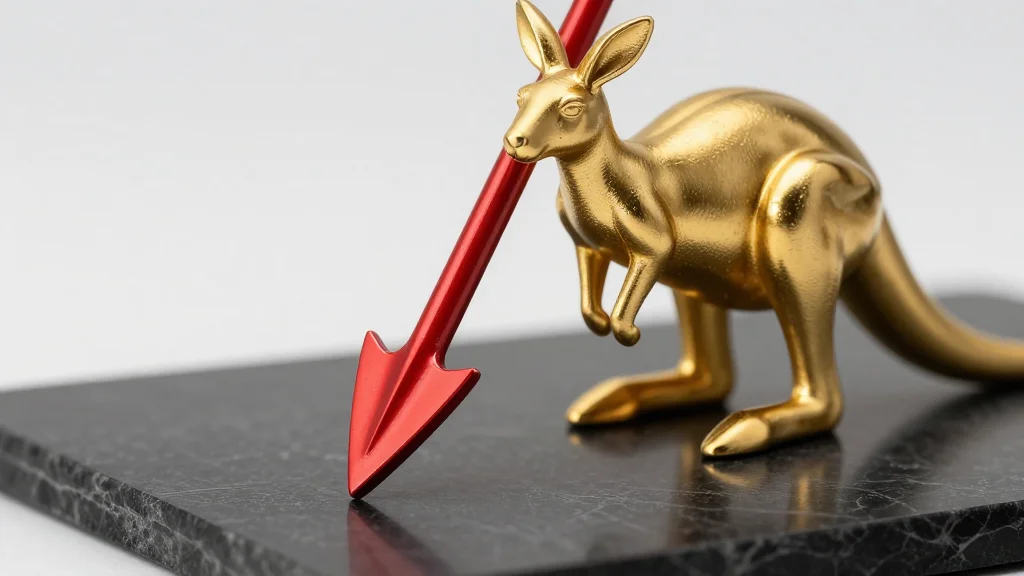
ASX Slides 0.3% as China Housing Slump and Rate‑hike Fears Hit Banks

Companies Mentioned

Why It Matters
The ASX’s dip underscores how Australia’s equity market is uniquely sensitive to both domestic monetary policy and external Chinese economic signals. A further RBA rate hike could tighten financing conditions for households and businesses, eroding earnings for the country’s dominant banking sector. At the same time, the prolonged contraction in China’s housing market threatens demand for Australian commodities, potentially dampening mining revenues and export‑linked growth. Together, these forces create a dual‑headwind that could ripple through other Asia‑Pacific markets that share similar exposure to Chinese demand and global interest‑rate cycles. For investors, the episode highlights the importance of monitoring macro‑economic data releases—especially employment figures and foreign housing indices—that can quickly shift risk sentiment. It also signals that diversification away from rate‑sensitive banks and commodity‑heavy miners may become a tactical consideration as the RBA signals a possible third hike this year.
Key Takeaways
- •ASX 200 fell 0.26% to 8,955, the only major Asian index to decline on the day
- •Major banks lost between 1.3% and 2.8% amid expectations of a third RBA rate rise
- •China's New House Price Index dropped 3.4% YoY in March, marking 33 straight months of decline
- •Technology stocks rallied, with WiseTech up 12.36% and Xero up 9%
- •RBA cash rate sits at 4.10% after two 25‑basis‑point hikes this year
Pulse Analysis
Australia’s market reaction illustrates a classic case of domestic‑external feedback loops. The RBA’s aggressive tightening cycle, already at 4.10%, is now being reinforced by a surprisingly tight labour market that suggests inflationary pressures remain entrenched. Historically, each additional 25‑basis‑point hike has shaved roughly 0.5% off bank profit margins, a dynamic that is now being priced in by investors ahead of the May meeting. This contrasts with the broader Asian narrative, where central banks are generally easing or holding rates steady, allowing equities to ride on growth optimism.
The Chinese housing sector’s persistent weakness adds a second layer of risk. Australia’s mining export model is heavily dependent on Chinese construction demand; a 3.4% YoY price decline in new homes signals reduced appetite for raw materials. While the broader Chinese economy posted 5% growth, the sectoral lag suggests a structural slowdown that could linger beyond the current fiscal year. Investors may begin to re‑price exposure to commodity‑linked stocks, prompting a shift toward defensive sectors such as consumer staples or healthcare.
Going forward, the ASX’s trajectory will likely hinge on two inflection points: the RBA’s May decision and any policy response from Beijing to stabilise its property market. A surprise rate pause could provide a short‑term boost to banks, while any indication of stimulus for Chinese housing could revive mining sentiment. Until then, the market will remain in a state of heightened sensitivity, rewarding stocks that can navigate both monetary tightening and external demand shocks.
ASX slides 0.3% as China housing slump and rate‑hike fears hit banks
Comments
Want to join the conversation?
Loading comments...