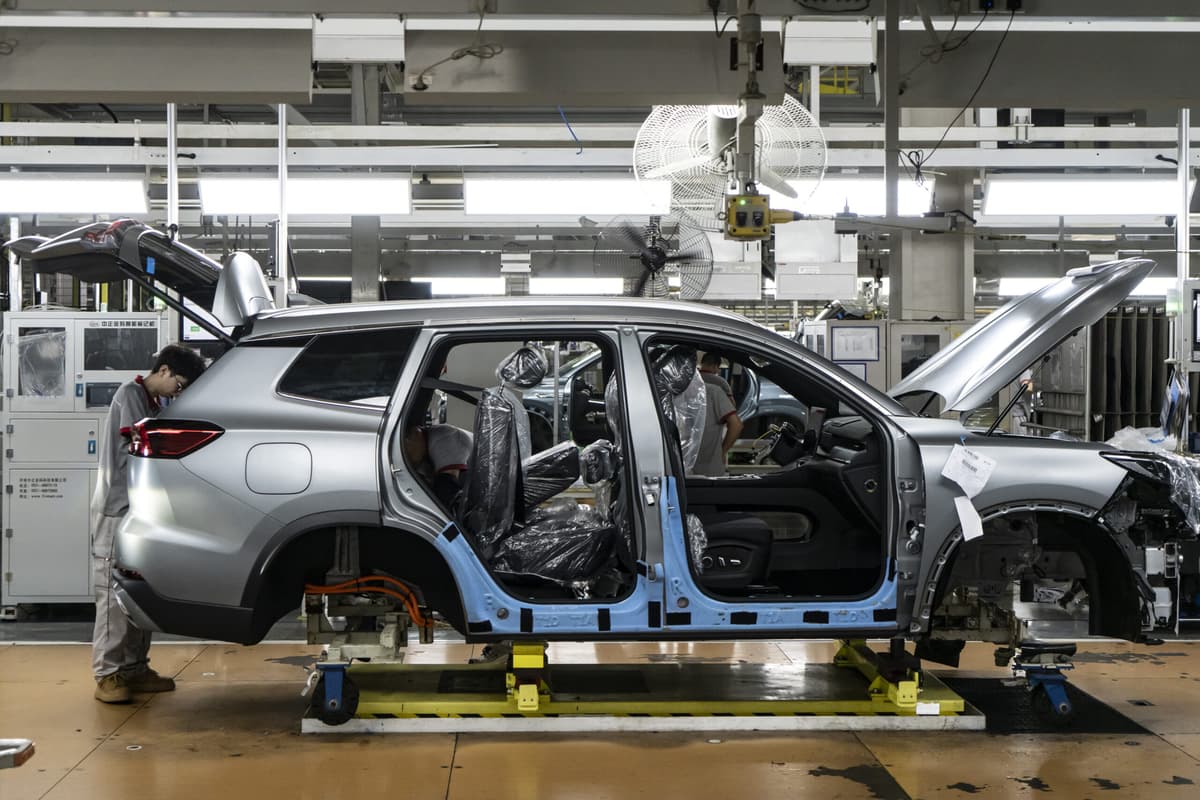
Made-in-China EVs Enter Canada Under Deal Carney Struck With Xi
Companies Mentioned
Why It Matters
The agreement reshapes Canada’s auto trade landscape, opening the market to low‑cost Chinese EVs and pressuring U.S. manufacturers while testing political ties between Ottawa, Beijing and Washington. It also signals a broader shift toward lower tariffs that could accelerate EV adoption and price competition in North America.
Key Takeaways
- •Canada allows up to 49,000 Chinese EVs annually at ~6% tariff.
- •Prior tariff exceeded 100%, effectively blocking Chinese electric cars.
- •Tesla Shanghai models are first to arrive under new low‑tariff regime.
- •BYD plans 20 Canadian sales locations as quota expands.
- •From 2027, half of quota reserved for sub‑$25k vehicles by 2030.
Pulse Analysis
The Canada‑China EV arrangement marks a dramatic policy reversal. Until January, Canada imposed tariffs above 100% on Chinese electric cars, mirroring the United States’ protectionist stance. By striking a deal during Prime Minister Mark Carney’s visit with President Xi, Ottawa lowered the duty to roughly 6% and opened a 49,000‑vehicle quota. This shift not only enables Tesla’s Shanghai‑built models to enter Canadian ports but also paves the way for other Chinese brands, such as Lotus and BYD, to test the market under a controlled framework.
U.S. manufacturers view the move with alarm. General Motors and other Detroit automakers have warned that cheaper Chinese EVs could undercut pricing and erode market share in a region where they dominate sales. Politicians, including Rep. Haley Stevens and Sen. Elissa Slotkin, are pushing legislation to block "Chinese‑connected vehicles" from the United States, a proposal that could affect Canadian owners as well. The deal also reflects broader geopolitical bargaining: China’s reduced tariffs on Canadian agricultural products were exchanged for automotive market access, a trade‑off that has drawn criticism from former President Donald Trump and his allies.
Looking ahead, the quota is designed to expand gradually, with a 2027 provision reserving 50% of imports for vehicles priced at C$35,000 (≈$25,400) or less, rising to half of all Chinese EVs by 2030. BYD’s plan for 20 sales locations signals intent to capture the budget segment, while luxury entrants like Lotus target affluent buyers with models starting around C$119,900 (≈$85,000). The controlled rollout offers Canadian consumers more affordable EV choices, but it also forces North‑American automakers to accelerate cost‑cutting and innovation to stay competitive. The outcome will likely influence future trade negotiations and the pace of EV adoption across the continent.
Made-in-China EVs Enter Canada Under Deal Carney Struck With Xi
Comments
Want to join the conversation?
Loading comments...