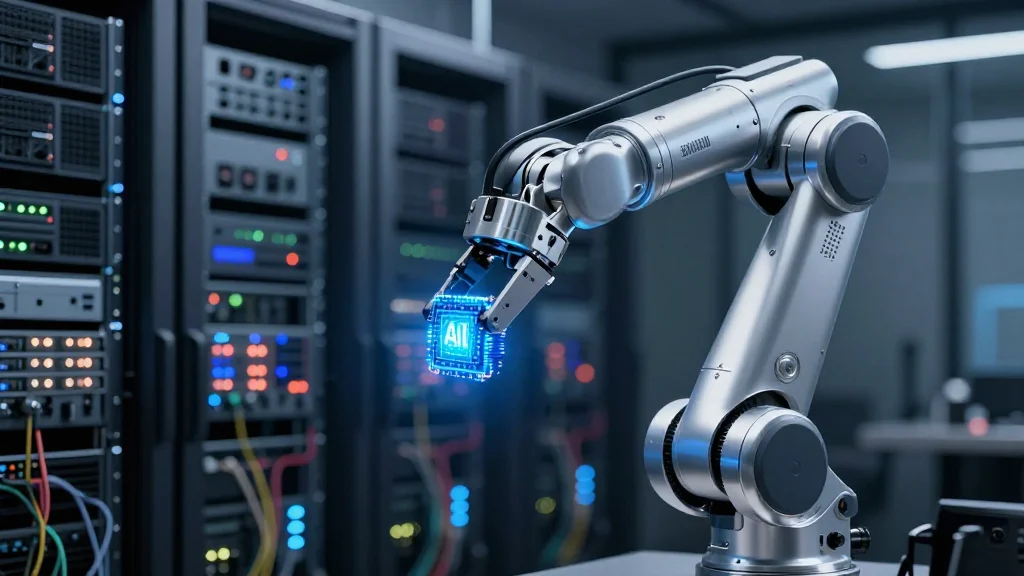
OpenAI Launches Robotics Division, Sending Tesla Shares Down 5% as Optimus Faces New Rival

Companies Mentioned

Why It Matters
OpenAI’s entry into physical robotics raises the competitive stakes for autonomous systems that blend advanced AI with real‑world actuation. If the startup can translate its foundation‑model breakthroughs into reliable hardware, it could shorten the timeline for commercially viable robots, challenging incumbents that have relied on incremental engineering. For Tesla, the threat is two‑fold: a potential loss of first‑mover advantage in the humanoid space and a broader market perception that its robotics ambitions are vulnerable to better‑funded AI rivals. The development also signals a shift in how AI firms view hardware as a growth frontier, moving beyond cloud services to tangible products that generate recurring revenue streams. This could spur a wave of new funding rounds, strategic alliances, and talent battles, reshaping the autonomy ecosystem over the next few years.
Key Takeaways
- •OpenAI announced a new robotics division on May 31, led by Aditya Ramesh.
- •Tesla’s share price fell about 5% the day after the announcement.
- •The division’s near‑term focus is robots for data‑center, power‑grid and factory construction.
- •Greg Brockman said the team is “making rapid progress towards building AI that can help people in the physical world.”
- •OpenAI listed 11 open engineering roles and aims to demo a prototype within six months.
Pulse Analysis
OpenAI’s decision to re‑enter robotics reflects a broader industry trend where AI leaders are betting on hardware to monetize their models. The company’s deep expertise in large‑scale simulation and reinforcement learning gives it a potential edge in training robots faster than traditional manufacturers, which often rely on slower, hardware‑first development cycles. By targeting high‑margin, skilled‑worker use cases, OpenAI can generate early revenue while refining its technology for eventual consumer applications.
Tesla’s Optimus strategy has always been a high‑risk, high‑reward play, hinging on the ability to mass‑produce a humanoid platform that can perform a wide array of tasks. The market’s reaction suggests that investors now view OpenAI’s entry as a credible acceleration of the competitive timeline, compressing the window for Tesla to establish a monopoly on humanoid robotics. If OpenAI can deliver functional prototypes ahead of Tesla’s production ramp‑up, it could force Musk’s team to either double‑down on capital‑intensive manufacturing or pivot toward niche applications where its head start remains.
Looking ahead, the rivalry could catalyze rapid innovation across the autonomy sector. Both firms are likely to seek partnerships—OpenAI with cloud and infrastructure providers, Tesla with automotive suppliers—to secure supply chains and scale production. The outcome will shape not only the future of robot‑assisted labor but also the valuation models investors use for AI‑hardware hybrids, potentially redefining what constitutes a “core” autonomous technology in the next decade.
OpenAI launches robotics division, sending Tesla shares down 5% as Optimus faces new rival
Comments
Want to join the conversation?
Loading comments...