Oregon’s Physical AI Ecosystem Takes Flight
Companies Mentioned

Why It Matters
Agility’s success proves that physical‑AI innovation can flourish in non‑traditional tech hubs, expanding the geographic talent pool and diversifying the AI supply chain. The momentum positions Oregon as a potential national center for hardware‑centric AI, influencing logistics, manufacturing and energy sectors.
Key Takeaways
- •Agility raised $400 mn, valued at $2.15 bn
- •Customers include Amazon, Toyota, GXO, and Mercado Libre
- •Oregon AI venture funding hit $688.7 mn in 2025
- •Panthalassa secured $140 mn for wave‑powered floating data centers
- •Talent shortage and fragmented hubs hinder Oregon’s AI scaling
Pulse Analysis
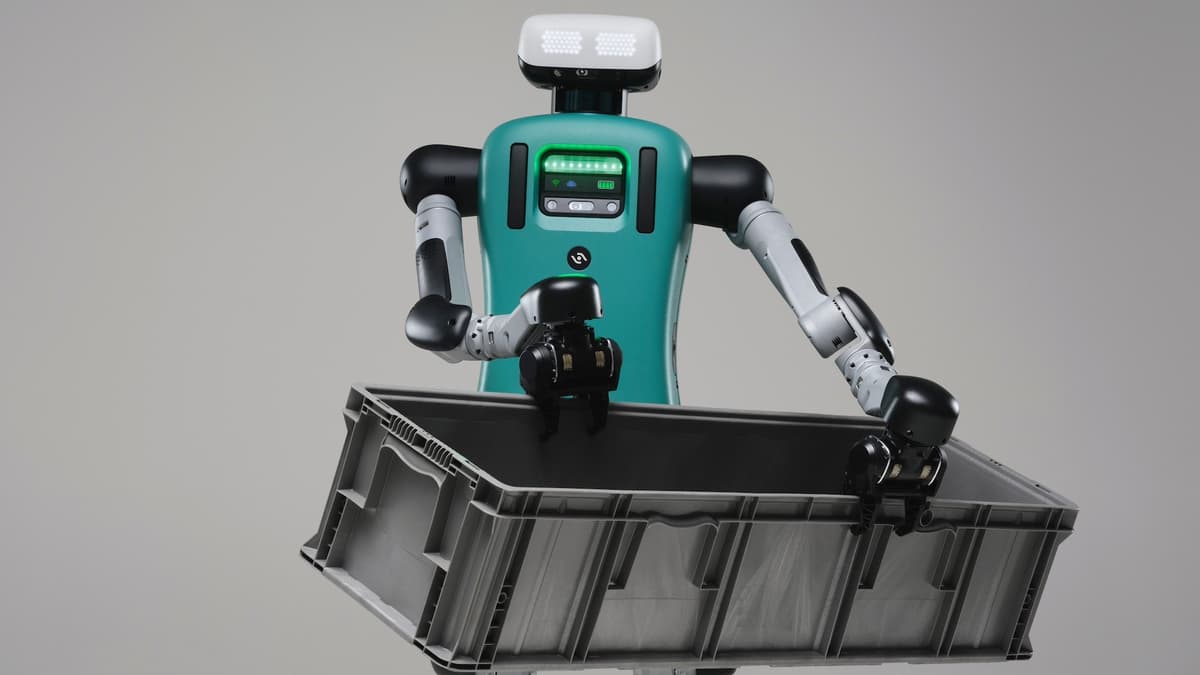
Agility’s rapid ascent illustrates how a university‑spun physical‑AI startup can compete with Silicon Valley giants. Founded in OSU’s Dynamic Robotics and AI Lab, the firm leveraged reinforcement learning to create Cassie and later Digit, a humanoid now operating in controlled warehouse zones for Amazon and other logistics leaders. By securing a $400 million round and a $2.15 billion valuation, Agility demonstrates that deep‑tech ventures can attract capital without relying on hype‑driven narratives, instead emphasizing incremental, real‑world deployments.
The broader Oregon ecosystem amplifies this narrative. OSU’s Advanced Technology and Manufacturing Institute (Atami) and a $200 million collaborative innovation complex, backed by Nvidia’s Jensen Huang, provide cutting‑edge infrastructure for hardware‑focused startups. Companies like Panthalassa are pioneering autonomous floating data centers powered by wave energy, underscoring the state’s talent depth and its "DNA" in edge compute and energy solutions. Partnerships with DeepMind, Nvidia and AWS further integrate Oregon firms into the global AI supply chain.
Despite the upside, Oregon confronts structural challenges. A scarcity of seasoned executives forces firms such as Agility to maintain bicoastal offices, while most capital still originates outside the state. Geographic fragmentation between hubs in Corvallis, Eugene and Portland hampers collaboration. Addressing these gaps through targeted executive recruitment, cross‑hub networking and sustained public‑private investment will be critical for Oregon to cement its role as a leading physical‑AI hub, reshaping logistics, manufacturing and renewable energy landscapes nationwide.
Oregon’s physical AI ecosystem takes flight
Comments
Want to join the conversation?
Loading comments...