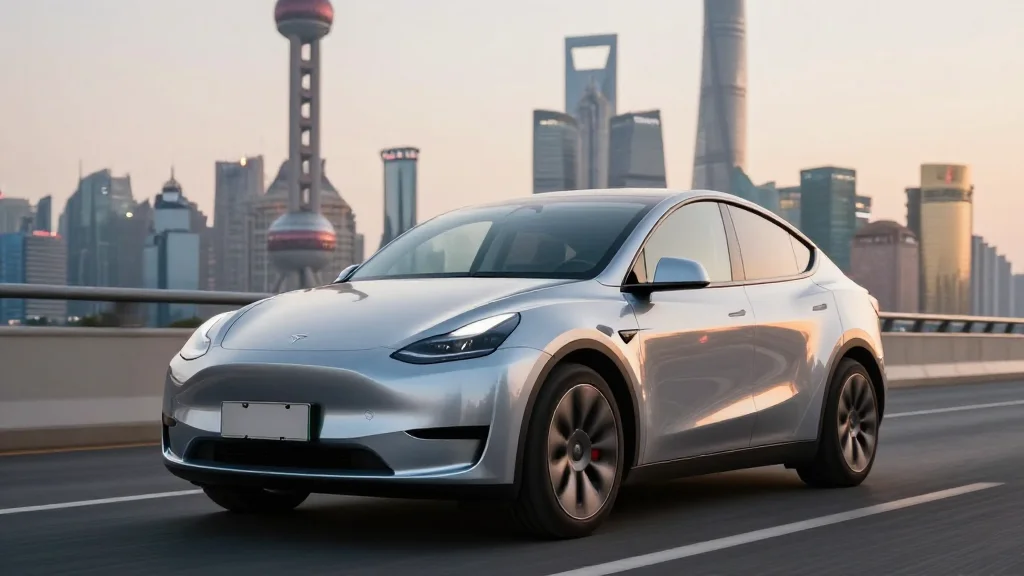
Tesla Rolls Out Full Self‑Driving Beta in China, Pricing It at ¥64,000

Companies Mentioned
Why It Matters
China accounts for more than a third of global EV sales and is rapidly becoming the benchmark for autonomous‑driving deployments. Tesla’s FSD launch tests the company’s ability to adapt its software stack to a market where local firms already offer higher levels of autonomy and where regulatory scrutiny is intense. Success—or failure—will influence how other foreign automakers approach the Chinese market and could reshape the competitive dynamics of global autonomous‑vehicle development. The rollout also highlights the tension between marketing nomenclature and technical reality. By branding a Level 2 system as “Full Self‑Driving,” Tesla risks regulatory pushback and consumer confusion, especially as Chinese competitors deliver hands‑off capabilities that meet or exceed local expectations. The outcome will inform future policy discussions on naming conventions and safety standards worldwide.
Key Takeaways
- •Tesla lists Full Self‑Driving (Supervised) at ¥64,000 ($9,400) for the Model 3 in China.
- •The system remains Level 2, requiring driver supervision, unlike local Level 3 offerings.
- •Chinese firms Changan Auto and BAIC Motor received Level 3 certifications in Dec 2025.
- •Xiaomi sold >410,000 vehicles in 2025, each equipped with advanced driver‑assistance systems.
- •Tesla ranks fourth in Chinese EV sales, behind BYD, Geely and Chery.
Pulse Analysis
Tesla’s decision to price its supervised FSD package at a premium in China reflects a calculated gamble: leverage brand prestige while buying time to align its software with local regulations. The company’s historic reliance on over‑the‑air updates gives it a technical edge, but the Chinese market rewards tangible autonomy capabilities that reduce driver workload. Competitors have already turned Level 3 certification into a selling point, and robotaxi operators are demonstrating commercial viability of fully driverless fleets. Tesla’s current offering may therefore be perceived as a stopgap rather than a competitive differentiator.
Regulatory dynamics are the decisive factor. China’s safety framework has evolved to endorse higher autonomy levels, yet it remains opaque about the criteria for approving foreign systems. Tesla’s recent hiring surge for autonomous‑driving talent in Shanghai signals an intent to localize development and possibly co‑create a version of FSD that satisfies Chinese standards. If the company can secure Level 3 certification within the next 12‑18 months, it could close the capability gap and tap into a market that already values hands‑off driving.
From a strategic perspective, the launch also serves as a litmus test for Tesla’s broader global autonomy ambitions. Success in China would validate the scalability of its software‑first approach across divergent regulatory environments, reinforcing its claim of being the industry’s de‑facto autonomous‑driving platform. Conversely, a lukewarm reception could accelerate the shift toward partnerships with local tech firms or prompt a redesign of its autonomy roadmap to accommodate region‑specific requirements.
Tesla rolls out Full Self‑Driving beta in China, pricing it at ¥64,000
Comments
Want to join the conversation?
Loading comments...