From Covalent to Noncovalent 14-3-3 Modulator, Unintentionally

Key Takeaways
- •Acrylamide compound 7 boosts ERα‑14‑3‑3σ binding 100‑fold without covalent link
- •Activity persists on C38A mutant, proving non‑covalent mechanism
- •SAR shows double bond essential; amide nitrogen critical for potency
- •Compound 7 likely stabilizes 14‑3‑3σ dimer rather than interface
- •Findings warn warhead design may yield unforeseen binding modes
Pulse Analysis
The 14‑3‑3 family comprises seven isoforms that act as intracellular scaffolds, linking diverse client proteins and influencing their localization, stability, and signaling output. Because many clients—such as estrogen‑receptor‑alpha (ERα) in breast cancer—depend on a precise interaction with 14‑3‑3, researchers have pursued “molecular glues” that reinforce these protein‑protein contacts. Successful examples, both covalent and noncovalent, have demonstrated that a small molecule positioned at the interface can dramatically increase complex affinity, opening a pathway to therapeutics that modulate otherwise “undruggable” targets.
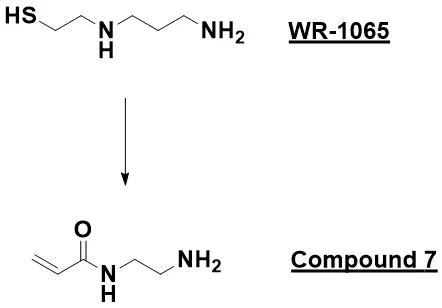
In a recent ACS Medicinal Chemistry Letters paper, Doveston et al. revisited the covalent warhead WR‑1065, the active metabolite of the FDA‑approved radioprotector amifostine, which forms a disulfide with C38 of 14‑3‑3σ and modestly (2.8‑fold) enhances ERα binding. Replacing the thiol with an acrylamide yielded compound 7, which sharpened the ERα‑14‑3‑σ K_D from 206 nM to 2.8 nM—nearly two orders of magnitude—yet mass‑spectrometry showed no covalent adduct. The molecule remained potent against the C38A mutant, indicating a purely non‑covalent mode that does not occupy the canonical interface.
The unexpected mechanism underscores a broader lesson for protein‑protein interaction drug design: warheads can act as allosteric stabilizers rather than direct covalent anchors. Structure‑activity data revealed that the acrylamide double bond and the amide nitrogen are indispensable, while substitution of the primary amine abolishes activity, suggesting a precise hydrogen‑bonding network. If compound 7 indeed reinforces the dimeric state of 14‑3‑σ, it opens a new avenue for targeting hub proteins through oligomer‑specific ligands. Future screens should therefore incorporate orthogonal biophysical readouts to capture such hidden modes, accelerating the discovery of next‑generation molecular glues.
From covalent to noncovalent 14-3-3 modulator, unintentionally
Comments
Want to join the conversation?