
Key Takeaways
- •First-in-class oral covalent dual FAAH/MAGL inhibitor entering Phase 2.
- •Targets MS spasticity and AD agitation by boosting anandamide and 2‑AG.
- •Addresses safety and efficacy failures of earlier FAAH-only candidates.
- •Developed by BMS/Celgene after acquisition of Abide’s ABX‑1772 program.
Pulse Analysis
The endocannabinoid system modulates pain, mood, and neuroinflammation through two primary lipid messengers—anandamide and 2‑arachidonoylglycerol (2‑AG). Their levels are tightly regulated by fatty‑acid amide hydrolase (FAAH) and monoacylglycerol lipase (MAGL), respectively. Over the past decade, pharmaceutical companies have pursued FAAH inhibitors to boost anandamide, but safety setbacks—most notably the BIA 10‑2474 incident—and modest efficacy have stalled the field. Consequently, interest shifted toward broader strategies that can simultaneously elevate both endocannabinoids while minimizing off‑target cannabinoid‑receptor activation.
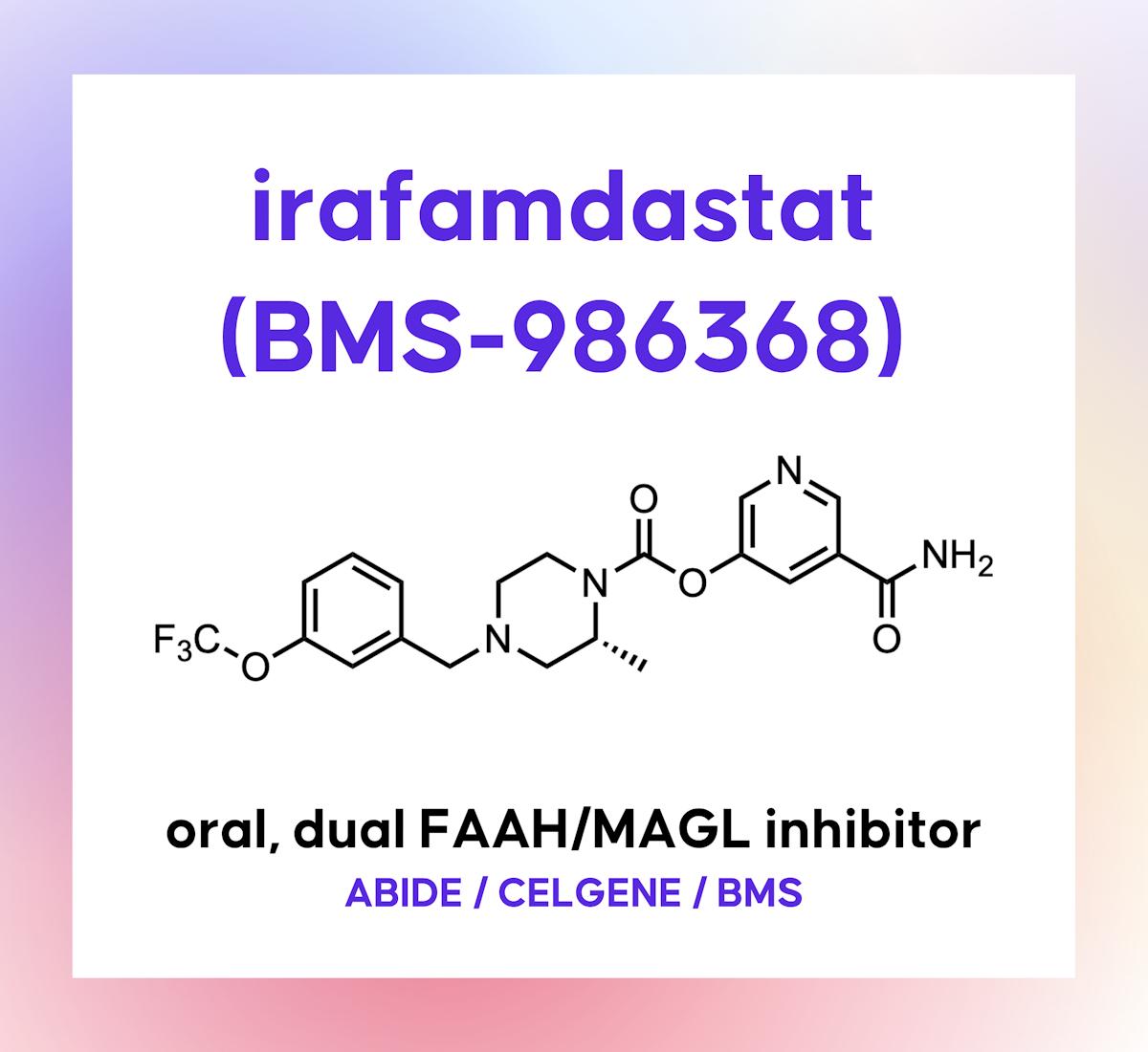
Irafamdastat (BMS‑986368) represents the first oral, covalent molecule designed to block both FAAH and MAGL. Originating as ABX‑1772 at Abide Therapeutics, the compound now resides in the BMS/Celgene pipeline and has entered Phase 2 trials for multiple sclerosis spasticity and agitation in Alzheimer’s disease. By preserving anandamide and 2‑AG, the drug aims to dampen neuronal hyperexcitability and neuroinflammatory cascades without the psychoactive effects of direct cannabinoid agonists. Early pharmacokinetic data suggest sustained enzyme occupancy, a key advantage over reversible inhibitors.
If clinical outcomes confirm symptom reduction with an acceptable safety profile, irafamdastat could revive investor confidence in endocannabinoid‑modulating therapeutics and spur a new wave of dual‑target programs. The neuro‑degenerative market—valued at over $30 billion globally—offers substantial commercial upside, especially for agents that address unmet needs in MS and Alzheimer’s disease. Competitors such as Pfizer’s PF‑04457845 and Sanofi’s SAR‑127303 remain single‑target, positioning BMS’s dual approach as a differentiator. Success would also validate covalent inhibition as a viable modality for central nervous system drugs.
irafamdastat (BMS-986368)
Comments
Want to join the conversation?