Parallel 3D Bioprinting Builds Tissue Model Arrays in Minutes
Key Takeaways
- •SLIPS‑DMA platform eliminates walls, enabling parallel DLP bioprinting
- •70 GelMA structures printed in 6.5 min versus over 7 h serial
- •588 structures fabricated in 3.5 min, cutting 34 h serial time
- •Slippery oil coating preserves droplet boundaries after bio‑ink exposure
- •Works with dispersed cells and pre‑formed spheroids in GelMA
Pulse Analysis
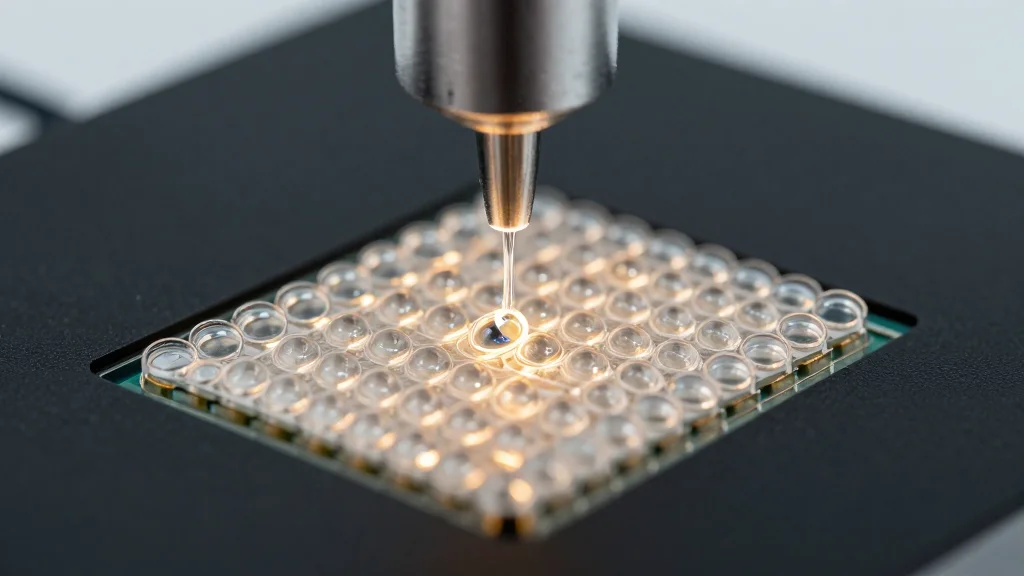
High‑throughput tissue engineering has long been hampered by the serial nature of conventional 3‑D bioprinting, where each well or compartment requires a separate printer pass. The SLIPS‑DMA platform sidesteps this bottleneck by replacing rigid walls with a patterned surface that confines liquids through wetting contrast. Hydrophilic spots attract droplets while a fluorinated‑oil‑infused porous background repels them, allowing a DLP projector to cure hydrogel precursors across the entire array in a single exposure. This open‑access design preserves compartmentalization without forcing the printer to traverse each location.
Performance data underscore the breakthrough: 70 GelMA constructs of varied geometry were completed in just 6.5 minutes, a speed that would demand more than seven hours in a traditional serial workflow. Scaling the array to 588 micro‑structures reduced fabrication time to 3.5 minutes, shaving off roughly 34 hours of labor. The printed hydrogels maintained cell viability for HEK‑293 lines and supported both dispersed cells and pre‑formed spheroids, demonstrating that rapid parallel printing does not compromise biological relevance. By keeping the tallest structure as the primary time determinant, researchers can explore shape‑dependent diffusion and cellular responses within a single run.
Beyond the laboratory, the ability to generate dense, immersed tissue arrays in minutes could transform drug discovery and toxicology screening, where thousands of conditions must be evaluated quickly. The technology still faces hurdles such as evaporation control, higher‑resolution projection, and integration with automated read‑outs, but its core premise—decoupling sample separation from printer motion—offers a scalable path forward. As bioprinting moves toward personalized medicine and organ‑on‑chip platforms, parallel SLIPS‑based systems are poised to become a cornerstone of next‑generation high‑content screening pipelines.
Parallel 3D bioprinting builds tissue model arrays in minutes
Comments
Want to join the conversation?