A Light-Controlled 'Muscle' Could Give Synthetic Cells a New Way to Move
Why It Matters
A programmable, ATP‑free force generator fills a critical gap for synthetic‑cell designs that need to move, reshape, or deliver therapeutics, potentially accelerating bio‑fabrication and targeted drug delivery.
Key Takeaways
- •Light‑caged calcium releases trigger Tcb2 network contraction.
- •Contractions reach 0.4 µm s⁻¹ and sustain ~150 cycles.
- •Patterned illumination shapes and moves microscopic particles.
- •Calcium “battery” mimics ciliate ultrafast motion, bypassing ATP.
- •Reinforcement‑learning models optimize light patterns for desired forces.
Pulse Analysis
Synthetic biology has long chased the ability to endow artificial cells with the same mechanical versatility as living organisms. Conventional designs rely on ATP‑driven motor proteins to generate force, but supplying ATP at scale and timing it precisely remains a bottleneck for in‑vivo applications. Nature offers an alternative: ciliates such as Tetrahymena thermophila store calcium in intracellular reservoirs and unleash an ultrafast contraction when a calcium pulse arrives, using ATP only to reload the store. By borrowing this calcium‑battery concept, engineers can decouple energy supply from actuation, opening a pathway to more controllable synthetic‑cell machinery.
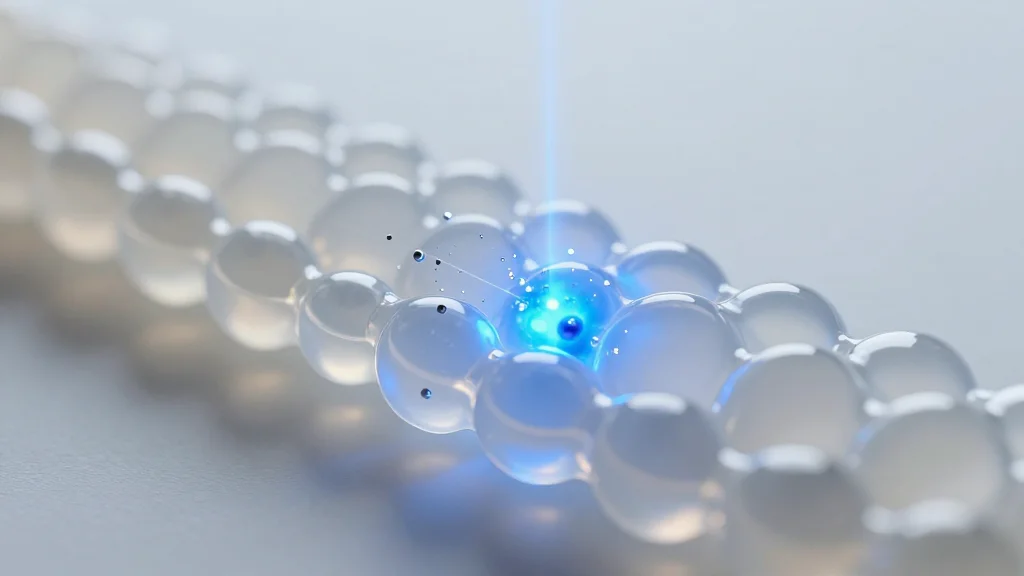
The Georgia Tech team isolated the ciliate calcium‑binding protein Tcb2, which self‑assembles into a fibrous network that shortens upon calcium binding. They paired the protein with a photolabile chelator that cages calcium until illuminated, allowing spatially resolved release of the ion. Projected light patterns—stars, circles, or custom shapes—induced the network to contract in matching geometries at roughly 0.4 µm per second, and the cycle could be repeated about 150 times before performance waned. Using the same force, the researchers propelled micron‑scale beads, demonstrating a functional “muscle” that can be programmed via light. Computational models and reinforcement‑learning algorithms further refined the illumination sequences to achieve targeted pulling or pushing actions.
A light‑controlled calcium engine supplies a missing component for next‑generation synthetic cells that must navigate complex tissues, change shape, or release therapeutics on demand. Because the system does not depend on continuous ATP provision, it could operate in low‑energy environments such as the bloodstream or tumor micro‑matrix, where traditional molecular motors falter. Future work will likely focus on integrating the Tcb2 actuator with membrane‑bound vesicles, scaling the contraction speed, and coupling calcium recharging to external cues like chemical signals. If successful, this technology could accelerate the development of smart drug‑delivery capsules, self‑assembling biomaterials, and bio‑hybrid robots that mimic the agility of living cells.
A light-controlled 'muscle' could give synthetic cells a new way to move
Comments
Want to join the conversation?
Loading comments...