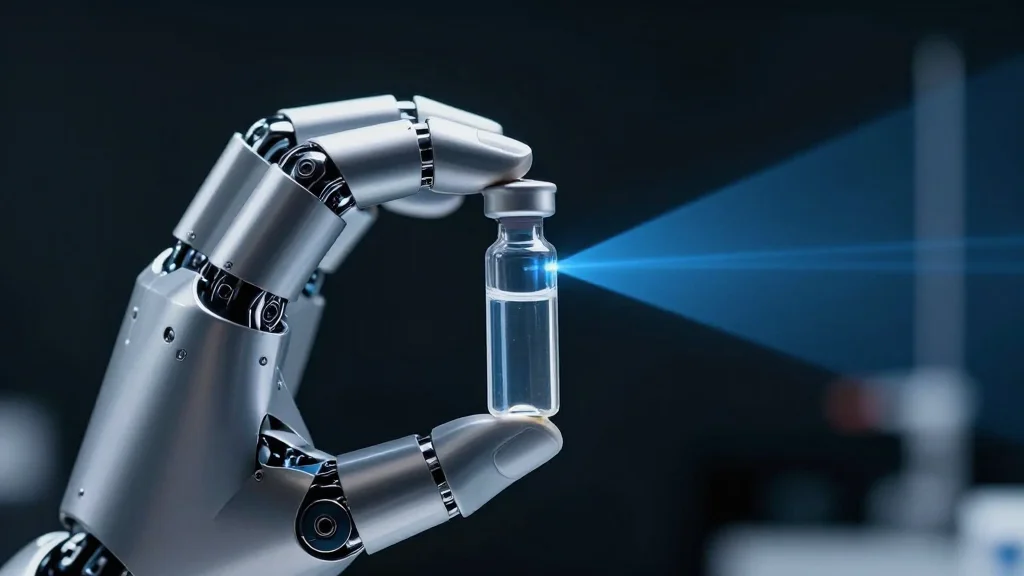
Accelerating Drug Discovery with Fragment Screening
Why It Matters
By delivering high‑throughput, low‑cost fragment screening, the NSLS‑II platform could boost early‑stage drug success rates and democratize access to cutting‑edge structural biology tools.
Key Takeaways
- •FBDD screens 100‑300 Da fragments, covering broad chemical space efficiently
- •NSLS‑II integrates robotics and AI to automate crystal handling and data capture
- •Publicly available platform lowers entry barriers for academic and small‑company researchers
- •Initial BLVRB study shows FBDD can accelerate therapeutics for chemotherapy‑induced thrombocytopenia
Pulse Analysis
Fragment‑based drug design (FBDD) has emerged as a powerful alternative to traditional high‑throughput screening. By focusing on tiny chemical fragments—typically 100 to 300 daltons—researchers can probe a much larger swath of chemical space with far fewer compounds. These fragments bind weakly but with high efficiency, providing clear structural footholds that can be chemically grown into potent, selective drug candidates. The approach reduces library size, cuts material costs, and often uncovers novel binding modes that larger molecules miss, making it especially attractive for tackling “undruggable” targets.
At the U.S. Department of Energy’s National Synchrotron Light Source II, a multidisciplinary team is automating the entire FBDD workflow. Using the Highly Automated Macromolecular Crystallography (AMX) beamline, robots handle sample mounting, crystal harvesting and diffraction data collection, while artificial‑intelligence pipelines curate results into a searchable database. This integration slashes manual labor, accelerates data turnaround, and creates a reproducible, high‑quality dataset that can feed machine‑learning models for future hit prediction. By making the platform openly accessible, NSLS‑II positions itself as a national hub for structural‑biology‑driven drug discovery.
The practical impact is already visible. A recent collaboration identified biliverdin IXβ reductase (BLVRB) as a promising target to boost platelet production, a critical need for patients undergoing chemotherapy. Although the initial study did not use fragment screening, the NSLS‑II team plans to apply FBDD to generate optimized leads for BLVRB inhibition. If successful, the workflow could dramatically shorten the path from target validation to lead optimization, offering a template for other disease areas. For biotech firms and academic labs alike, the combination of rapid fragment screening, automation, and open data promises higher success rates, lower R&D spend, and faster delivery of life‑saving medicines.
Accelerating drug discovery with fragment screening
Comments
Want to join the conversation?
Loading comments...