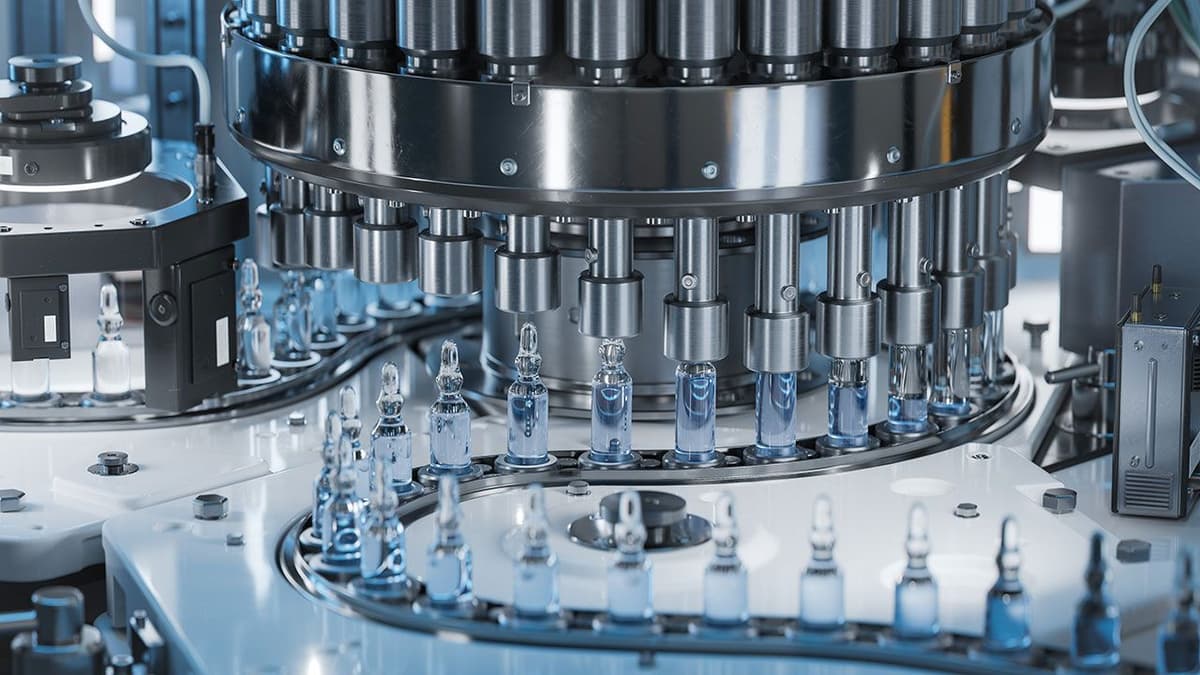
Advancing Aseptic Precision: How Modern Filling Lines Elevate Sterility, Flexibility, and Throughput
Why It Matters
The shift to isolated, AI‑enhanced filling lines cuts contamination risk and operational downtime, directly impacting product safety and profitability in the fast‑growing biologics market. It also enables manufacturers to meet tighter regulatory standards while scaling flexible, high‑value therapies.
Key Takeaways
- •Isolator-based lines eliminate human contact, cutting contamination risk dramatically
- •Integrated wash‑sterilize‑fill‑seal modules boost throughput while maintaining GMP compliance
- •AI-driven analytics provide real‑time diagnostics and predictive maintenance for uptime
- •Flexible form‑fill‑seal equipment supports syringes, kits, and diverse container formats
Pulse Analysis
The rise of isolator technology marks a turning point for aseptic manufacturing. By physically separating operators from the critical processing zone, modern lines achieve Grade A/ISO 5 environments with minimal human touch, dramatically lowering microbial ingress. Integrated wash‑sterilize‑fill‑seal modules streamline the entire production chain, allowing manufacturers to meet EU Annex 1 and FDA cGMP expectations without sacrificing speed. This architecture is especially vital for biologics, high‑potency drugs, and cell‑based therapies where sterility is non‑negotiable.
Flexibility is now a core design principle. Form‑fill‑seal equipment can accommodate traditional vials, ready‑to‑use syringes, and complex combination kits within a single isolator footprint. Automated handling of lyophilized products eliminates manual loading, reducing contamination hotspots and shortening cycle times. Multi‑technology filling heads—positive‑displacement pumps, Coriolis mass‑flow meters, and single‑use peristaltic systems—allow rapid changeovers for varying viscosities, toxicities, and batch sizes, ensuring consistent fill accuracy and minimizing batch variability.
Digitalization completes the transformation. AI‑enabled analytics continuously monitor air quality, particulate loads, and equipment health, generating auditable, real‑time records required for regulatory traceability. Predictive maintenance algorithms forecast component wear, preventing unscheduled shutdowns and preserving line uptime. As data integrity standards tighten, manufacturers that embed these smart, connected solutions will secure a competitive edge, delivering safer, higher‑yield products while adapting swiftly to emerging therapeutic formats.
Advancing Aseptic Precision: How Modern Filling Lines Elevate Sterility, Flexibility, and Throughput
Comments
Want to join the conversation?
Loading comments...