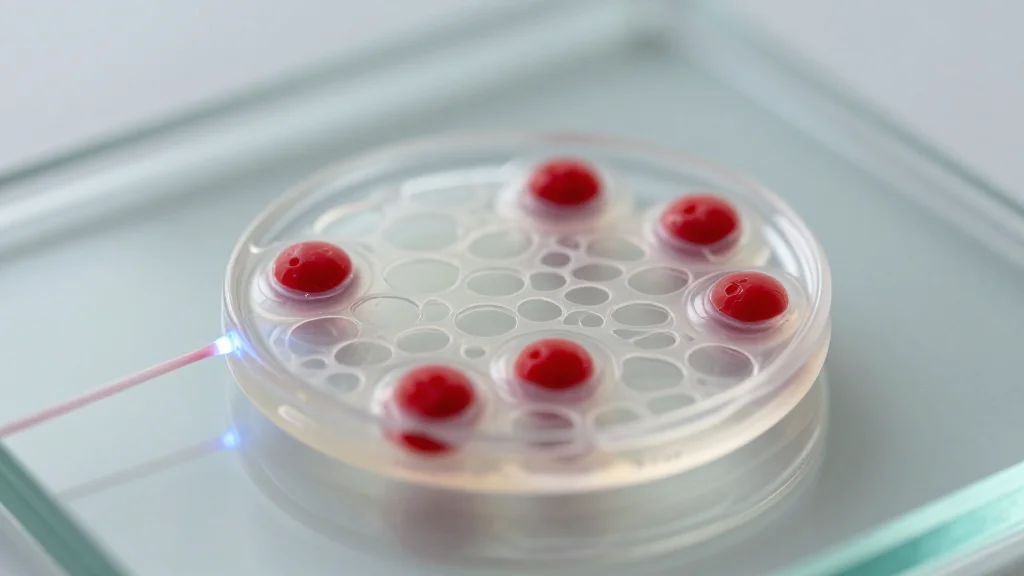
Application of Hydrogel in the Capture and Detection of Circulating Tumor Cells
Why It Matters
Reliable CTC capture enables earlier cancer diagnosis and real‑time monitoring, directly supporting personalized treatment strategies and improving patient outcomes.
Key Takeaways
- •Hydrogels' 3D pores enable deep infiltration and high CTC capture efficiency.
- •Functionalized hydrogels allow affinity‑driven targeting while preserving cell viability.
- •Integrated optical/electrochemical transducers provide on‑chip detection and analysis.
- •Standardized, scalable hydrogel fabrication is critical for clinical adoption.
Pulse Analysis
Liquid biopsy has emerged as a minimally invasive alternative to tissue sampling, with circulating tumor cells serving as a gold‑standard biomarker for early cancer detection and metastatic monitoring. Traditional isolation techniques—such as antibody‑coated magnetic beads or size‑based filters—often suffer from low capture yields, cell damage, or limited scalability. Hydrogels address these shortcomings by offering a hydrated, three‑dimensional scaffold that mimics the extracellular matrix, allowing CTCs to migrate deep into the material while maintaining their physiological state. Their inherent biocompatibility and the ability to graft specific ligands (e.g., EpCAM antibodies) create highly selective capture environments that outperform many conventional methods.
Recent research has pushed hydrogel platforms beyond simple capture. Stimuli‑responsive polymers now release captured cells on demand using temperature, pH, or enzymatic triggers, facilitating downstream molecular profiling without harsh dissociation steps. Moreover, embedding optical waveguides or electrochemical electrodes within the gel matrix enables real‑time signal transduction, turning the capture device into a multifunctional diagnostic chip. Microfluidic integration further enhances throughput, allowing continuous blood processing while preserving the high surface‑to‑volume ratio essential for efficient cell capture. These innovations collectively move hydrogel‑based CTC technologies closer to point‑of‑care applications.
Despite technical progress, several hurdles impede clinical translation. Manufacturing reproducibility remains a challenge; batch‑to‑batch variations in polymer cross‑linking can alter pore size and ligand density, affecting performance consistency. Regulatory pathways also demand extensive validation to prove safety and diagnostic accuracy across diverse cancer types. Addressing these issues will require standardized, scalable fabrication protocols and large‑scale clinical trials that compare hydrogel platforms against established benchmarks. Success in these areas could unlock a new generation of liquid‑biopsy tools, delivering faster, more reliable cancer diagnostics and opening revenue streams for biotech firms investing in advanced biomaterials.
Application of Hydrogel in the Capture and Detection of Circulating Tumor Cells
Comments
Want to join the conversation?
Loading comments...