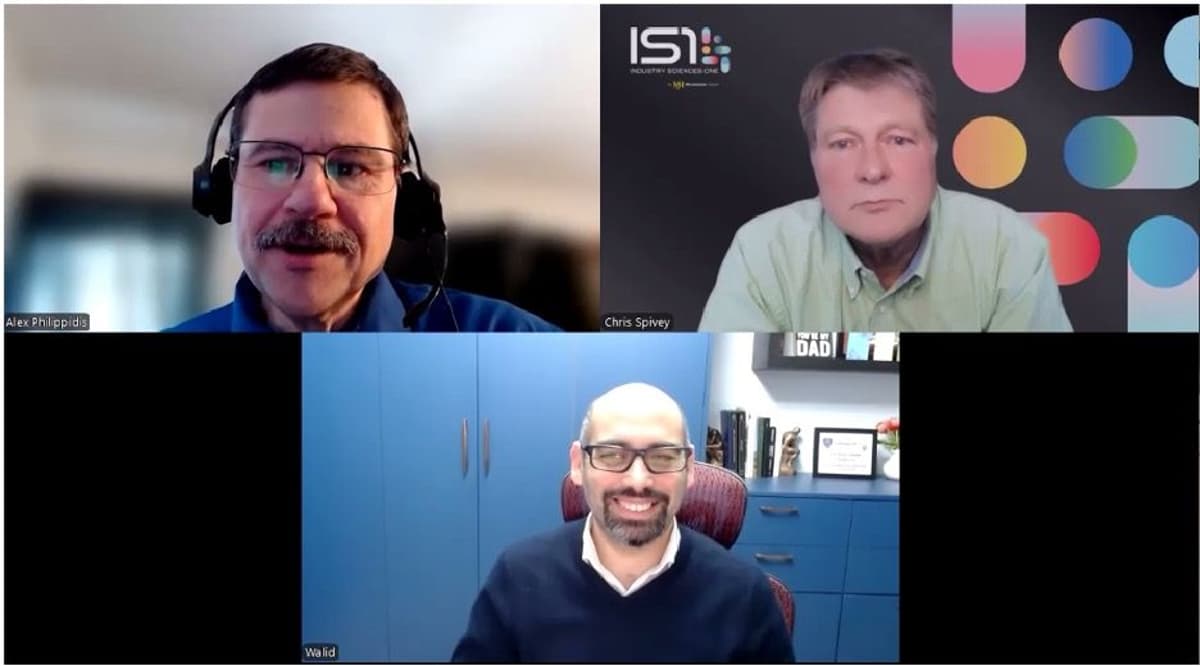
Behind the Headlines Episode 32: AI’s Power, NVIDIA & Lilly, Revolution Medicine
•February 3, 2026
0
Companies Mentioned


Why It Matters
The NVIDIA‑Lilly partnership could reshape drug discovery economics, while the muted deal flow signals heightened risk aversion across pharma investors.
Key Takeaways
- •NVIDIA and Eli Lilly launch $1B AI co‑innovation lab.
- •AI aims to link wet labs with continuous learning models.
- •AI could cut drug development costs and speed trials.
- •Merck ends $30B Revolution Medicines acquisition talks.
- •JPM conference saw minimal payer and health‑system attendance.
Pulse Analysis
The collaboration between NVIDIA and Eli Lilly marks a watershed moment for artificial intelligence in biopharma. By creating a continuous‑learning loop that ties Lilly’s agentic wet labs to NVIDIA’s high‑performance computing, the partnership promises to automate hypothesis generation, data capture, and model refinement in near‑real time. This scientist‑in‑the‑loop framework is designed to reduce the iterative bottlenecks that traditionally inflate R&D spend, potentially shaving years off the drug‑development timeline and delivering cost efficiencies that investors have long coveted.
Beyond the headline partnership, the episode delved into practical AI applications that are already delivering value. Panelists cited advances in trial‑simulation algorithms that segment patient populations, predict response heterogeneity, and identify optimal enrollment strategies. Such capabilities enable sponsors to design leaner protocols, allocate resources more effectively, and accelerate regulatory submissions. As AI models ingest richer datasets from both pre‑clinical and clinical stages, the feedback loop tightens, fostering a virtuous cycle of insight generation that can lower per‑patient trial costs while improving success rates.
The broader market context, however, remains mixed. Merck’s decision to walk away from a $30 billion bid for Revolution Medicines highlights lingering valuation disputes and a cautious capital‑allocation mindset. Meanwhile, the JP Morgan Healthcare Conference reflected a retreat of traditional payers and health‑systems, suggesting tighter reimbursement environments and heightened scrutiny of R&D spend. Coupled with manufacturing reshoring pressures and research‑budget cuts, these signals underscore that while AI offers transformative potential, firms must balance innovation ambitions with disciplined financial stewardship.
Behind the Headlines Episode 32: AI’s Power, NVIDIA & Lilly, Revolution Medicine
0
Comments
Want to join the conversation?
Loading comments...