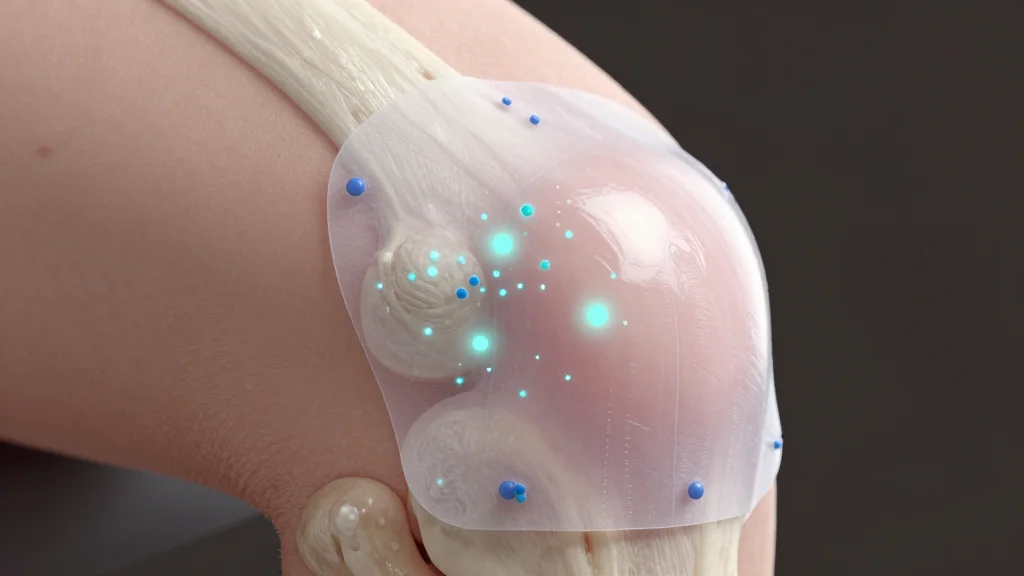
Bioadhesive Scaffold for Dual Delivery of Methotrexate‐Loaded Liposomes and Chondrogenic miRNA in Advanced Rheumatoid Arthritis Therapy
Why It Matters
The dual‑stage platform offers a potential disease‑modifying solution that could lower long‑term disability and healthcare costs for rheumatoid arthritis patients, while providing a template for combining immunosuppression with tissue engineering in other inflammatory conditions.
Key Takeaways
- •Scaffold releases methotrexate in response to MMP activity
- •miRNA‑140 delivery promotes hyaline cartilage formation
- •Combined therapy restores both cartilage and subchondral bone
- •In vivo model shows complete osteochondral regeneration
- •Platform integrates drug release and gene therapy in one matrix
Pulse Analysis
Rheumatoid arthritis remains a leading cause of chronic disability, affecting roughly 1.3 million Americans. Conventional regimens—non‑steroidal anti‑inflammatories, disease‑modifying antirheumatic drugs, and biologics—primarily dampen inflammation without repairing the irreversible joint damage that defines late‑stage disease. This therapeutic gap has spurred interest in disease‑modifying strategies that can both curb immune attacks and rebuild cartilage, a combination rarely achieved in a single intervention.
The newly reported bioadhesive scaffold tackles that gap by merging two nanomedicine modalities within a single, tissue‑adhesive matrix. Collagen provides a natural cell‑friendly backbone, while polydopamine‑modified hyaluronic acid and PEGDE cross‑linking create a robust, MMP‑sensitive network. Embedded methotrexate‑loaded lipid nanoparticles burst release the drug when inflammatory enzymes rise, instantly quelling synovitis. Simultaneously, gallic‑acid‑functionalized chitosan particles protect and ferry miRNA‑140, a potent chondrogenic signal, to resident stem cells, prompting hyaline cartilage formation and subchondral bone integration. In murine models, this sequential approach achieved full osteochondral restoration, a milestone rarely seen with existing RA therapies.
If translated to humans, the platform could redefine the RA treatment paradigm, shifting from lifelong symptom management to finite, curative courses. Its modular design also lends itself to other musculoskeletal disorders where inflammation and tissue loss coexist, such as osteoarthritis or post‑traumatic cartilage injuries. Commercially, a successful disease‑modifying product would capture a sizable market, given the $42 billion global spend on rheumatoid arthritis care. Challenges remain—scaling manufacturing, regulatory pathways for combined drug‑gene devices, and long‑term safety—but the convergence of targeted drug release and regenerative gene therapy marks a compelling frontier for biotech investors and clinicians alike.
Bioadhesive Scaffold for Dual Delivery of Methotrexate‐Loaded Liposomes and Chondrogenic miRNA in Advanced Rheumatoid Arthritis Therapy
Comments
Want to join the conversation?
Loading comments...