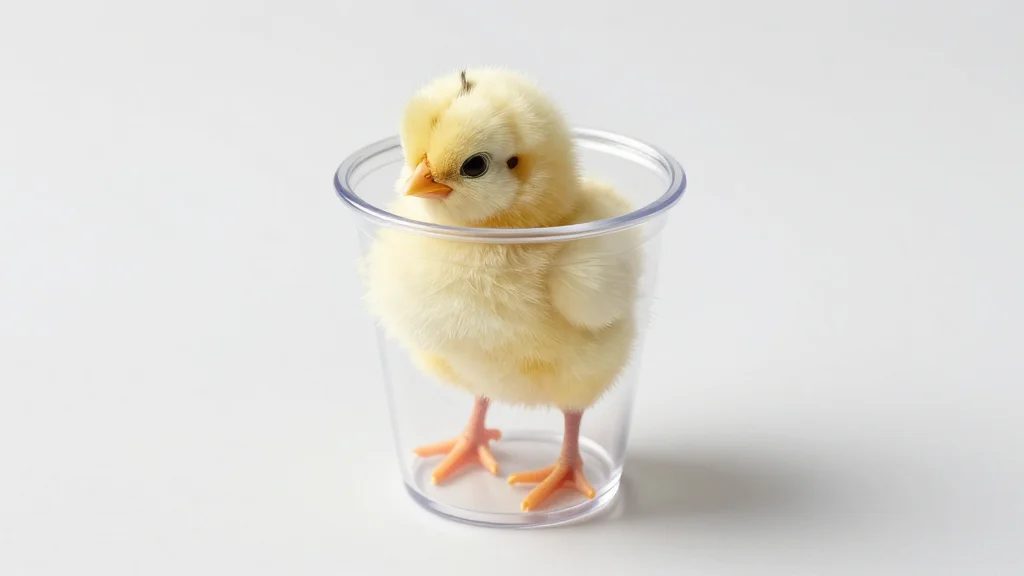
Colossal Bio Grows Chicks in 3D-Printed Artificial Eggs. Breakthrough or Copycat Technology?
Key Takeaways
- •Colossal used 3D‑printed lattice cups with silicone membrane for incubation
- •Chick embryos developed normally, showing artificial shells can supply oxygen
- •Researchers argue the method builds on 2024 Tsukuba plastic‑film technique
- •Potential to incubate extinct birds could accelerate de‑extinction programs
- •Ethical and regulatory scrutiny expected as shell‑less incubation scales
Pulse Analysis
Colossal Biosciences’ recent demonstration of chicks hatching inside a 3D‑printed plastic cup marks a visible milestone for the company’s de‑extinction agenda. By printing an oval lattice and coating it with a gas‑permeable silicone membrane, the startup mimics the essential functions of a natural eggshell—oxygen exchange and structural support—while eliminating the need for a biological shell. The visual of transparent “eggs” has captured public imagination and positions Colossal as a front‑runner in a niche that blends synthetic biology with advanced manufacturing.
The scientific community, however, is quick to point out that the concept is not entirely new. In 2024, researchers at the University of Tsukuba successfully hatched chickens beneath a thin transparent film, a method published in *Scientific Reports*. Colossal’s design refines that idea with a rigid lattice that could be scaled for larger or more fragile species, yet the core principle—providing an artificial, breathable barrier—remains consistent. Critics argue the company’s marketing overstated the novelty, framing it as the “first‑ever shell‑less incubation system” when it is, in fact, an incremental improvement on existing protocols.
Beyond the laboratory, the technology could have far‑reaching implications for biodiversity restoration and commercial poultry. A reliable artificial egg could simplify the incubation of endangered or extinct avian species, reducing dependence on surrogate mothers and accelerating breeding programs. At the same time, regulators will need to address biosecurity, animal welfare, and the ethical dimensions of resurrecting species. Investors are watching closely, as successful scaling could open new markets in synthetic agriculture and biotech‑enabled conservation, while also prompting a wave of policy discussions about the limits of engineered life.
Colossal Bio grows chicks in 3D-printed artificial eggs. Breakthrough or copycat technology?
Comments
Want to join the conversation?