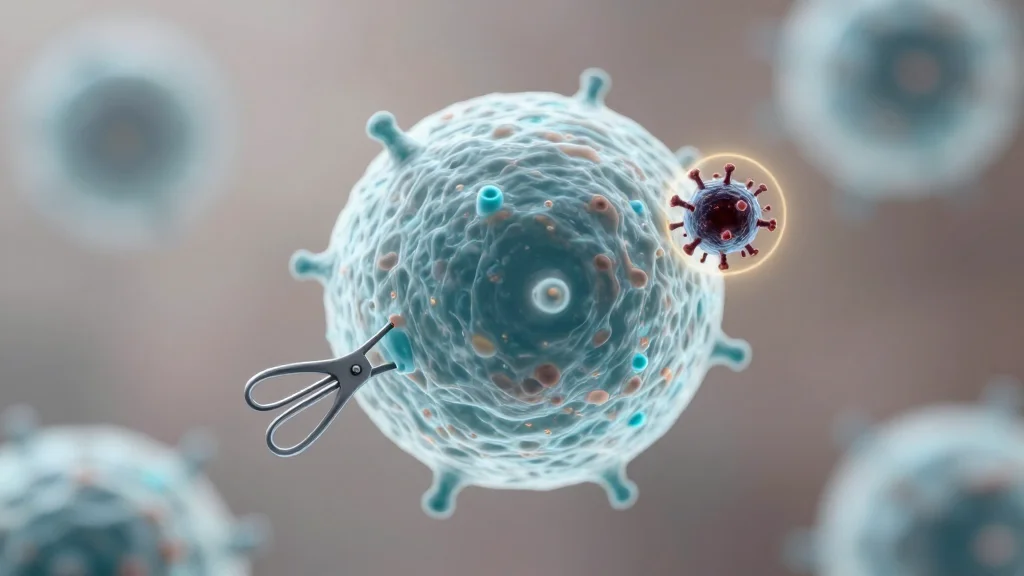
CRISPR Screens Map Human T‑Cell Genes That Promote or Block HIV Infection
Why It Matters
Understanding the full set of human genes that control HIV entry and replication opens pathways for novel therapeutics and strategies to eradicate latent reservoirs, a major hurdle in curing AIDS.
Key Takeaways
- •First genome‑wide CRISPR screens in primary human CD4+ T cells
- •Identified hundreds of host factors that modulate HIV infection
- •Discovered antiviral proteins PI16 and PPID that block viral entry
- •Engineered PPID variants showed up to tenfold increased restriction
- •Platform enables new studies of HIV latency and cure strategies
Pulse Analysis
For decades, HIV research has leaned on immortalized cell lines that only approximate the virus’s natural target—primary CD4+ T cells. Those models miss critical host interactions, leaving a fragmented view of how the virus exploits human biology. The Gladstone‑UCSF team overcame this gap by refining infection protocols to achieve roughly 70% infection in primary T cells, a breakthrough that made genome‑scale CRISPR perturbations feasible. This technical leap allowed the first systematic, cell‑type‑specific interrogation of the human genome in the context of authentic HIV infection.
The dual CRISPRa and CRISPRn screens uncovered hundreds of host genes influencing viral replication, but the most striking discoveries were two previously uncharacterized antiviral factors: PI16 and PPID (Cyp40). PI16 interferes with the fusion machinery, while PPID binds the capsid and hampers nuclear import, together curbing viral entry and integration. Mutagenesis and structural modeling pinpointed key residues, and engineered PPID variants achieved up to a tenfold boost in restriction, even against aggressive early‑epidemic isolates. These findings not only expand the catalog of innate anti‑HIV defenses but also suggest protein‑based therapeutics or small‑molecule mimetics could augment existing antiretroviral regimens.
Beyond immediate therapeutic leads, the study establishes a versatile platform for probing HIV latency—the hidden reservoir that evades current drugs. By applying the same CRISPR toolkit to latently infected primary T cells, researchers can now systematically identify genes that maintain or disrupt viral dormancy. This capability could accelerate the discovery of latency‑reversing agents or strategies to purge infected cells, moving the field closer to a functional cure. As the HIV landscape evolves, such comprehensive, cell‑authentic screens will be essential for staying ahead of viral resistance and for translating molecular insights into clinical breakthroughs.
CRISPR Screens Map Human T‑Cell Genes That Promote or Block HIV Infection
Comments
Want to join the conversation?
Loading comments...