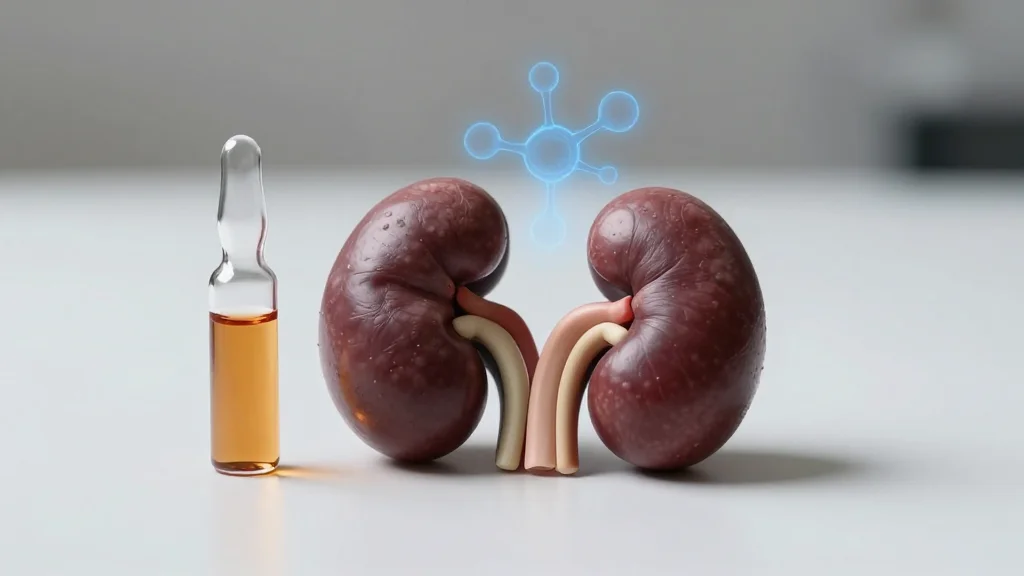
DNlite™ Biomarker Predicts Renal Risk Independent of Albuminuria in Landmark CREDENCE Trial

Why It Matters
The DNlite™ findings address a critical gap in diabetic kidney disease management: the inability of albuminuria and eGFR to capture all patients at risk of progression. By providing an independent biomarker of kidney stress, DNlite™ could enable earlier intervention, improve patient outcomes, and reduce the economic burden of end‑stage renal disease. Moreover, the data reinforce the value of re‑analyzing existing trial cohorts to uncover novel diagnostic insights, a strategy that may accelerate biomarker discovery across other chronic diseases. If DNlite™ gains regulatory approval and clinical uptake, it could also influence pharmaceutical development pipelines. Companies developing next‑generation SGLT2 inhibitors or novel renoprotective agents may use DNlite™ to enrich trial populations with high‑risk patients, potentially shortening study durations and improving signal detection. The assay’s commercial potential may attract strategic partnerships or licensing deals, further fueling investment in precision nephrology.
Key Takeaways
- •DNlite™ assay evaluated in 2,429 CREDENCE participants
- •Predicts renal outcomes independent of albuminuria and eGFR
- •Risk stratification observed across both placebo and canagliflozin arms
- •CEO Karen Tseng emphasizes unique kidney‑stress biology captured by DNlite™
- •Companies aim for FDA clearance in early 2027
Pulse Analysis
The DNlite™ announcement arrives at a moment when the diabetes care market is saturated with SGLT2 inhibitors, GLP‑1 agonists, and emerging combination therapies. While these drugs have dramatically slowed CKD progression, they have not eliminated residual risk, leaving clinicians to rely on imperfect markers. DNlite™ offers a biologically distinct signal—urinary post‑translationally modified Fetuin‑A—that could become the missing piece in a risk‑prediction algorithm. Historically, the adoption of new renal biomarkers has been slow, largely due to regulatory hurdles and the entrenched reliance on albuminuria. However, the ADA platform provides a high‑visibility launchpad, and the partnership between a clinical‑stage biotech (Bio Preventive Medicine) and a diagnostic specialist (Precision Diabetes) mirrors successful models seen in cardiovascular risk scoring.
From a competitive standpoint, DNlite™ enters a field where companies like NephroCheck (detecting TIMP‑2·IGFBP7) and Renalytix (KidneyIntelX) already market multi‑analyte panels. DNlite™ differentiates itself by focusing on a single, mechanistically linked protein modification, potentially simplifying assay development and reducing costs. If the assay can be run on standard automated chemistry platforms, it may achieve broader laboratory adoption faster than more complex panels.
Looking forward, the key to DNlite™’s impact will be prospective validation and payer acceptance. Demonstrating that DNlite™‑guided therapy leads to measurable reductions in dialysis initiation or hospitalizations will be essential for reimbursement. Moreover, integration with electronic health records could enable real‑time risk alerts, positioning DNlite™ as a digital health asset. In sum, the DNlite™ data not only enrich the scientific understanding of diabetic kidney disease but also set the stage for a new class of precision diagnostics that could reshape treatment pathways and market dynamics in the next decade.
DNlite™ Biomarker Predicts Renal Risk Independent of Albuminuria in Landmark CREDENCE Trial
Comments
Want to join the conversation?
Loading comments...