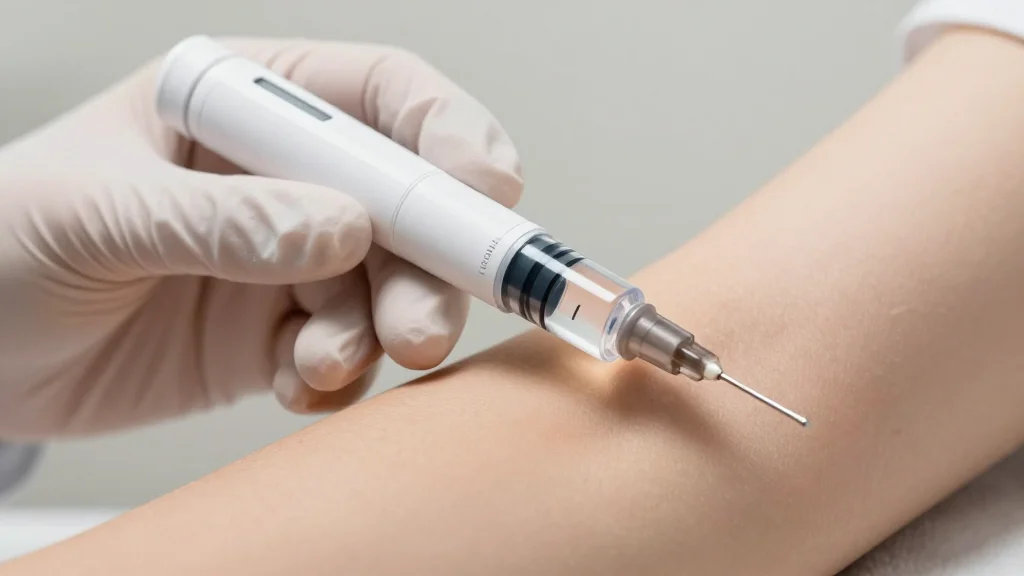
FDA Review Sought for Subcutaneous Risankizumab Induction in Crohn Disease
Why It Matters
An SC induction route could cut reliance on infusion centers, improve patient convenience, and broaden therapeutic options for biologic‑experienced Crohn patients, potentially reshaping a market of roughly one million U.S. sufferers.
Key Takeaways
- •AbbVie seeks FDA approval for SC risankizumab induction in Crohn disease.
- •AFFIRM trial enrolled 289 adults; 65% had prior biologic failure.
- •Primary endpoints: clinical remission and endoscopic response at week 12.
- •SC induction may reduce infusion center dependence, boosting patient convenience.
- •Full efficacy and safety data remain unpublished, creating regulatory uncertainty.
Pulse Analysis
Crohn's disease treatment has evolved from broad immunosuppression to targeted biologics, with IL‑23 inhibitors like risankizumab emerging as a cornerstone for patients who fail TNF blockers or integrin antagonists. Currently, risankizumab is delivered intravenously for induction before transitioning to subcutaneous maintenance, a regimen that demands infusion‑center visits and associated logistical burdens. The prospect of a fully subcutaneous induction aligns with a broader industry shift toward patient‑centric delivery models, mirroring trends seen with other biologics in dermatology and rheumatology.
The AFFIRM trial, the data engine behind AbbVie's submission, enrolled 289 adults with moderate‑to‑severe disease, including a high proportion of biologic‑experienced individuals. By randomizing patients 2:1 to SC risankizumab versus placebo, the study aimed to demonstrate both clinical remission (CDAI < 150) and endoscopic response at week 12—key markers that regulators and clinicians use to gauge disease control. If the unpublished efficacy signals hold, an SC induction could dramatically simplify the treatment pathway, eliminating the need for IV infusions and potentially improving adherence, especially in rural or underserved settings where infusion centers are scarce.
Regulatory approval, however, hinges on the FDA's assessment of the top‑line results and any safety nuances introduced by the subcutaneous route. Payers will scrutinize cost‑effectiveness, particularly if SC induction commands a premium over the existing IV regimen. For gastroenterologists, the decision will balance convenience against proven efficacy, especially in patients with prior biologic failures. Should the FDA endorse the application, AbbVie could capture a larger share of the $5‑billion U.S. Crohn's therapeutic market, while patients gain a more flexible, potentially less disruptive option for disease management.
FDA Review Sought for Subcutaneous Risankizumab Induction in Crohn Disease
Comments
Want to join the conversation?
Loading comments...