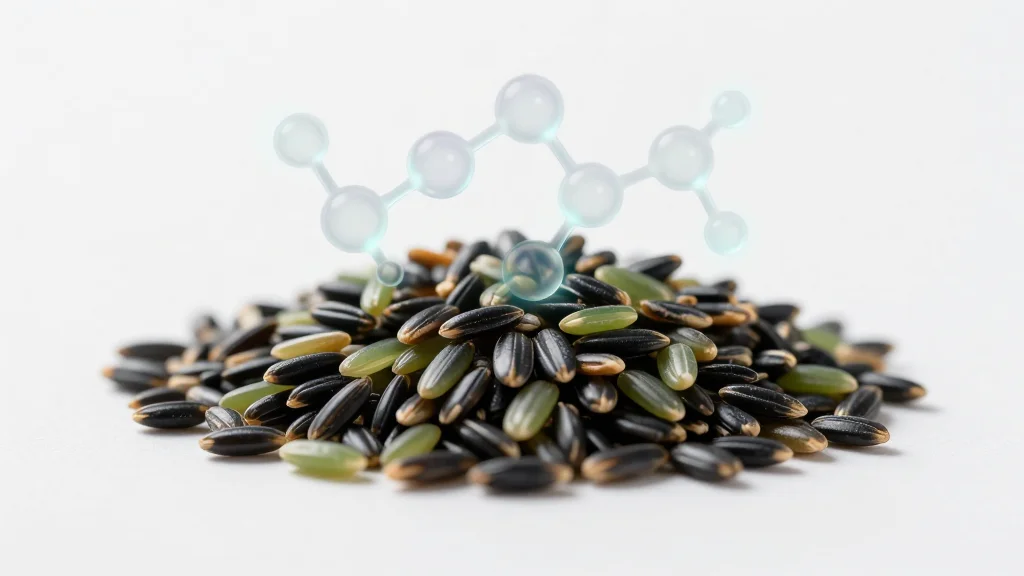
Hokkaido University Finds Anti‑Inflammatory Compounds in Black and Green Japanese Rice

Why It Matters
The discovery of FAHMFAs and LNAPEs in black and green japonica rice bridges crop genetics and human health, offering a natural source of anti‑inflammatory agents that could reduce reliance on pharmaceutical interventions for chronic diseases. By providing a scientifically validated functional ingredient within a widely consumed staple, the research could accelerate the integration of nutraceuticals into everyday diets, supporting public‑health goals around inflammation‑related conditions such as cardiovascular disease and type‑2 diabetes. From an industry perspective, the ability to breed rice varieties with enhanced bioactive lipid profiles creates a new competitive frontier. Companies that secure intellectual property around these traits or develop extraction technologies may capture premium pricing, while agricultural regions that adopt the cultivars could see higher export value. The study also exemplifies how high‑resolution metabolomics can unlock hidden value in traditional crops, prompting further investment in similar research across grains, legumes, and fruits.
Key Takeaways
- •56 japonica rice varieties analyzed, including brown, red, green, and black
- •196 distinct fat molecules identified across five lipid classes
- •First detection of FAHMFAs in rice, alongside LNAPEs linked to anti‑inflammation
- •In‑vitro tests showed reduced cytokine production in macrophages exposed to extracts
- •Potential to create functional‑food products and nutraceuticals by 2027
Pulse Analysis
The Hokkaido University study arrives at a pivotal moment when consumers are increasingly seeking foods that do more than satiate hunger. Historically, functional‑food claims have been dominated by fortified cereals, probiotic yogurts, and exotic superfoods like acai or quinoa. Rice, by contrast, has been viewed as a neutral carrier, its health profile defined largely by glycemic index. By uncovering naturally occurring anti‑inflammatory lipids, the research repositions rice as an active health agent, which could shift market dynamics.
From a competitive standpoint, the discovery gives Japanese breeders a strategic edge. Existing premium rice brands—such as Koshihikari and Akitakomachi—already command price premiums based on taste and texture. Adding a validated health benefit could justify even higher margins and open export channels to health‑focused markets in North America and Europe. However, scaling these traits will require careful agronomic validation; if yield penalties emerge, growers may be reluctant to adopt the new cultivars.
Looking ahead, the next critical step is translating the laboratory findings into consumer‑ready products. Extraction of FAHMFAs for supplement use could face regulatory scrutiny, as the compounds are novel in the food supply. Conversely, whole‑grain products that retain the lipid matrix may navigate a smoother path, leveraging existing food‑safety approvals. Partnerships between academic labs, seed companies, and food manufacturers will likely dictate the speed of commercialization. If successful, black and green japonica rice could become a cornerstone of the functional‑food landscape, illustrating how precision agriculture can generate tangible health benefits without altering dietary habits.
Hokkaido University Finds Anti‑Inflammatory Compounds in Black and Green Japanese Rice
Comments
Want to join the conversation?
Loading comments...