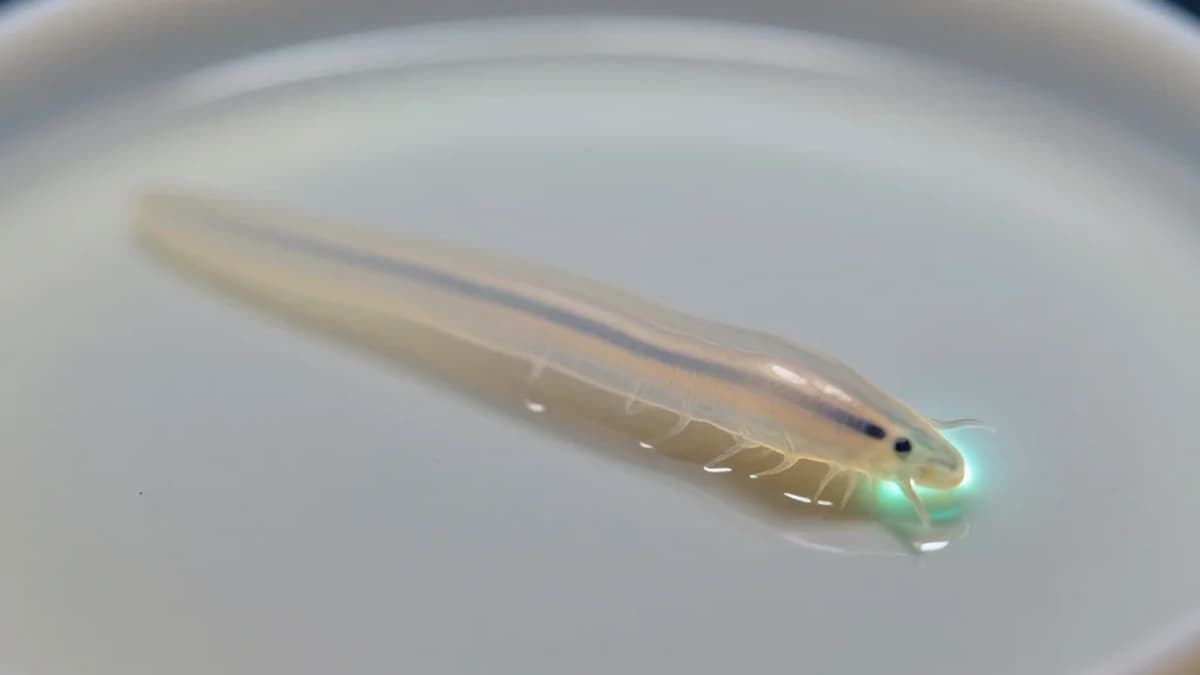
How Flatworms Keep Their Regeneration Powers on Track
•March 2, 2026
0
Why It Matters
Understanding how RoboA and Anosmin enforce precise stem‑cell decisions could improve the safety and efficacy of regenerative therapies. The mechanism links extracellular cues to intracellular fate control, a principle applicable beyond flatworms.
Key Takeaways
- •RoboA suppresses brain stem cells from wrong fate
- •FoxA drives pharynx-specific differentiation
- •Anosmin partners with RoboA to guide cell identity
- •Stem cells retain hidden flexibility when signals fail
- •Findings may inform human stem‑cell control strategies
Pulse Analysis
Planarians have long served as a premier model for studying whole‑body regeneration because a single adult stem cell population, the neoblasts, can replace any missing tissue. Their remarkable ability to rebuild organs such as the brain, pharynx, and even the entire body within days makes them an attractive system for uncovering the rules that govern stem‑cell fate decisions. Yet, while the sheer number of neoblasts explains the speed of regeneration, the molecular safeguards that prevent these cells from differentiating incorrectly have remained elusive—until now.
The new Nature Communications paper identifies the roundabout A receptor (RoboA) as a critical checkpoint in the planarian brain. By repressing the activity of the transcription factor FoxA, RoboA blocks neoblasts from adopting a pharyngeal program in the wrong location. The researchers also discovered that the extracellular protein Anosmin1a works alongside RoboA, providing a localized cue that fine‑tunes stem‑cell identity. Loss‑of‑function experiments showed that disrupting either RoboA or Anosmin leads to ectopic pharynx formation and even neuronal conversion, highlighting a delicate balance of signals.
These findings have broader relevance for regenerative medicine. The conserved nature of Robo‑type receptors and Anosmin proteins in vertebrates suggests that similar checkpoint mechanisms could be harnessed to improve the precision of human stem‑cell therapies. By linking extracellular cues to intracellular fate regulators, the study offers a template for engineering stem cells that retain plasticity without risking mis‑differentiation. Future work will likely explore whether modulating RoboA‑Anosmin pathways can enhance tissue repair in mammals, potentially bridging the gap between planarian magic and clinical application.
How flatworms keep their regeneration powers on track
0
Comments
Want to join the conversation?
Loading comments...