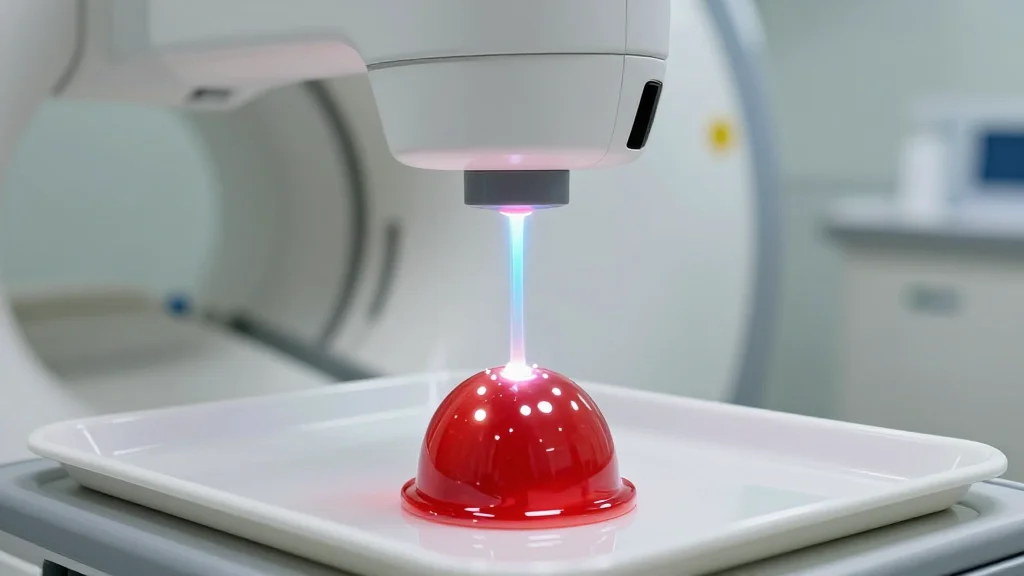
Irradiation May Help CAR-T Cell Therapy Work Better Against Solid Tumors
Why It Matters
By turning irradiation into an immune‑modulating tool, the method could overcome persistence and safety barriers that have limited CAR‑T success in solid cancers, potentially expanding a multi‑billion‑dollar market.
Key Takeaways
- •Focused irradiation converts dendritic cells into antigen‑dressing factories
- •Antigen‑dressed dendritic cells sustain CAR‑T expansion within solid tumors
- •CAR‑T activity remains localized, reducing off‑target toxicity
- •Approach uses existing radiotherapy equipment, easing clinical translation
- •Pre‑clinical results show durable control of lung and melanoma tumors
Pulse Analysis
Chimeric antigen receptor T‑cell (CAR‑T) therapy has reshaped treatment for hematologic malignancies, yet its efficacy in solid tumors remains limited. The hostile tumor microenvironment, poor T‑cell persistence, and off‑target toxicity have stalled progress for indications such as lung cancer and melanoma. Researchers at Icahn School of Medicine at Mount Sinai propose a pragmatic solution: using focused irradiation to remodel the tumor niche, thereby creating a supportive landscape for engineered T cells without the need for new drugs or devices.
In mouse models of advanced lung cancer and melanoma, a single 8 Gy focal dose triggered dendritic cells to capture intact tumor proteins and display them on their surface—a process the authors term “antigen dressing.” These dressed dendritic cells engaged the CAR‑T receptor, prolonging T‑cell survival and driving local expansion for weeks. Importantly, the amplified response stayed confined to the irradiated lesion, sparing adjacent healthy tissue even when it expressed the same target antigen. This spatial restriction addresses the most common safety hurdle that has forced termination of several solid‑tumor CAR‑T trials.
The strategy leverages equipment already present in oncology centers, suggesting a rapid path to early‑phase clinical trials. If human studies confirm the pre‑clinical findings, manufacturers could combine existing radiotherapy protocols with lower CAR‑T cell doses, reducing manufacturing costs and expanding the addressable patient pool. Moreover, the antigen‑dressing concept may be applicable to other cell‑based immunotherapies, opening new avenues for combination regimens. Investors and biotech firms should monitor this development closely, as it could revive the solid‑tumor CAR‑T market and reshape future combination‑therapy pipelines.
Irradiation may help CAR-T cell therapy work better against solid tumors
Comments
Want to join the conversation?
Loading comments...