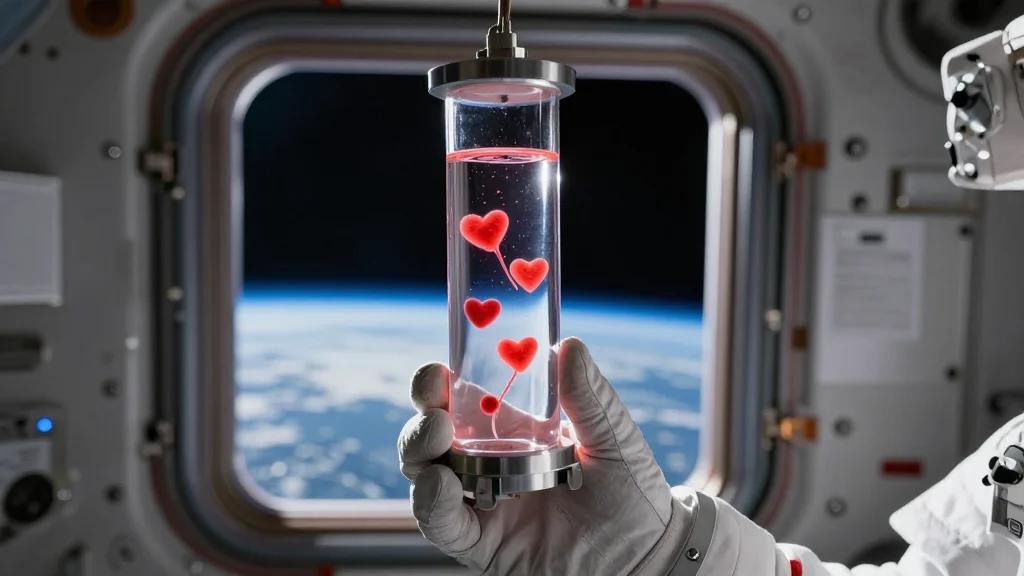
ISS Crew Advances Cancer and Heart Therapies with Microgravity Experiments

Why It Matters
The experiments underscore the growing convergence of space exploration and biomedical innovation. By dissecting how heart tissue and cancer cells react to microgravity, scientists can uncover pathways that are otherwise hidden, potentially leading to drugs that work more efficiently or with fewer side effects. Moreover, the research addresses a practical need: safeguarding astronaut health on future lunar or Martian missions where exposure to infectious agents and radiation could exacerbate cardiovascular and oncologic risks. Beyond astronaut safety, the findings could reshape drug‑development pipelines on Earth. Microgravity‑induced changes in cell behavior provide a novel screening platform that may reduce the time and cost of pre‑clinical testing. If successful, the approach could become a standard adjunct to terrestrial laboratories, accelerating the delivery of life‑saving therapies to patients worldwide.
Key Takeaways
- •ISS crew processed heart stem cells and pneumonia‑causing bacteria in a portable glovebag on the Harmony module.
- •Microgravity observations aim to clarify how infectious diseases damage heart tissue, informing new cardiac treatments.
- •Parallel cancer‑therapy experiments examined tumor‑cell responses to drugs in weightless conditions.
- •Data will be returned to Earth for analysis by university and industry partners, with results slated for upcoming scientific conferences.
- •Research supports both astronaut health on deep‑space missions and the development of novel therapeutics for Earth patients.
Pulse Analysis
NASA’s microgravity research program has evolved from a curiosity-driven endeavor into a strategic pillar of its biomedical agenda. The latest ISS experiments illustrate a deliberate shift toward high‑impact, disease‑focused studies that promise tangible health benefits. Historically, space‑based biology yielded insights into bone density loss and muscle atrophy, but the current emphasis on heart and cancer biology reflects a maturation of capabilities—portable glovebags, automated culture systems, and real‑time data transmission now enable complex, clinically relevant assays.
From an industry perspective, the ability to test drug candidates in space could become a differentiator for biotech firms seeking faster pathways to market. Companies that partner with NASA or secure access to the ISS may gain early data that de‑risk later-stage trials, potentially attracting venture capital and accelerating IPO timelines. The recent Redwire transaction, while not directly tied to the ISS experiments, signals investor appetite for space‑infrastructure firms that support such research, suggesting a broader ecosystem ready to commercialize microgravity findings.
Looking forward, the integration of ISS research with terrestrial drug pipelines could reshape regulatory expectations. If microgravity data consistently predict human outcomes, agencies like the FDA may consider incorporating space‑derived evidence into their approval frameworks. For now, the scientific community watches closely as the ISS continues to serve as a unique laboratory where the boundaries between space exploration and human health converge, promising breakthroughs that could benefit both astronauts and patients on Earth.
ISS Crew Advances Cancer and Heart Therapies with Microgravity Experiments
Comments
Want to join the conversation?
Loading comments...