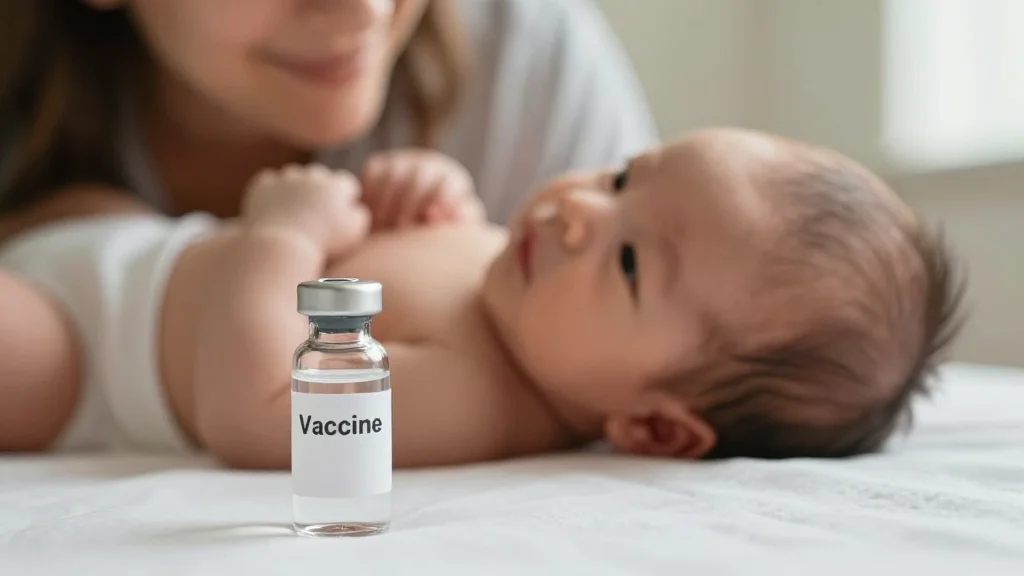
Major UKHSA Study Finds Maternal RSV Vaccination Reduces Infant Hospitalization Risk by More Than 80%
Why It Matters
The findings validate maternal RSV vaccination as a high‑impact, scalable strategy to curb severe infant disease, reshaping neonatal public‑health policy in the UK and informing global rollout plans.
Key Takeaways
- •Maternal RSV vaccine cut infant hospitalizations by 81.3% in England.
- •Effectiveness rises to 85% when given ≥4 weeks before birth.
- •Even 10‑13 days before delivery yields ~50% risk reduction.
- •Preterm infants see ~70% protection with ≥14‑day interval.
- •Study covers 289,399 births, representing 90% of English deliveries.
Pulse Analysis
Respiratory syncytial virus remains a leading cause of infant morbidity worldwide, accounting for thousands of hospital admissions and a substantial share of early‑life respiratory sequelae. While monoclonal antibodies have offered targeted protection for the most vulnerable newborns, they are costly and logistically complex. Maternal immunisation leverages the placenta’s natural antibody transfer, delivering broad, passive immunity without exposing the infant to a vaccine while their immune system matures. The UK’s national programme, launched in September 2024, provides a timely case study of how large‑scale, data‑driven public‑health interventions can shift disease dynamics at the population level.
The UKHSA analysis stands out for its methodological rigor, integrating NHS maternity records, immunisation registries, and hospital admission data to track outcomes across nearly 300,000 births. By stratifying results by the interval between vaccination and delivery, the study clarifies a dose‑timing relationship that had been largely theoretical. The incremental benefit—50% risk reduction even when vaccination occurs just ten days before birth—offers clinicians flexibility in real‑world settings where exact gestational timing can be unpredictable. Moreover, the near‑70% effectiveness observed in preterm infants underscores the vaccine’s potential to address the subgroup that traditionally bears the highest RSV burden.
Policy makers can now cite robust, real‑world evidence when expanding maternal RSV programmes beyond the UK. The data support earlier third‑trimester administration to maximise antibody transfer, while also justifying vaccination up to the point of labour when earlier dosing is not feasible. In low‑ and middle‑income countries, where intensive paediatric care is scarce, scaling maternal RSV vaccination could dramatically reduce hospital strain and infant mortality. Future research will likely explore synergistic strategies—combining maternal immunisation with long‑acting monoclonal antibodies for ultra‑high‑risk neonates—to achieve near‑complete protection throughout the first six months of life.
Major UKHSA Study Finds Maternal RSV Vaccination Reduces Infant Hospitalization Risk by More Than 80%
Comments
Want to join the conversation?
Loading comments...