New Bioengineered Patch Makes Its Own Oxygen to Heal Wounds and Grow Tissue
Why It Matters
By delivering oxygen directly within a scaffold, the SSOT patch overcomes a long‑standing barrier to creating viable, thick tissue constructs, opening pathways for advanced wound care and organ‑replacement therapies. Its low‑voltage, printable design could accelerate clinical translation and personalize implant geometry.
Key Takeaways
- •SSOT patch generates oxygen via electrolysis within a conductive hydrogel.
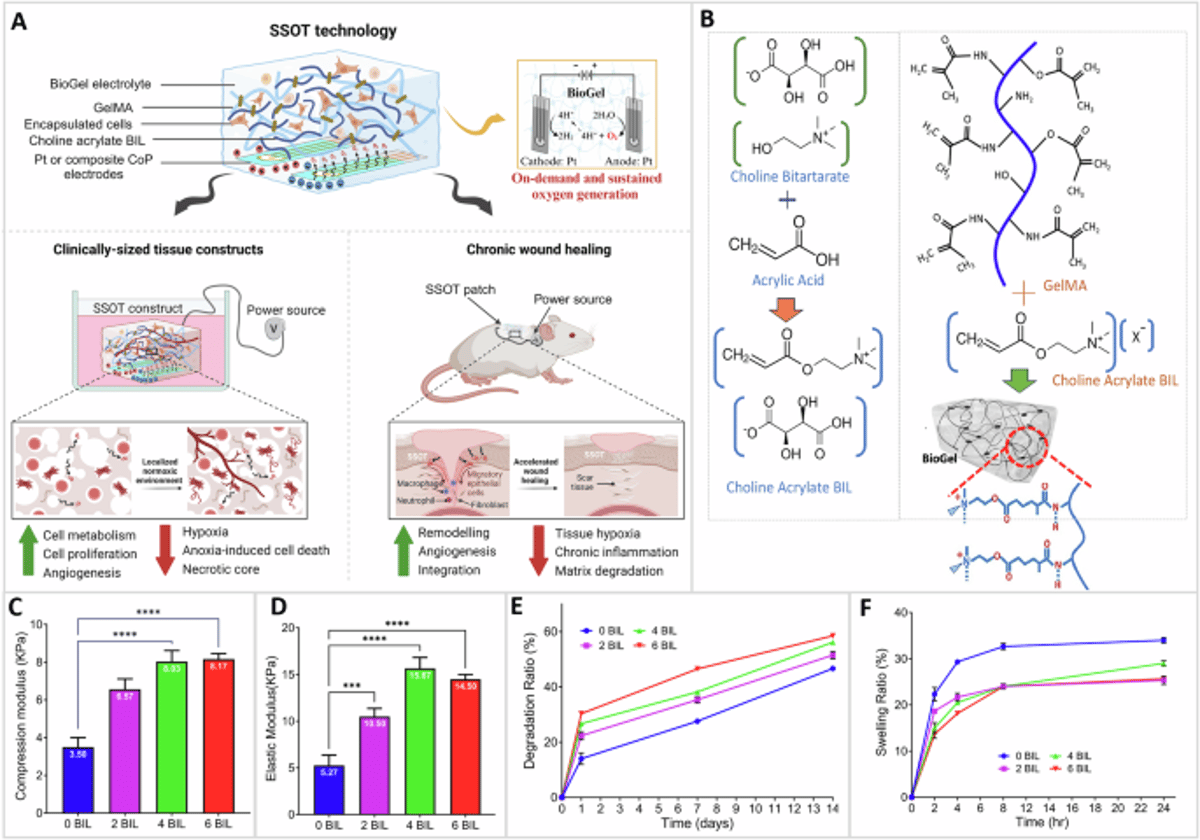
- •BioGel’s choline ionic liquid doubles gel stiffness and slows degradation.
- •Cell survival in oxygen‑deprived conditions rose to ~75% with SSOT.
- •Diabetic mouse wounds closed in 33 days using battery‑powered patches.
- •Minimal immune response observed after 28 days of subcutaneous implantation.
Pulse Analysis
Oxygen diffusion limits have hampered tissue engineering for decades, forcing researchers to rely on rapid vascular ingrowth or external oxygen carriers. The newly reported Smart Self‑Oxygenating Tissue (SSOT) system sidesteps this bottleneck by embedding a miniature electrochemical cell within a GelMA‑based hydrogel. When a modest 1 V current passes through the BioGel, water splits into oxygen and hydrogen, delivering a steady, localized oxygen flux directly to embedded cells without needing blood vessels. The inclusion of a choline‑derived ionic liquid not only conducts electricity but also reinforces the gel, making it twice as stiff and far more resistant to enzymatic breakdown.
Pre‑clinical testing underscores the platform’s promise. Human cell cultures exposed to severe hypoxia maintained 74‑79% viability with SSOT, compared to under 46% without it, and secreted higher levels of VEGF, a key angiogenic factor. In vivo, rat implants showed negligible macrophage infiltration after a month, indicating good biocompatibility. Most strikingly, diabetic mice with chronic, non‑healing wounds achieved complete closure in just over a month when treated with battery‑powered SSOT patches, forming organized collagen and authentic skin layers rather than scar tissue.
If the technology scales, it could reshape regenerative medicine and chronic wound management. The printable electrode design allows clinicians to tailor patch geometry to patient‑specific defects, while the low‑voltage operation simplifies power requirements for bedside or wearable devices. Challenges remain, including long‑term durability in larger animals and regulatory pathways for implantable electrochemical devices. Nonetheless, the SSOT platform offers a concrete solution to the oxygen‑delivery dilemma, positioning it as a potential cornerstone for next‑generation biofabrication and personalized tissue therapies.
New Bioengineered Patch Makes Its Own Oxygen to Heal Wounds and Grow Tissue
Comments
Want to join the conversation?
Loading comments...