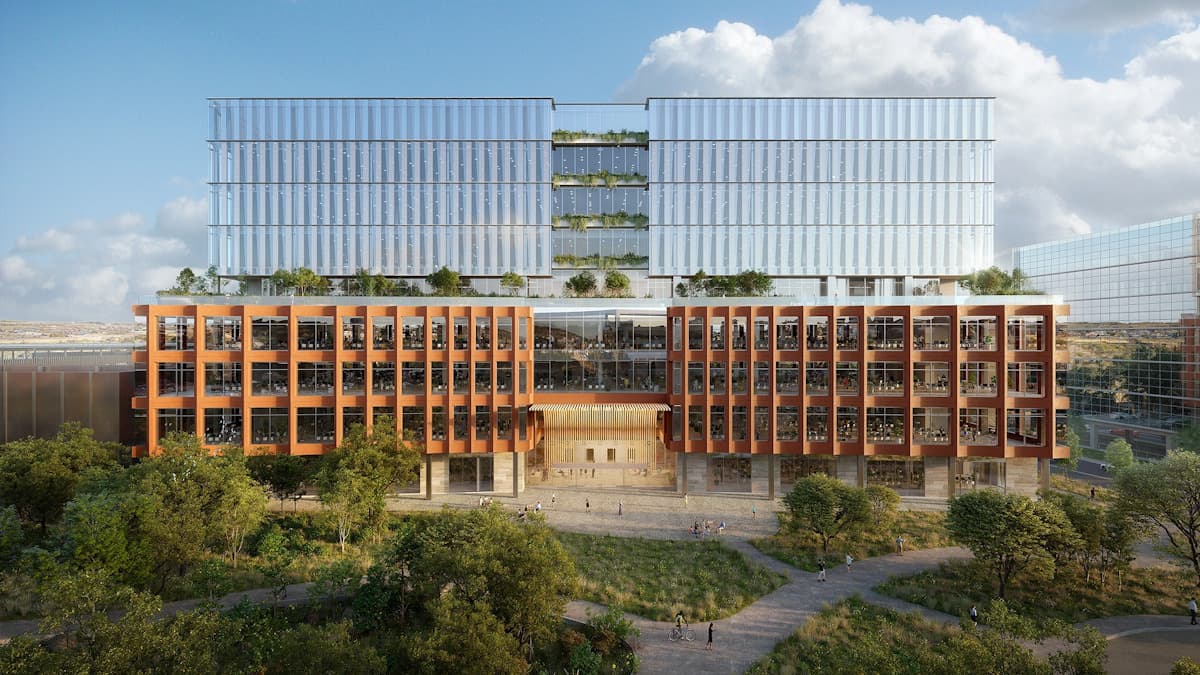
Novartis Breaks Ground on San Diego Biomedical R&D Site
•February 9, 2026
0
Companies Mentioned


Why It Matters
The new centre deepens Novartis’ U.S. R&D footprint, accelerating drug discovery and reinforcing its competitive edge in a rapidly expanding biotech ecosystem.
Key Takeaways
- •$1.1 billion, 466k‑sq‑ft San Diego R&D hub.
- •Part of $23 billion US capital program.
- •Will employ ~1,000 scientists by 2029.
- •Modular labs enable AI, automation, cross‑team adjacency.
- •Targets neuroscience, oncology, global health, regenerative medicine.
Pulse Analysis
The San Diego campus marks a strategic shift for global pharma, as companies pour billions into U.S. research to hedge against geopolitical risk and tap the country’s talent pool. Novartis’ $23 billion investment mirrors moves by rivals such as Eli Lilly, reflecting a broader trend of reshoring R&D and manufacturing. By concentrating capital in high‑growth regions, firms aim to shorten development cycles and secure supply chain resilience, while positioning themselves near leading academic institutions and biotech startups.
Beyond sheer scale, the facility’s modular architecture signals a new operational philosophy. Flexible lab spaces allow rapid reconfiguration as scientific priorities evolve, fostering collaboration between chemists, biologists and data scientists. Integrated AI and automation platforms promise to accelerate hypothesis testing, reduce experimental redundancy, and enhance reproducibility. This design aligns with Novartis’ ambition to streamline end‑to‑end discovery across modalities such as gene therapy, RNA medicines and targeted protein degraders, delivering a more agile pipeline.
Industry observers see the San Diego hub as a catalyst for regional innovation. Its proximity to a dense life‑science ecosystem will likely deepen partnerships with biotech firms, universities and technology providers, creating a feedback loop that fuels both basic research and commercial translation. As competitors race to expand their U.S. footprints, Novartis’ investment could set a benchmark for how modular, AI‑enabled facilities reshape drug discovery, potentially shortening time‑to‑market for breakthrough therapies. The move underscores the growing importance of integrated, technology‑forward R&D centers in the next wave of pharmaceutical growth.
Novartis breaks ground on San Diego biomedical R&D site
0
Comments
Want to join the conversation?
Loading comments...