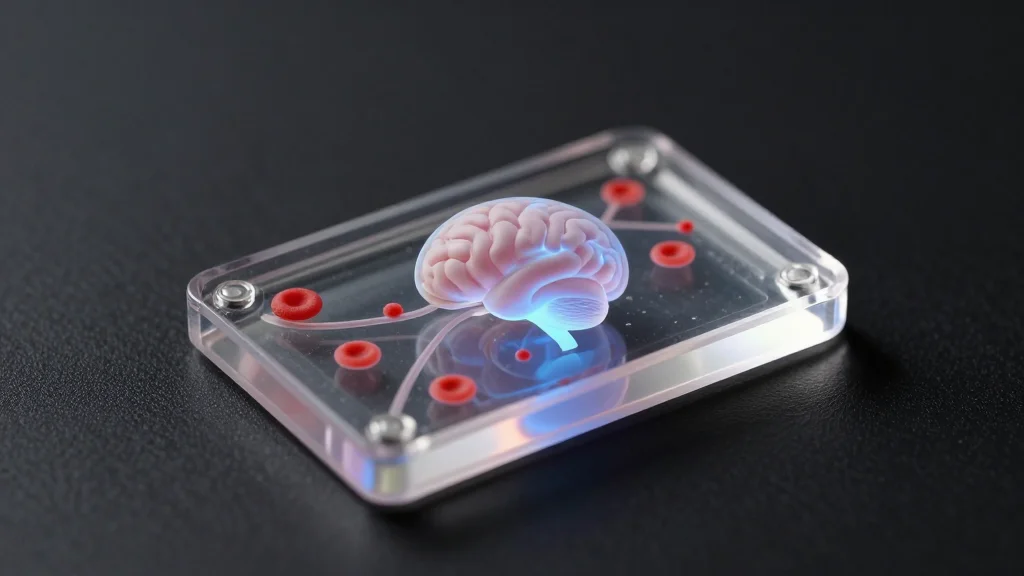
Organ-on-Chip Integrated Into Preclinical Glioblastoma Research
Why It Matters
The partnership promises more human‑relevant data early in development, potentially cutting costly late‑stage failures for brain‑cancer therapeutics. It also advances the industry shift toward 3R‑aligned, in‑vitro models.
Key Takeaways
- •Dynamic42 and EPO launch organ-on-chip partnership for glioblastoma
- •Human BBB-on-chip model to assess drug response differences
- •Collaboration aims to reduce late-stage failures in brain cancer trials
- •Joint work will be presented at AACR 2026 meeting
Pulse Analysis
The search for more predictive preclinical models has become a critical bottleneck in neuro‑oncology, where glioblastoma remains one of the deadliest brain tumors. Traditional animal studies often fail to capture the unique physiology of the human blood‑brain barrier (BBB), leading to high attrition rates when promising compounds advance to clinical trials. Organ‑on‑chip platforms, which micro‑engineer human tissue architecture on a silicon substrate, offer a promising bridge between in‑vitro simplicity and in‑vivo complexity. By recreating the cellular, mechanical, and biochemical cues of the human BBB, these chips can reveal drug permeability and toxicity patterns that animal models miss.
Dynamic42, a German specialist in microfluidic organ‑on‑chip systems, joined forces with Experimental Pharmacology and Oncology (EPO) to translate this technology into glioblastoma drug discovery. The joint effort pairs Dynamic42’s proprietary BBB‑on‑chip device with EPO’s library of patient‑derived tumor spheroids and extensive translational oncology know‑how. Early experiments will directly compare drug responses across the human chip and conventional rodent models, quantifying how species‑specific barrier properties influence efficacy. This data‑driven approach is designed to sharpen go/no‑go decisions, reduce reliance on animal testing, and align with the 3Rs principle of Replace, Reduce, Refine.
Beyond the immediate glioblastoma focus, the collaboration signals a broader industry shift toward human‑relevant in‑vitro platforms for drug development. Successful validation at the upcoming American Association for Cancer Research (AACR) 2026 meeting could accelerate adoption of organ‑on‑chip assays across oncology, neurology, and beyond, potentially reshaping regulatory expectations for preclinical evidence. Both firms also plan to explore commercialization pathways, offering the integrated platform to pharmaceutical partners seeking to de‑risk their pipelines. As more companies embrace these technologies, the cumulative effect may be faster, cheaper, and safer delivery of novel therapies to patients.
Organ-on-Chip Integrated Into Preclinical Glioblastoma Research
Comments
Want to join the conversation?
Loading comments...