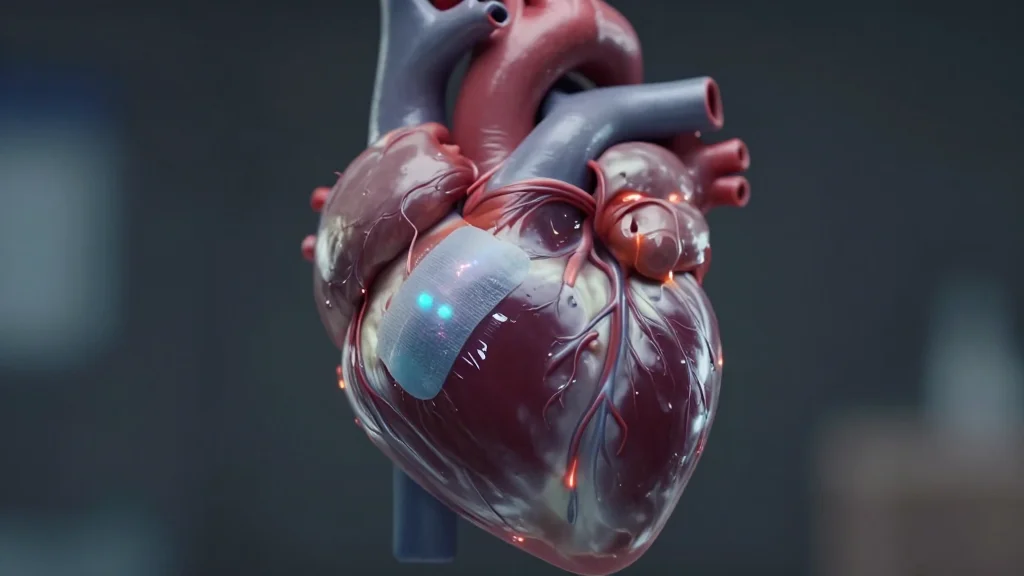
Precise Spatiotemporal Cardiac Repair and Regeneration
Why It Matters
By aligning drug release with the heart’s repair timeline, these DDS promise higher efficacy, fewer side effects, and faster recovery for millions suffering heart attacks, reshaping cardiovascular care and market dynamics.
Key Takeaways
- •Hierarchical drug release aligns with inflammation, proliferation, remodeling phases
- •Electroconductive scaffolds restore electrical continuity and reduce arrhythmia risk
- •Cell‑free vesicles deliver microRNA and proteins without stem‑cell drawbacks
- •Minimally invasive hydrogels enable catheter‑based, targeted myocardial delivery
- •AI models optimize material selection and release kinetics for personalized therapy
Pulse Analysis
Heart disease remains the leading cause of death in the United States, with over a million myocardial infarctions each year. Traditional therapies—systemic drugs, stents, or stem‑cell injections—often miss the narrow therapeutic windows of the heart’s three‑phase healing process, leading to suboptimal outcomes and adverse effects. The emergence of spatiotemporal drug delivery systems addresses this gap by embedding timing mechanisms directly into biomaterials, allowing clinicians to modulate inflammation, promote new blood vessel growth, and curb scar formation in lockstep with the myocardium’s own repair schedule.
At the core of these innovations are multifunctional scaffolds that combine conductive polymers, degradable matrices, and engineered extracellular vesicles. Conductive hydrogels and electroactive patches not only serve as drug reservoirs but also re‑establish electrical pathways, mitigating arrhythmias and supporting synchronized contraction. Meanwhile, cell‑free vesicle platforms carry micro‑RNAs, proteins, and lipids that mimic stem‑cell paracrine signals without the logistical and safety challenges of live cell therapies. Delivered via catheter‑compatible injectables, paint‑on gels, or microneedle arrays, these solutions achieve high spatial precision while preserving the minimally invasive nature of modern interventional cardiology.
The commercial trajectory of these technologies is being accelerated by AI‑driven design pipelines. Machine‑learning models ingest multi‑omics data, imaging biomarkers, and patient‑specific healing profiles to predict optimal polymer chemistries and release kinetics, dramatically shortening development cycles. Coupled with emerging regulatory frameworks that favor standardized, scalable manufacturing, investors are eyeing a multi‑billion‑dollar market for next‑generation cardiac regenerative products. As personalized, AI‑optimized DDS move from bench to bedside, they promise to transform post‑infarction care, improve survival rates, and reduce long‑term healthcare costs.
Precise Spatiotemporal Cardiac Repair and Regeneration
Comments
Want to join the conversation?
Loading comments...