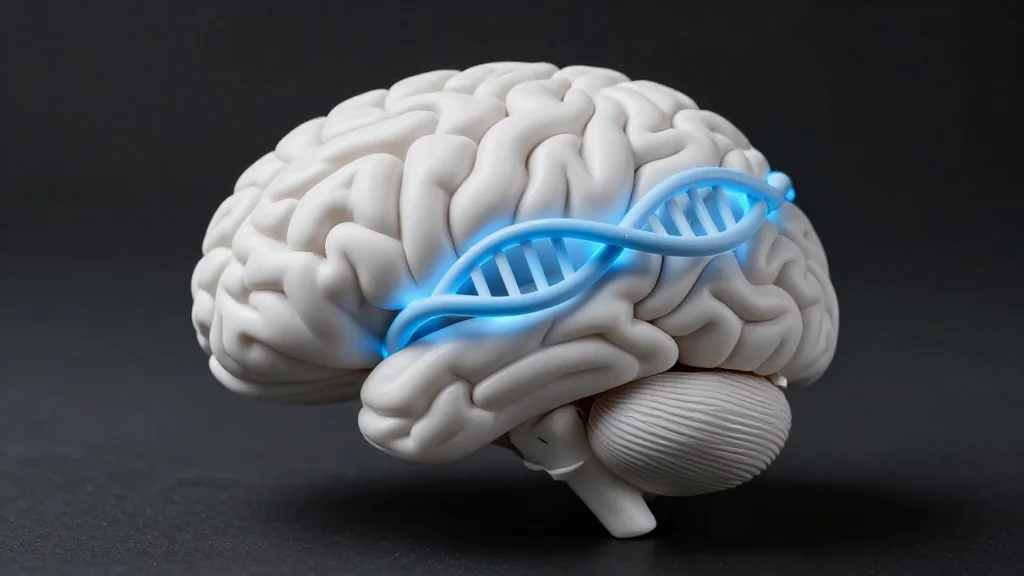
Science Spotlight: Silencing Seizures by Fixing Gene Mutations
Why It Matters
Correcting SCN1A mutations in vivo offers a potential disease‑modifying treatment for refractory epilepsies, a market with few effective options and high unmet clinical need.
Key Takeaways
- •Prime editing corrected SCN1A K1270T mutation in neonatal mice
- •AAV vectors delivered split editor under neuron‑specific promoter
- •Seizure frequency dropped >80% after gene correction
- •Survival rates doubled in treated mouse cohorts
- •Proof‑of‑concept opens path to human SCN1A gene therapy
Pulse Analysis
Epilepsy affects roughly 50 million people worldwide, and mutations in the SCN1A gene—responsible for the Nav1.1 sodium channel—underlie some of the most severe forms, including Dravet syndrome and generalized epilepsy with febrile seizures plus (GEFS+). Current pharmacologic options often fail to control seizures and can cause adverse effects, leaving a substantial therapeutic gap. Gene‑editing technologies have emerged as a promising avenue, yet translating these tools from cell culture to living organisms has remained a critical hurdle.
In a landmark study, researchers at the University of Zurich employed prime editing, a versatile CRISPR‑derived technique, to precisely rewrite the K1270T point mutation in SCN1A. By packaging an intein‑split prime editor into adeno‑associated virus (AAV) vectors and injecting them into the cerebral ventricles of newborn mice, they achieved neuron‑specific expression and efficient correction of the target allele. Treated mice exhibited an over 80% reduction in seizure episodes and a two‑fold increase in survival compared with untreated controls. A concurrent study used a base‑editing strategy to achieve similar outcomes, underscoring the robustness of in‑vivo editing across platforms.
These findings signal a turning point for genetic therapies targeting ion‑channel disorders. Demonstrating safe, durable correction in a mammalian brain paves the way for pre‑clinical safety studies and eventual human trials. Commercially, a successful SCN1A gene‑editing therapy could capture a multi‑billion‑dollar market, given the prevalence of refractory epilepsies and the high cost of current care. Challenges remain, including scaling AAV production, ensuring long‑term off‑target safety, and navigating regulatory pathways, but the proof‑of‑concept establishes a credible roadmap toward disease‑modifying treatments for patients who currently have limited options.
Science Spotlight: Silencing seizures by fixing gene mutations
Comments
Want to join the conversation?
Loading comments...