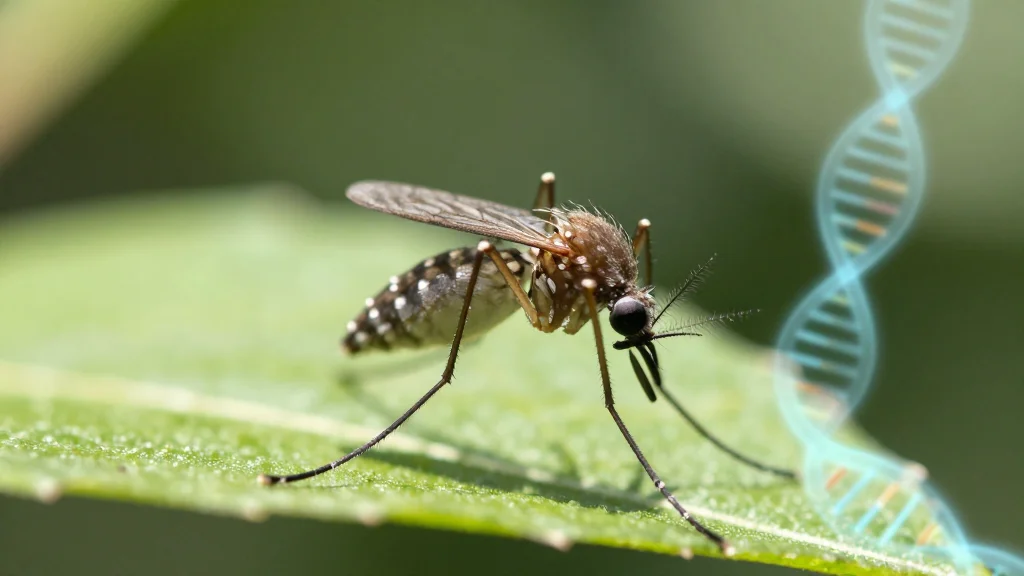
Scientists Map Genetic Switches on Mosquito Reproductive Genes, Advancing Tools to Fight Disease
Why It Matters
A precise CRE atlas removes a key technical barrier, enabling gene‑drive strategies that can suppress malaria‑carrying mosquitoes with reduced ecological risk. This accelerates the path to scalable, genetic solutions for a disease that claims over 400,000 lives annually.
Key Takeaways
- •First comprehensive CRE atlas for Anopheles gambiae germline
- •Hundreds of regulatory elements identified, pinpointing key nucleotides
- •Enables precise, safer gene drives targeting mosquito reproduction
- •Accelerates development of genetic tools to curb malaria and dengue
Pulse Analysis
Mosquito‑borne illnesses such as malaria and dengue continue to exact a heavy toll, especially in low‑income regions where traditional control methods face logistical and resistance challenges. Genetic technologies, particularly gene drives, promise population‑level impact, but their deployment hinges on an intimate understanding of mosquito biology. Central to this is the ability to toggle genes at the right time and place, a capability that depends on cis‑regulatory elements (CREs) governing germline development and sex differentiation.
The Keele University team tackled this knowledge gap by building a systematic computational pipeline that scanned the Anopheles gambiae genome for CREs linked to reproductive genes. Their effort yielded a high‑resolution atlas pinpointing specific nucleotides that dictate when and where key genes are expressed in male and female mosquitoes. By validating hundreds of these elements experimentally, the researchers delivered a definitive reference that researchers worldwide can leverage to engineer gene drives with unprecedented specificity, minimizing off‑target effects and ecological uncertainty.
For biotech firms and public‑health agencies, the CRE map translates into a faster, more reliable design cycle for genetic control products. Precise regulatory switches allow gene drives to be activated only in the mosquito germline, reducing the risk of unintended spread to non‑target species. Moreover, the atlas supports the development of self‑limiting or reversible drive systems, aligning with emerging regulatory frameworks that demand safety and transparency. As the global community seeks sustainable solutions to curb malaria’s burden, this resource positions genetic engineering as a viable, controllable tool in the fight against vector‑borne disease.
Scientists map genetic switches on mosquito reproductive genes, advancing tools to fight disease
Comments
Want to join the conversation?
Loading comments...