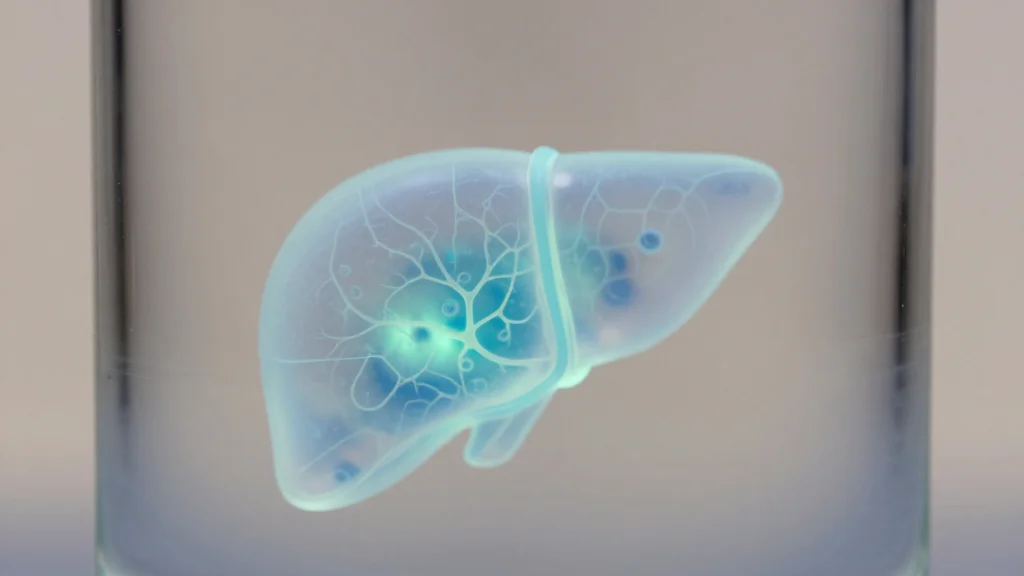
Synthetic Biology and Tissue Engineering Grow Liver Tissue In‑Body
Why It Matters
BOOST could provide an on‑demand, scalable cell‑therapy bridge for patients awaiting liver transplants, easing organ shortages. Its modular design may accelerate development of smart, implantable tissues across multiple disease areas.
Key Takeaways
- •BOOST enables implanted liver tissue to expand 5‑fold in mice
- •Genetic circuit uses doxycycline‑inducible YAP and four growth factors
- •Small constructs avoid need for large cell batches pre‑implantation
- •Expanded tissue remains functional, non‑fibrotic, and vascularized
- •Strategy may apply to engineered heart or pancreatic therapies
Pulse Analysis
End‑stage liver disease remains a leading cause of mortality, and the gap between patients and donor organs continues to widen. Traditional tissue‑engineering efforts have struggled to produce constructs large enough for therapeutic use, hampering clinical translation. By marrying synthetic biology with organ engineering, the BOOST platform redefines the scale‑up problem: instead of building a full‑size organ in the lab, researchers implant a miniature tissue patch and trigger its growth in situ. This paradigm shift could dramatically reduce manufacturing complexity and cost, while providing a timely bridge for patients on transplant waiting lists.
The BOOST system hinges on a tightly regulated genetic circuit. Primary hepatocytes and supportive fibroblasts are engineered to express a non‑degradable YAP protein and four liver‑specific growth factors—HGF, TGFa, WNT2, and RSPO3—under doxycycline control. When mice receive the engineered construct and a short course of doxycycline, the cells proliferate, expanding the tissue fivefold within a week. Crucially, the expanded graft becomes vascularized, avoids fibrosis, and shows no tumorigenic signs, demonstrating a favorable safety profile. The ability to toggle growth on and off with a simple oral pill offers clinicians precise temporal control over therapy.
Looking ahead, BOOST’s modular genetic toolkit could be adapted to other high‑need organs. A similar on‑demand expansion strategy for engineered cardiac patches or pancreatic islet clusters could address heart failure and diabetes, respectively. Commercially, the technology promises a new class of scalable, off‑the‑shelf cell therapies that reduce reliance on scarce donor organs. As regulatory pathways for gene‑controlled implants mature, BOOST may catalyze a wave of smart tissue therapeutics, reshaping the biotech landscape and delivering tangible benefits to patients with previously untreatable conditions.
Synthetic Biology and Tissue Engineering Grow Liver Tissue In‑Body
Comments
Want to join the conversation?
Loading comments...