This Artificial Retina Doesn't Just Aim to Restore Sight—It Opens a Hidden Channel of Vision
Why It Matters
By bypassing damaged photoreceptors, the retina could regain functional vision for patients with degenerative blindness and potentially extend human perception into the infrared spectrum, reshaping therapeutic and consumer markets.
Key Takeaways
- •NIR-sensitive phototransistor array converts infrared to electrical signals
- •Liquid‑metal micropillar electrodes directly stimulate retinal ganglion cells
- •Ex‑vivo and mouse studies show restored light perception without tissue damage
- •Potential to add an infrared visual channel beyond natural sight
Pulse Analysis
Retinal degenerative diseases such as retinitis pigmentosa and age‑related macular degeneration affect millions worldwide, eroding the photoreceptor layer that normally translates visible light into neural signals. Existing prosthetic approaches—epiretinal implants, sub‑retinal chips, and optogenetic therapies—have focused on replicating visible‑light detection, often with limited resolution and cumbersome external hardware. The Korean team’s breakthrough lies in leveraging near‑infrared wavelengths, which penetrate ocular tissue more deeply and are invisible to the remaining photoreceptors, thereby opening a parallel visual pathway that sidesteps the damaged cells entirely.
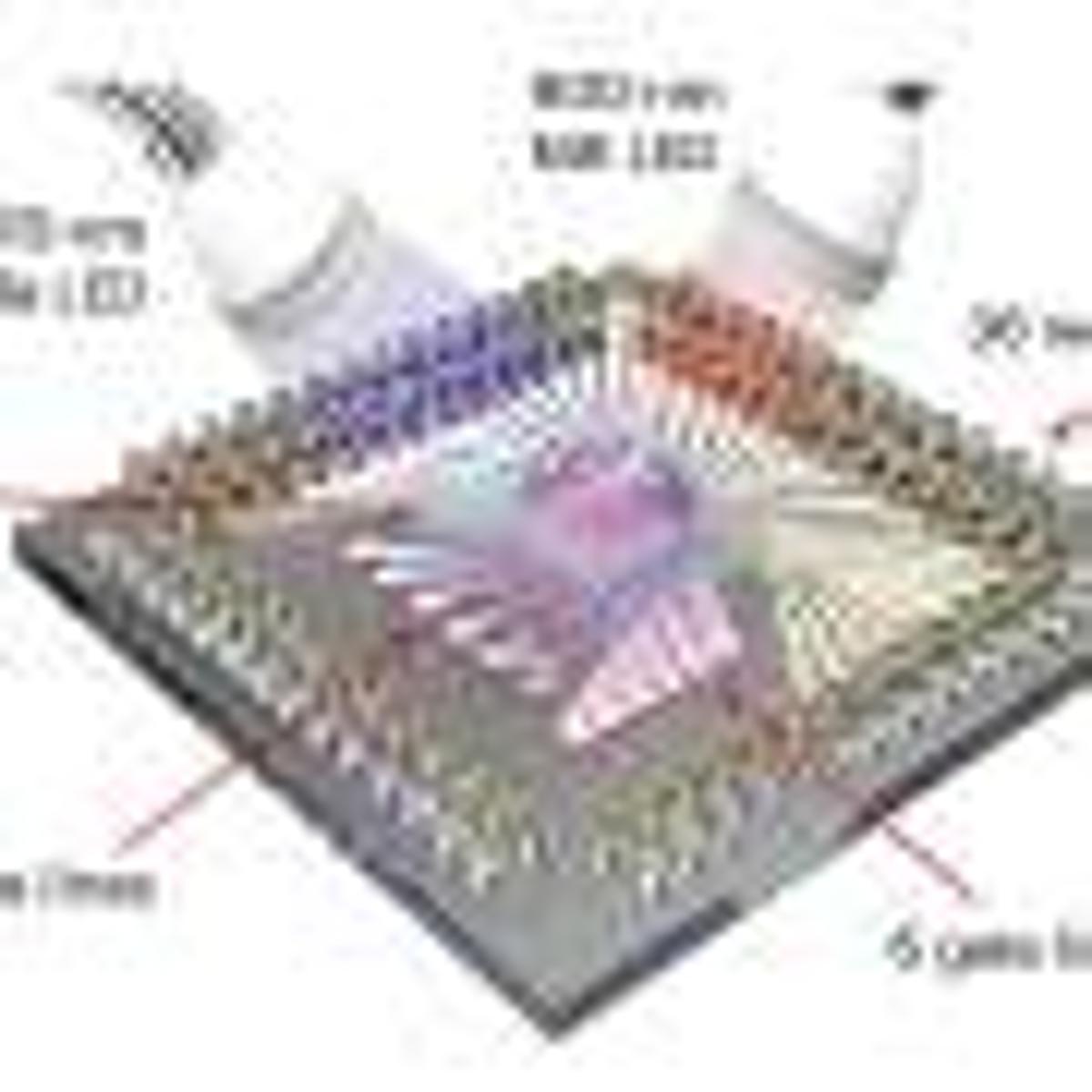
The core of the system is a densely packed phototransistor matrix tuned to NIR wavelengths, coupled with liquid‑metal micropillar electrodes that protrude toward the ganglion cell layer. Unlike rigid metallic contacts, the liquid‑metal pillars possess a low Young’s modulus, conforming to retinal curvature and reducing mechanical stress. In laboratory settings, the device adhered to the epiretinal surface, generated precise charge packets, and elicited action potentials in ganglion cells. Ex‑vivo retinal slices showed no cytotoxicity, while blind rd1 mice exhibited behavioral responses to NIR cues and corresponding cortical activation, indicating functional visual restoration without compromising residual natural vision.
Should clinical trials confirm safety and efficacy, this technology could redefine the market for visual prosthetics, attracting investment from both medical device firms and consumer electronics players interested in augmented reality interfaces. Regulatory pathways will likely mirror those of existing retinal implants, but the added capability of infrared perception may raise novel ethical and privacy considerations. Moreover, the platform could serve as a testbed for multispectral vision, enabling users to detect heat signatures or low‑light environments, thereby expanding human sensory experience beyond its biological limits.
This artificial retina doesn't just aim to restore sight—it opens a hidden channel of vision
Comments
Want to join the conversation?
Loading comments...