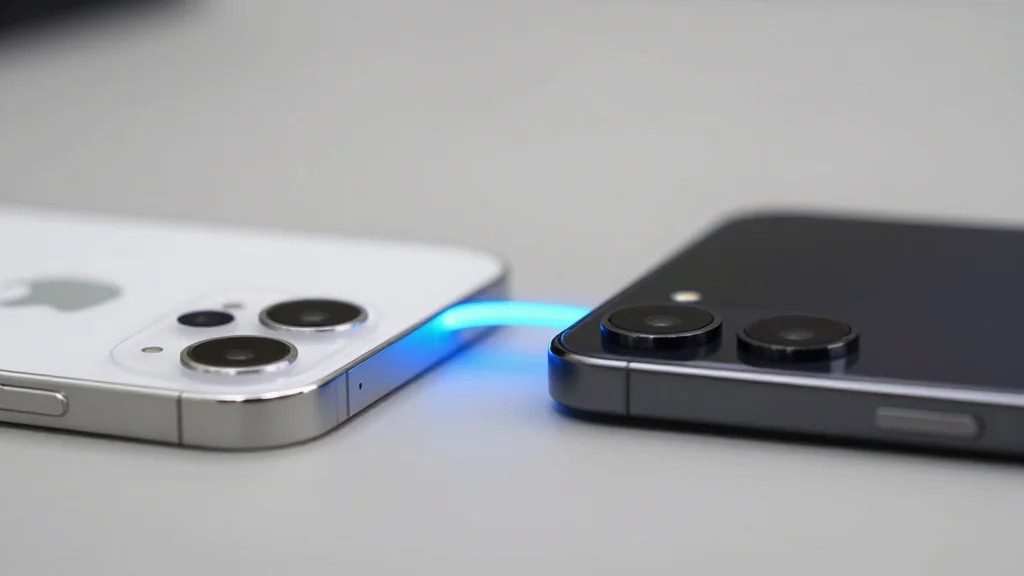
Apple Taps Google Gemini to Power New Siri at WWDC 2026, Targeting Enterprise AI Catch‑up

Companies Mentioned
Why It Matters
The Apple‑Google Gemini partnership signals a major shift in how a leading consumer tech company approaches AI for the enterprise. By adopting an external foundation model, Apple can accelerate feature development, reduce time‑to‑market, and potentially deliver a more capable, privacy‑preserving assistant that meets CIOs’ security standards. This move also intensifies competition among AI platform providers, forcing Microsoft, Google and emerging AI vendors to reassess their own enterprise strategies. For CIOs, the rollout of a Gemini‑powered Siri could mean a new option for secure, on‑device AI that integrates natively with the Apple ecosystem. If Apple can deliver on its promises, organizations may consider consolidating workflows—such as calendar management, document retrieval and cross‑app automation—under a single, privacy‑first assistant, reducing reliance on multiple third‑party tools and simplifying IT governance.
Key Takeaways
- •Apple announced a partnership with Google to use Gemini AI models for the next generation of Siri at WWDC 2026.
- •The new Siri architecture will feature query planning, knowledge retrieval and summarisation layers, with Gemini handling planning and summarisation.
- •Craig Federighi said the previous Siri experience "did not converge" in quality, prompting the external model partnership.
- •Tim Cook acknowledged progress but emphasized the need for reliability before full launch.
- •Apple aims to roll out Gemini‑powered Siri to enterprise customers by early 2027, targeting on‑device privacy and cross‑app automation.
Pulse Analysis
Apple’s decision to embed Google’s Gemini models into Siri represents a pragmatic pivot from its historically insular AI development. Historically, Apple’s AI strategy—centered on on‑device processing and incremental feature releases—has lagged behind the rapid, cloud‑first innovations of Microsoft’s Copilot+ and Google’s own Assistant. By licensing Gemini, Apple can shortcut years of model training, gaining immediate access to a state‑of‑the‑art LLM while preserving its on‑device privacy ethos through hybrid inference. This hybrid approach could become a template for other hardware‑centric firms seeking to balance privacy with performance.
The partnership also reshapes the competitive landscape for enterprise digital assistants. CIOs have been wary of adopting Siri for mission‑critical tasks due to perceived gaps in contextual understanding and integration depth. A Gemini‑enhanced Siri that can reliably interpret complex queries, orchestrate cross‑application workflows, and do so without transmitting raw data to the cloud could tip the scales in favor of Apple’s ecosystem, especially in organizations already standardized on iOS and macOS devices. However, success hinges on execution—Apple must deliver a seamless developer experience, robust enterprise APIs, and clear licensing terms.
Finally, the move underscores a broader industry trend: the commoditization of foundation models. As AI becomes a utility, vendors like Apple are increasingly willing to source core models externally while differentiating through hardware integration, privacy guarantees, and ecosystem services. This could accelerate the convergence of consumer and enterprise AI, blurring the lines between personal assistants and corporate workflow engines, and prompting CIOs to reevaluate AI procurement strategies across the board.
Apple taps Google Gemini to power new Siri at WWDC 2026, targeting enterprise AI catch‑up
Comments
Want to join the conversation?
Loading comments...