The moves underscore the Nordics’ emergence as a hub for green AI computing, offering low‑carbon, cost‑effective capacity that could reshape global data‑center supply dynamics.
The Nordic region is rapidly becoming a magnet for data‑center developers seeking abundant, low‑cost renewable energy. With abundant hydro resources and a supportive regulatory environment, countries like Norway can offer AI operators power that is both sustainable and competitively priced, addressing growing concerns over the carbon intensity of large‑scale computing.
Fossefall’s Harpefoss proposal exemplifies this trend. By repurposing a closed childcare centre, the firm aims to create an "AI factory" powered by surplus hydroelectric output, aligning with its 500 MW clean‑energy target for 2030. The company’s existing Fyresdal site, currently capable of 5.5 MW, is slated to expand to 18 MW, and a strategic partnership with US AI specialist Seekr provides both capital and a ready customer pipeline, reinforcing the business case for green AI infrastructure.
Polar DC’s expansion in Drangedal highlights another critical dimension: heat‑reuse. The DRA02 project must clear a cost‑benefit analysis for surplus heat utilization, a requirement that can turn waste into value for district heating networks. Coupled with its broader European ambitions—800 MW in Germany, 100 MW in Sweden, and 140 MW in Finland—Polar DC is positioning itself as a pan‑European provider of next‑generation, high‑performance computing capacity. Investors are watching closely as these initiatives could set new standards for environmentally responsible data‑center growth.
Two new Norwegian data center firms are looking to expand with new developments
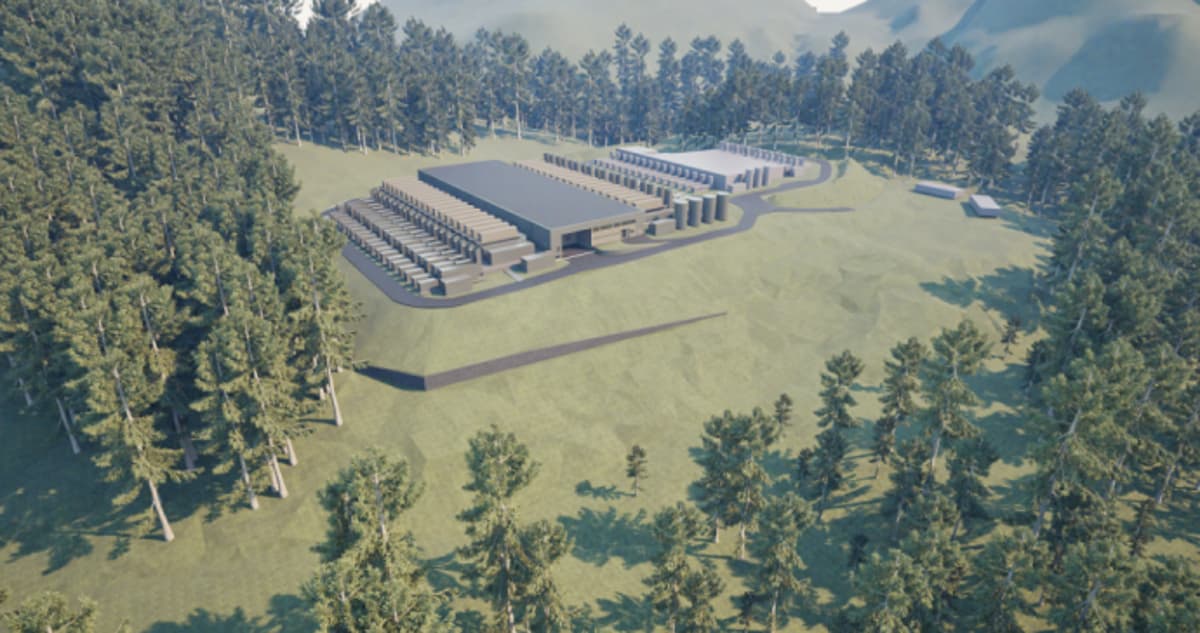
A new data‑center development is being planned in central Norway. Local press reports that Fossefall SPV 1 is looking to develop a data centre in Harpefoss in the municipality of Sør‑Fron.
Full details of the development haven’t been shared, but the company reportedly wants to develop on the site of the Harpefoss childcare centre, which is set to close. The municipal council is yet to decide on the proposal.
Sør‑Fron is a municipality in Innlandet county in the centre of Norway, about 240 km north of Oslo. Harpefoss is a village in the municipality.
Fossefall launched last year with plans to establish 500 MW of “clean” AI infrastructure by 2030. The company aims to develop “AI factories” powered by surplus renewable energy (namely hydroelectric) in the Nordics. Øyvind Vesterdal, CEO of Fossefall, was previously CEO of data‑centre firm Earth Wind and Power.
The company acquired a data centre in Fyresdal, Telemark, late last year. The site, acquired from Nosrk Data, can reportedly support up to 5.5 MW. Fossefall reportedly aims to increase its capacity to 18 MW.
Fossefall has partnered with US AI firm Seekr, which is both an investor and set to be a customer.
Details have been released around Polar DC’s plans for a data centre in Drangedal. The Drangedal commune this week said Polar DC is looking to extend its existing footprint with a planned extension known as DRA02.
Further details on the size of the expansion haven’t been shared, though the commune notes the project must undergo a cost‑benefit analysis of the possibilities for utilizing surplus heat required of all data‑centre projects above 2 MW. The analysis must be submitted to the Norwegian Water Resources and Energy Directorate (NVE) and approved by NVE before construction begins.
Launched last year, Polar bills itself as a developer of the “next generation of data centres to facilitate the latest developments in HPC and AI workloads.”
On its website, Polar says its DRA site has 52 MW in development on a 60,600 m² (652,290 sq ft) plot. The company is developing a 12 MW, 3,000 m² (32,290 sq ft) facility (DRA01) in the Varpet industrial area in Tørdal, breaking ground in 2024.
A second site south of Oslo, HER, is set to 100 MW on a 39,000 m² (419,800 sq ft) plot.
In the UK, the company lists a project near Doncaster (DON) that could offer 250 MW across 32,500 m² (350,000 sq ft). Full details haven’t been shared.
Polar is led by CEO Andy Hayes, who was previously CTO at hyperscale developer Yondr. Founded by Lian Group, alternative‑investment firm H.I.G. Capital acquired a majority stake in the company in October.
Crusoe is a customer, using a Polar DC facility for its AI cloud. It is set to be hosted in Drangedal.
Elsewhere in Norway, Polar DC is also looking to redevelop the former REC Solar offices in Porsgrunni in Telemark county, south of Oslo, near Norway’s southern coast. The company filed with the Porsgrunn municipality last month to develop the property in the Herøya industrial park within the existing building.
On its website, Polar DC lists future plans to develop 800 MW of capacity in Germany, 100 MW in Sweden, and 140 MW in Finland. Further details haven’t been shared.
The company previously listed plans for DAL01, located on a 19,000 m² (204,515 sq ft) plot 35 km outside Bergen, reportedly with 20 MW available and another 45 MW in development, using river cooling. The site, an existing industrial building previously used for manufacturing, was described as ready for fit‑out for client needs.
Comments
Want to join the conversation?
Loading comments...