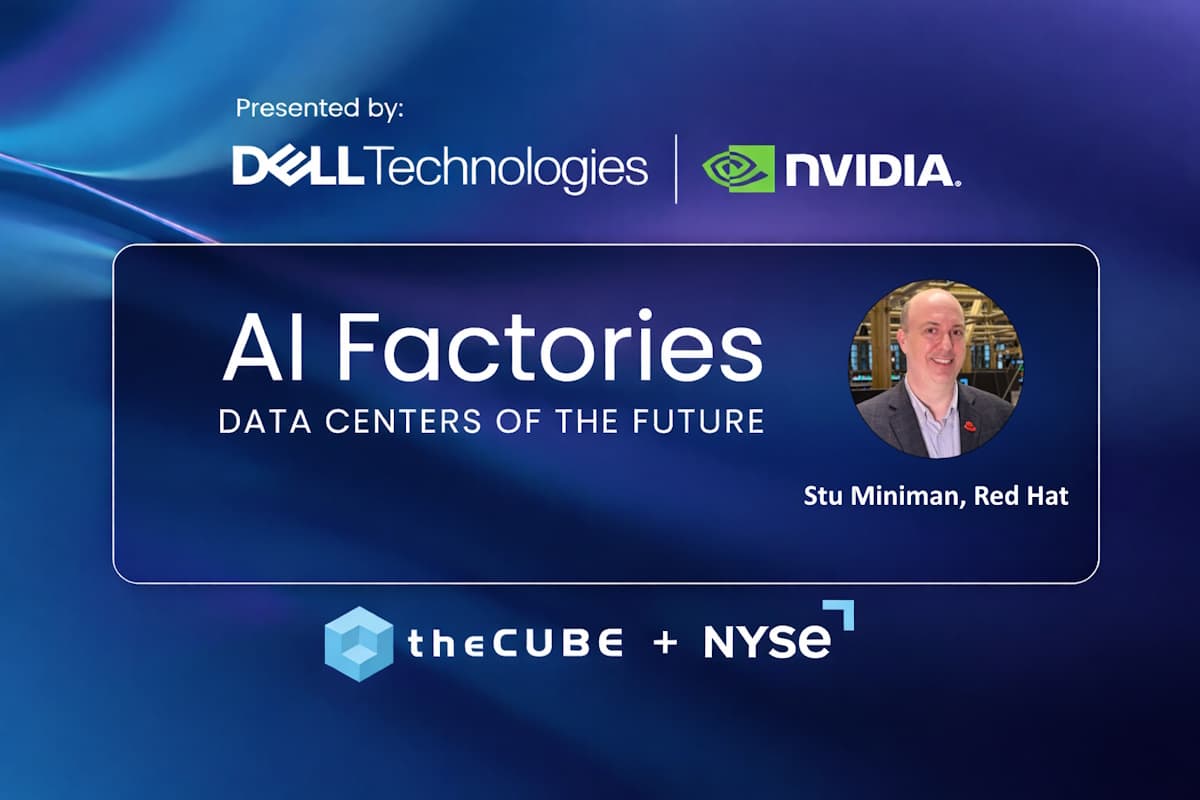
How Red Hat and the Nvidia Ecosystem Are Standardizing AI Factories
•February 13, 2026
0
Companies Mentioned


Why It Matters
Standardized AI factories lower operational complexity and boost GPU efficiency, enabling enterprises to scale AI workloads reliably and cost‑effectively. This alignment reshapes the competitive landscape, positioning Nvidia and Red Hat as the de‑facto platform for next‑generation AI infrastructure.
Key Takeaways
- •Nvidia partners with Red Hat to standardize AI factories
- •Linux and Kubernetes become AI infrastructure control plane
- •Red Hat provides enterprise‑grade security and scalability for GPU workloads
- •Standardized stack reduces undifferentiated heavy lifting for enterprises
- •Projects like llm‑d showcase Kubernetes‑driven AI model deployment
Pulse Analysis
The Nvidia‑Red Hat alliance is redefining how organizations build and operate AI factories. By anchoring the stack on open‑source Linux and Kubernetes, the partnership offers a unified control plane that abstracts hardware complexity while delivering day‑zero driver support for Nvidia’s latest GPUs, such as Vera Rubin and Blackwell. This approach mirrors the early cloud era, where a common operating system and orchestration layer enabled rapid scaling and vendor‑agnostic deployments, now applied to the high‑performance demands of AI workloads.
Enterprises are increasingly demanding repeatable, secure, and scalable environments for AI model training and inference. Red Hat’s enterprise Linux expertise provides hardened security, lifecycle management, and extensive support contracts, while Kubernetes orchestrates GPU resources to maximize utilization. Initiatives like the llm‑d project illustrate how developers can leverage this stack to deploy large language models without deep cluster‑admin skills, accelerating the transition from proof‑of‑concept to production. The standardized stack also simplifies multi‑cloud and edge strategies, allowing workloads to move seamlessly across data centers, private clouds, and public providers.
The broader market implication is a consolidation around a de‑facto AI infrastructure standard, reducing fragmentation and lowering entry barriers for mid‑market firms. As Nvidia extends its role from silicon supplier to ecosystem orchestrator, competitors must match the depth of integration and support that Red Hat offers. Companies that adopt this standardized AI factory can expect faster time‑to‑value, higher GPU efficiency, and a clearer path to scaling AI initiatives across the enterprise.
How Red Hat and the Nvidia ecosystem are standardizing AI factories
0
Comments
Want to join the conversation?
Loading comments...