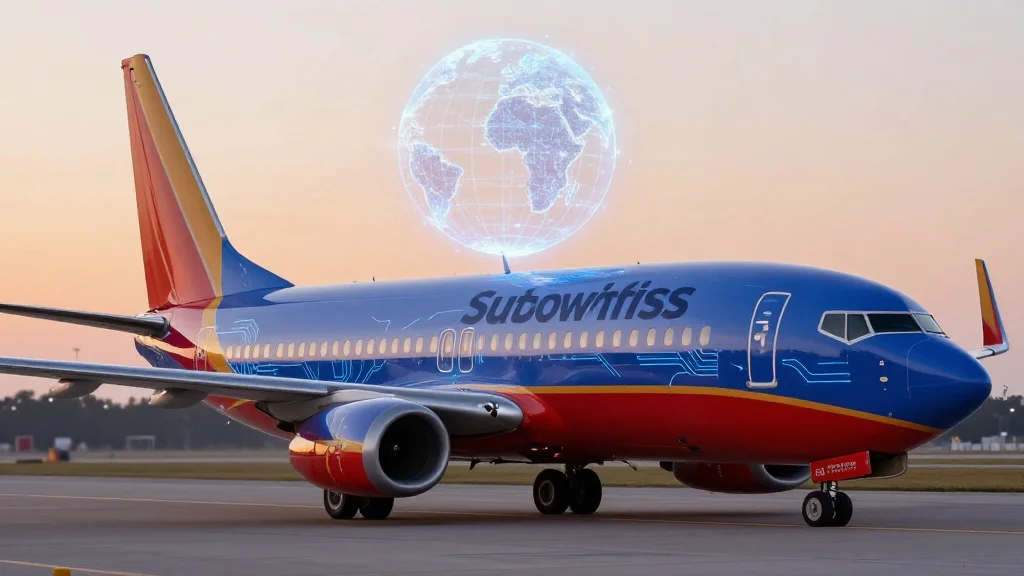
How Southwest Airlines Is Putting Endpoint Operations on Autopilot
Companies Mentioned
Why It Matters
The proactive, AI‑powered approach cuts downtime and IT labor costs while safeguarding Southwest’s tight aircraft turnaround schedules, directly impacting revenue and customer experience. It also showcases how airlines can leverage digital employee experience tools to scale operational resilience.
Key Takeaways
- •Southwest runs 2.1 billion remote actions in 2025, saving 23 k hours.
- •DEX platform automates disk‑space cleanup, averting 1‑TB hard‑drive purchases.
- •AI‑driven Workspace assistant cuts ticket volume and speeds issue resolution.
- •Proactive endpoint monitoring improves aircraft turnaround and passenger experience.
- •Governance framework ensures AI automation remains reliable and controlled.
Pulse Analysis
The airline industry has long wrestled with the paradox of digitization: while mobile devices and cloud applications streamline crew communication and maintenance workflows, they also create a sprawling network of endpoints that must stay online 24/7. For a carrier like Southwest, which operates roughly 800 Boeing 737 aircraft on tight turn‑around cycles, a single device glitch can ripple through gate operations, cabin crew coordination, and ultimately the passenger journey. Traditional ticket‑driven IT support struggles to keep pace, prompting carriers to explore AI‑enabled endpoint management platforms that can monitor, diagnose, and remediate problems at scale.
Southwest’s answer is a fully staffed Digital Employee Experience (DEX) operation built on Nexthink’s analytics engine. The team runs more than 2.1 billion remote actions per year, automating routine fixes such as cache clearing, profile deletion, and disk‑space reclamation—efforts that alone have saved an estimated 23,000 employee hours in 2025. Integrated with ServiceNow, the platform auto‑generates tickets for recurring failures, while the LLM‑powered Workspace assistant surfaces real‑time device health data and suggests corrective steps. Early pilots of Nexthink’s Spark AI aim to empower end users to resolve issues without ever contacting the service desk, further reducing support load.
Southwest’s proactive model signals a broader shift toward AI‑first IT operations across transportation and other high‑velocity sectors. By moving from reactive troubleshooting to predictive remediation, airlines can protect aircraft utilization rates, lower labor expenses, and improve the digital experience for thousands of frontline workers. However, the rollout also underscores the need for robust governance; Southwest stresses continuous validation, clear guardrails, and trust‑building to mitigate the risks of over‑automation. As more carriers adopt similar DEX and AI stacks, the competitive advantage will increasingly hinge on how effectively they balance speed, reliability, and responsible AI oversight.
How Southwest Airlines is putting endpoint operations on autopilot
Comments
Want to join the conversation?
Loading comments...