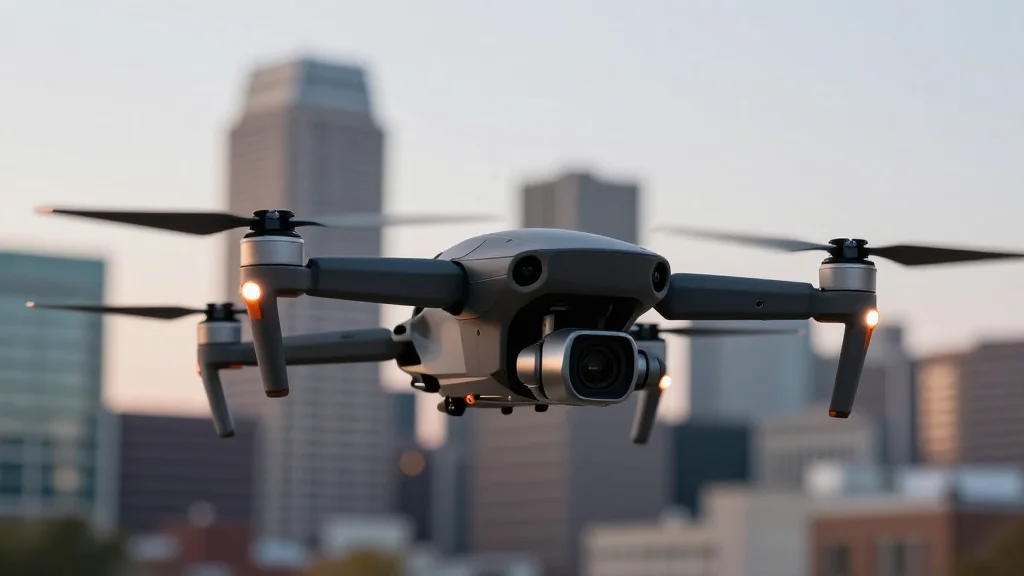
Minneapolis Council Weighs Drone First‑Responder Pilot Amid Privacy Concerns

Companies Mentioned
Why It Matters
The Minneapolis drone pilot is a litmus test for how local governments balance cutting‑edge technology with privacy protections. A successful trial could accelerate adoption of aerial assets across the nation’s emergency services, prompting CIOs to develop new data‑security protocols and cross‑agency integration strategies. Conversely, a rejection would reinforce the need for stricter legislative oversight and could slow the diffusion of drone‑enabled public‑safety tools. Beyond the immediate operational benefits, the debate underscores a broader shift: municipal CIOs are increasingly tasked with evaluating AI‑enabled hardware that collects visual and thermal data. Decisions made today will shape procurement standards, vendor relationships, and the legal frameworks that govern public‑sector surveillance for years to come.
Key Takeaways
- •Councilmember LaTrisha Vetaw introduced a 75‑day free drone pilot for the 4th Precinct.
- •Skydio will provide two drones at no cost; they could have responded to 4,600 priority calls in under two minutes in 2025.
- •Minnesota law allows only 11 UAV uses without a warrant, fueling privacy concerns.
- •Councilmember Soren Stevenson voiced both excitement and alarm about the technology.
- •A council vote next week will determine whether the pilot proceeds to a post‑trial review.
Pulse Analysis
Municipal CIOs are entering an era where hardware procurement is no longer a simple cost‑benefit exercise but a multidimensional risk assessment. The Minneapolis case illustrates how a vendor‑supplied, no‑upfront‑cost trial can bypass traditional procurement safeguards, yet still demand rigorous data‑governance planning. CIOs must anticipate the downstream costs of integrating drone feeds into existing emergency‑response workflows, including storage, bandwidth, and cybersecurity measures to protect live video streams from interception.
Historically, first‑responder technology upgrades have followed a linear path: radio upgrades, computer‑aided dispatch, then mobile data terminals. Drones compress that timeline, delivering situational awareness within minutes. However, the rapid deployment also compresses the policy‑making window, leaving little time for thorough privacy impact assessments. Cities that succeed will likely adopt a modular approach: start with narrowly defined, warrant‑backed use cases, then expand as legal frameworks evolve.
Looking ahead, the outcome of Minneapolis’s vote could influence state‑level legislation. A green light may encourage other Minnesota municipalities to lobby for broader UAV allowances, while a rejection could embolden privacy advocates to push for tighter statutory limits. For CIOs, the strategic imperative is clear: embed privacy‑by‑design principles into any drone‑related procurement and maintain a transparent dialogue with elected officials, legal counsel, and the public to ensure technology serves safety without eroding trust.
Minneapolis Council Weighs Drone First‑Responder Pilot Amid Privacy Concerns
Comments
Want to join the conversation?
Loading comments...