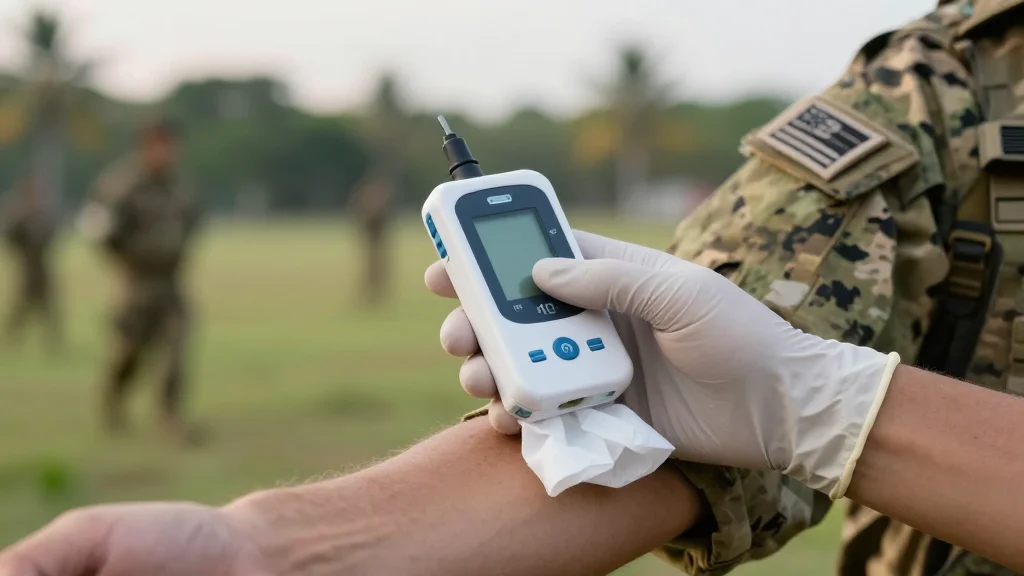
NIRSense Teams with US Army Pacific to Deploy Portable Tissue‑Oxygenation Monitors at Balikatan‑26

Why It Matters
The deployment of portable tissue‑oxygenation monitors represents a shift toward data‑rich, point‑of‑care diagnostics in combat environments. By delivering tissue‑level perfusion information, medics can make more nuanced decisions that may improve survival rates and reduce unnecessary evacuations. For CIOs, the initiative underscores the importance of secure, interoperable medical IoT solutions that can be fielded quickly without sacrificing compliance or reliability. If the technology proves effective, it could accelerate adoption of similar wearable sensors across the Department of Defense, influencing procurement strategies, training curricula, and the broader ecosystem of battlefield health analytics.
Key Takeaways
- •NIRSense partners with US Army Pacific’s 18th Theater Medical Command at Balikatan‑26.
- •Portable StO₂ monitors provide real‑time tissue perfusion data for combat medics.
- •Technology previously deployed in Ukraine, now tested in the Indo‑Pacific theater.
- •CIOs must address cybersecurity, data integration, and rapid acquisition cycles.
- •Successful trials could lead to wider DoD adoption of advanced medical wearables.
Pulse Analysis
The NIRSense‑USARPAC collaboration arrives at a moment when the military is aggressively modernizing its health‑service capabilities. Historically, battlefield medicine has relied on pulse oximetry and basic vitals; adding tissue‑level metrics expands the diagnostic envelope and aligns with the Army’s push toward precision medicine. This move also reflects a broader trend in the defense sector: leveraging commercial‑off‑the‑shelf (COTS) medical IoT to shorten development cycles and reduce costs.
From a CIO perspective, the partnership illustrates a template for rapid technology insertion. The press release indicates a timeline of less than a month from announcement to field testing, suggesting that procurement pathways—such as Other Transaction Authority (OTA) agreements—are being used to bypass traditional, slower acquisition processes. However, the need for secure data handling and seamless integration with existing health‑information networks remains a hurdle. CIOs will need to balance speed with rigorous cybersecurity vetting, especially as wearable devices generate continuous streams of sensitive physiological data.
Looking ahead, the success of NIRSense’s system could catalyze a cascade of similar deployments, from battlefield trauma kits to forward‑deployed tele‑medicine platforms. The key question for CIOs will be how to scale these solutions while maintaining interoperability across services and allied partners. If the technology proves its worth in the Indo‑Pacific, it may become a standard component of the Army’s medical readiness portfolio, reshaping procurement priorities and driving further innovation in rugged medical IoT.
NIRSense Teams with US Army Pacific to Deploy Portable Tissue‑Oxygenation Monitors at Balikatan‑26
Comments
Want to join the conversation?
Loading comments...