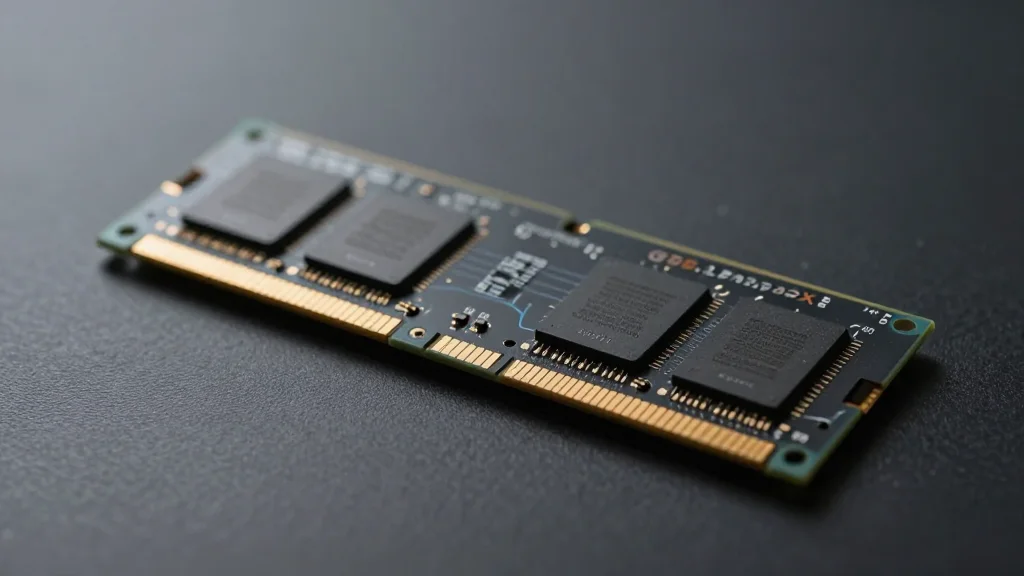
SK Hynix Begins Mass Production of 192GB SOCAMM2 AI Server Memory for Nvidia Vera Rubin

Companies Mentioned
Why It Matters
For CIOs overseeing AI infrastructure, memory bandwidth and power consumption are the two levers that most directly affect operational cost and performance. The SOCAMM2’s claimed 75 percent improvement in power efficiency could shave megawatts of electricity from a hyperscale rack, directly impacting sustainability goals and OPEX budgets. Moreover, the module’s higher bandwidth eases the data‑movement bottleneck that has limited the scaling of large‑language‑model training, enabling faster model iteration and potentially shortening product development cycles. The collaboration between SK hynix and Nvidia also signals a broader trend of vertical integration in the AI hardware stack. By co‑designing memory with the compute platform, vendors can optimize data pathways and reduce latency, a competitive advantage that could reshape procurement strategies for enterprises and cloud providers alike.
Key Takeaways
- •SK hynix starts mass production of 192 GB SOCAMM2 memory for Nvidia Vera Rubin platform.
- •SOCAMM2 uses 10‑nm LPDDR5X DRAM, delivering 9.6 Gbps transfer speed—up 13% from previous generation.
- •Module offers >2× bandwidth and >75% better power efficiency versus standard DDR5 RDIMMs.
- •Modular form factor enables replaceable server memory, improving maintenance flexibility.
- •SK hynix aims to pair SOCAMM2 with upcoming HBM4 chips, deepening its AI‑hardware partnership with Nvidia.
Pulse Analysis
The launch of SOCAMM2 reflects a strategic pivot by memory manufacturers toward AI‑centric solutions. Historically, DRAM vendors have focused on consumer and mobile markets, where power efficiency is paramount but capacity demands are modest. By repurposing LPDDR5X—originally a mobile technology—for server workloads, SK hynix is leveraging a mature process node to achieve a cost‑effective balance of speed and energy use. This approach contrasts with Micron’s aggressive push on HBM2E and Samsung’s 3D‑stacked DRAM, both of which chase raw bandwidth at the expense of higher production complexity and price.
From a market dynamics perspective, the partnership with Nvidia gives SK hynix a privileged seat at the table of the AI hardware ecosystem. Nvidia’s Vera Rubin platform is expected to become a reference architecture for training next‑generation large language models, and securing the memory supply chain early could lock in a sizable share of the multi‑billion‑dollar AI infrastructure spend. Competitors will need to either match the power‑efficiency claims or differentiate on other dimensions such as latency or integration with emerging compute fabrics.
Looking forward, the real test for SOCAMM2 will be in large‑scale deployments. If hyperscale operators can validate the promised reductions in total cost of ownership and see measurable speed‑ups in model training, the module could set a new baseline for AI server design. Conversely, any shortfall in yield or reliability could reinforce the industry’s reliance on traditional DDR5 or HBM solutions. CIOs will therefore monitor early performance data closely as they plan capacity expansions for the AI workloads that are reshaping enterprise IT.
SK hynix begins mass production of 192GB SOCAMM2 AI server memory for Nvidia Vera Rubin
Comments
Want to join the conversation?
Loading comments...