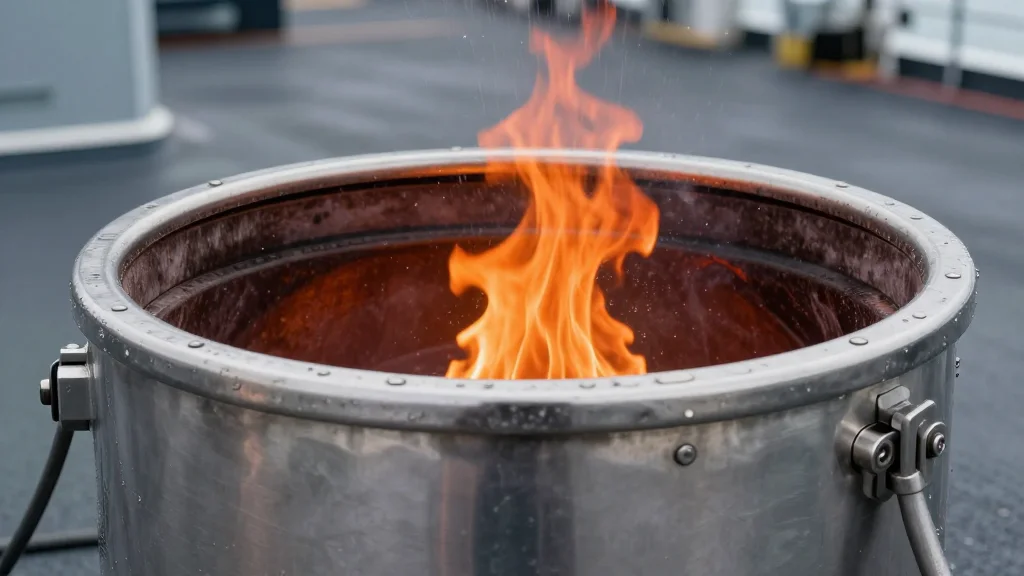
USS Gerald R. Ford Fire Halts Combat Sorties for Two Days, Exposing Shipboard IT Vulnerabilities

Why It Matters
The Ford fire highlights a rare, high‑visibility failure of a mission‑critical platform that depends on tightly integrated IT, power, and environmental controls. For CIOs, the incident underscores the need for layered redundancy, rapid incident‑response playbooks, and proactive health‑monitoring of physical infrastructure—principles that apply equally to data centers, cloud edge nodes, and industrial control systems. As organizations increasingly migrate critical workloads to hybrid environments, the carrier’s two‑day sortie gap serves as a cautionary tale about the operational cost of a single point of failure. Beyond the immediate military impact, the event may accelerate procurement of fire‑resistant cabling, smarter sensor networks, and AI‑driven anomaly detection across the Department of Defense’s fleet. Those technologies will likely spill over into the commercial sector, where CIOs will seek similar safeguards to protect against unplanned outages that can affect revenue, compliance, and brand reputation.
Key Takeaways
- •March 12 laundry‑room fire forced USS Gerald R. Ford to halt combat sorties for two days
- •Approximately 600 sailors were displaced and firefighting lasted about 30 hours
- •Carrier withdrew to Souda Bay, then to Split, Croatia, for repairs and was declared mission‑capable on March 15
- •Admiral Daryl Caudle praised the crew and warned of risk‑buy‑down challenges for global operations
- •Incident spotlights shipboard IT and infrastructure resilience, prompting defense and enterprise CIOs to reassess redundancy and incident‑response strategies
Pulse Analysis
The Ford fire is more than a naval footnote; it is a live demonstration of how physical infrastructure failures can cripple digital command and control. Historically, carrier operations have relied on compartmentalized redundancy, but modern ships now run on integrated networks that blur the line between IT and traditional engineering. When a fire breaches a laundry chute, the ripple effect can shut down flight‑deck software, radar processing, and even the carrier’s cyber‑defense posture. This convergence forces CIOs to think of IT assets as kinetic, not just informational, and to embed resilience at the hardware level.
From a market perspective, the incident may accelerate defense spending on hardened cabling, fire‑suppression systems that are aware of data pathways, and AI‑driven predictive maintenance. Vendors that can certify their products for naval‑grade fire resistance stand to gain contracts, while firms offering real‑time infrastructure monitoring will see heightened demand. The broader enterprise sector will watch closely, as the same technologies can be repurposed for data‑center fire detection and automated shutdowns, reducing downtime risk for cloud providers and large‑scale enterprises.
Looking forward, the Navy’s post‑incident review will likely produce a playbook that CIOs can adapt for their own critical environments. The emphasis will shift toward cross‑disciplinary drills that involve both IT security teams and facilities engineers, ensuring that a single physical event does not cascade into a cyber‑operational crisis. For CIOs, the lesson is clear: resilience must be baked into the architecture, not bolted on after an outage.
USS Gerald R. Ford fire halts combat sorties for two days, exposing shipboard IT vulnerabilities
Comments
Want to join the conversation?
Loading comments...