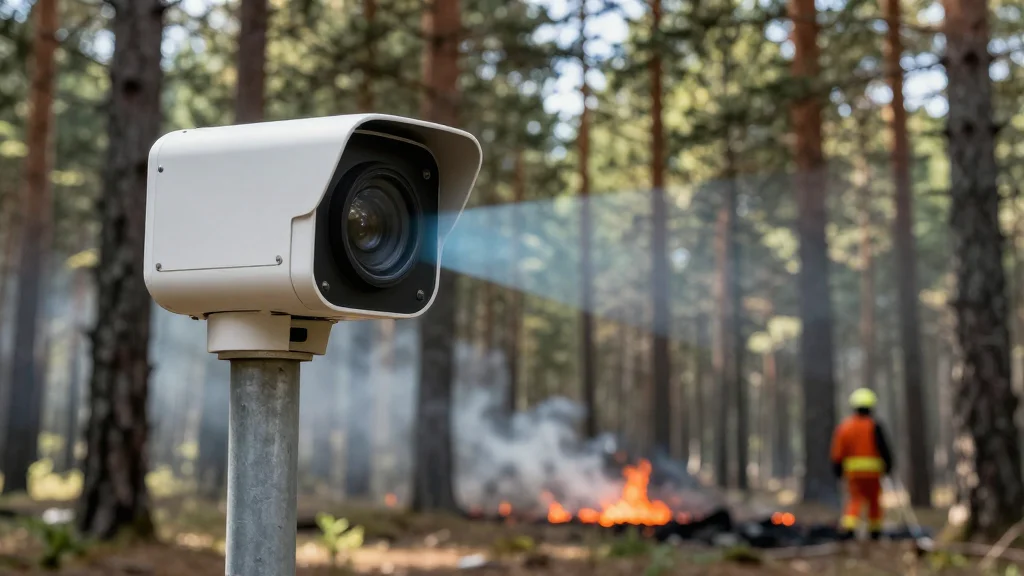
Western Utilities Deploy AI Cameras to Detect Wildfires Early, Expanding to 200+ Sites

Companies Mentioned
Why It Matters
The rapid adoption of AI‑driven wildfire detection reshapes how public‑sector CIOs manage risk, blending advanced analytics with legacy grid operations. By cutting detection times by nearly an hour, utilities can protect critical infrastructure, reduce outage durations, and lower liability exposure. The technology also demonstrates a scalable model for other climate‑related threats, positioning AI as a core component of municipal resilience strategies. Moreover, the $50,000 per‑camera price point forces CIOs to justify expenditures through measurable outcomes, potentially accelerating the development of standardized performance metrics for AI safety tools. As more states adopt similar systems, a national data pool could emerge, enabling predictive modeling that further enhances early‑warning capabilities.
Key Takeaways
- •APS aims for 71 AI cameras by summer, up from ~40 today.
- •Xcel Energy has installed 126 cameras, targeting coverage in 7 of 8 service states.
- •AI alerts are 45 minutes faster than first 911 calls, per APS meteorologist.
- •Pano AI charges roughly $50,000 per camera annually, including analytics and 24/7 monitoring.
- •Last year Pano AI’s system detected 725 wildfires across the United States.
Pulse Analysis
Utility CIOs are at the nexus of operational reliability and climate resilience, and the AI camera rollout marks a decisive shift toward proactive risk mitigation. Historically, utilities have relied on post‑event assessments and manual patrols, which are increasingly inadequate in the face of longer fire seasons and higher ignition probabilities. By embedding AI into the monitoring stack, CIOs can integrate fire alerts directly into outage‑management systems, enabling automated pre‑emptive shutdowns of vulnerable lines and dynamic re‑routing of power flows.
The economics of the deployment hinge on a classic cost‑avoidance argument. While $50,000 per camera may appear steep, the potential savings from avoided infrastructure loss, reduced fire‑suppression costs, and lower insurance premiums can quickly outweigh the expense, especially for utilities serving millions of customers. Early data suggests that each prevented acre of wildfire can save tens of millions in property damage and environmental remediation, a figure that aligns with the ROI thresholds many CIOs must meet.
Looking forward, the success of these pilots could catalyze a broader ecosystem of AI‑enabled public‑sector services, from flood monitoring to landslide detection. The key will be establishing interoperable data standards and ensuring that AI models remain transparent and auditable, addressing both regulatory scrutiny and public trust. If utilities can demonstrate consistent, quantifiable benefits, the AI camera model may become a template for other critical infrastructure sectors seeking to harness machine learning for safety and efficiency.
Western Utilities Deploy AI Cameras to Detect Wildfires Early, Expanding to 200+ Sites
Comments
Want to join the conversation?
Loading comments...