More Americans Want Brands To Get Political
•February 19, 2026
0
Why It Matters
Brands must navigate a tighterrope between activist expectations and consumer backlash, as these attitudes directly influence sales and long‑term brand equity.
Key Takeaways
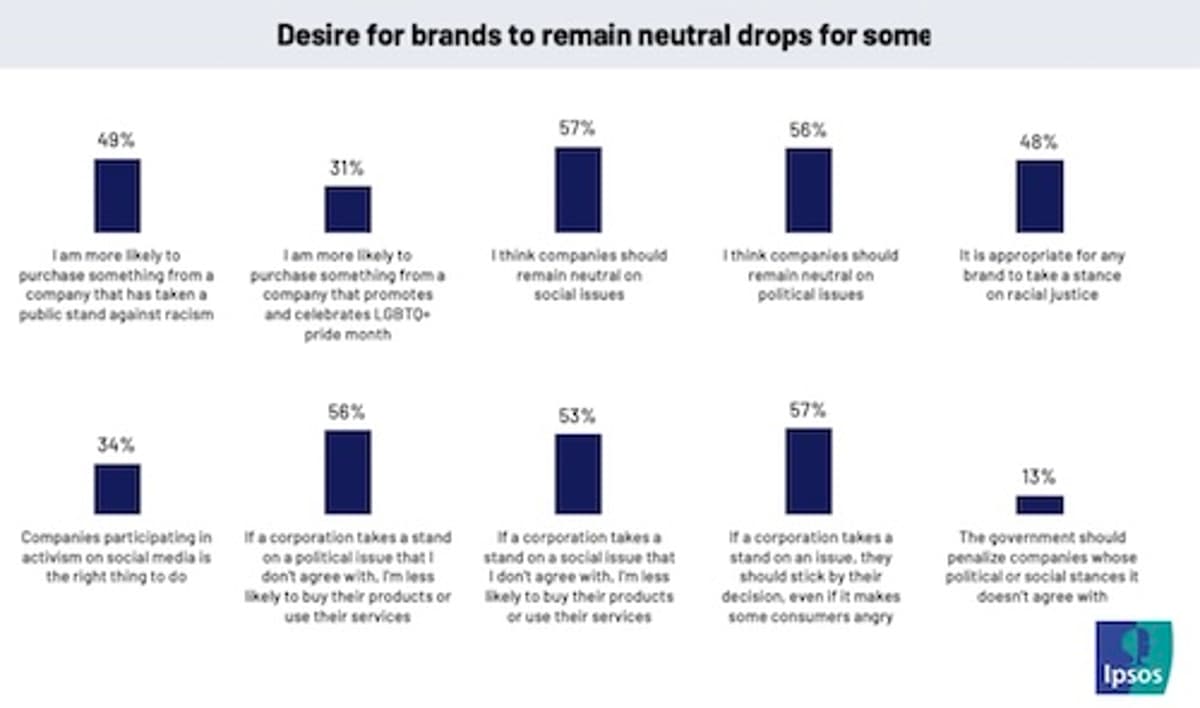
- •57% still prefer brand neutrality on social issues
- •Support for brand activism on racial justice rose to 48%
- •49% more likely to buy from anti‑racism stance
- •56% less likely to purchase if brand opposes their view
- •Only 13% favor government penalties for controversial brand statements
Pulse Analysis
The latest Ipsos findings underscore a growing complexity in consumer expectations around corporate political speech. While a clear majority still leans toward neutrality, the incremental rise in support for brand activism—particularly on racial‑justice and LGBTQ+ issues—signals that silence may no longer be a safe default for many companies. Marketers are seeing a measurable shift in purchase intent: consumers are increasingly rewarding brands that take a stand against racism, yet they remain quick to punish perceived misalignment with their own political views. This duality forces brands to calibrate messaging with precision, balancing authenticity against the risk of alienation.
For marketers, the data translates into actionable strategy. Authenticity and consistency have become non‑negotiable; 57% of respondents expect brands to stand by their positions even if they provoke controversy. Companies that embed social values into their core narrative, rather than treating activism as a campaign add‑on, are better positioned to capture the 49% of shoppers who say they’ll buy from anti‑racism advocates. At the same time, the 56% who would avoid brands with opposing stances highlight the need for granular audience segmentation and targeted communication, ensuring that political messaging resonates with the right consumer cohorts without triggering widespread backlash.
Regulatory risk remains low, with only 13% favoring government penalties for controversial brand statements, suggesting that self‑regulation and market forces will continue to drive corporate behavior. However, the rising consumer demand for purposeful branding means that companies must invest in robust stakeholder listening mechanisms and transparent reporting. By aligning brand values with measurable social impact and maintaining a consistent voice, firms can turn the evolving political climate into a competitive advantage rather than a liability.
More Americans Want Brands To Get Political
0
Comments
Want to join the conversation?
Loading comments...