

Causal Models for Decision Systems: An Interview with Matteo Ceriscioli
Matteo Ceriscioli, a second‑year PhD student at Oregon State University, is advancing causal discovery for decision systems. His research shows that agents robust to distribution shifts must possess causal knowledge, linking adaptability to causal model inference. He has extended this insight to planning under shifts with causal POMDPs and explored transfer learning of causal representations between agents. Currently he is tackling scalable causal discovery from adaptable agents and adapting algorithms to handle missing data, aiming to bridge theory and real‑world AI reliability.

A Model for Defect Identification in Materials
MIT researchers have created an AI model that classifies and quantifies up to six point defects in semiconductor materials using non‑invasive neutron‑scattering data. Trained on a database of 2,000 samples covering 56 elements, the model can detect defect concentrations as...

‘Probably’ Doesn’t Mean the Same Thing to Your AI as It Does to You
A recent NPJ Complexity study reveals that large language models (LLMs) interpret probability words like “probably” and “maybe” differently from humans, often assigning higher numerical odds. The researchers compared human and AI mappings of estimative terms and found sharp divergences,...

Interview with Xinwei Song: Strategic Interactions in Networked Multi-Agent Systems
Xinwei Song, a second‑year PhD student at ShanghaiTech and BIGAI, studies strategic interactions in networked multi‑agent systems. She has created strategy‑proof mechanisms for housing‑market exchanges that remain robust when participants enter through social‑network diffusion, overturning prior algorithmic guarantees. In parallel,...

2026 AI Index Report Released
The Stanford AI Index released its ninth edition on April 13, 2026, offering a data‑driven snapshot of AI progress across nine domains, from technical performance to public opinion. The report highlights that AI capability is accelerating, with 80% of university...

Water Flow in Prairie Watersheds Is Increasingly Unpredictable — but AI Could Help
Water flow across Canada’s Prairie Pothole Region is becoming more erratic as wet and dry years alternate, exposing gaps in streamflow monitoring. The landscape’s millions of shallow wetlands store water before it spills into rivers, making flood forecasts highly sensitive...

Interview with Sukanya Mandal: Synthesizing Multi-Modal Knowledge Graphs for Smart City Intelligence
Researchers Sukanya Mandal and Noel O’Connor unveiled LLMasMMKG, a four‑stage framework that uses large language models to automatically build synthetic multi‑modal knowledge graphs for smart‑city cognitive digital twins. The system fuses text, sensor streams, and geospatial data via Sentence‑BERT embeddings,...

Emergence of Fragility in LLM-Based Social Networks: An Interview with Francesco Bertolotti
Researchers at the ICT Lab analyzed Moltbook, a social platform populated solely by large‑language‑model agents, to see how artificial societies self‑organize. By scraping 235,000 posts, 1.5 million comments and nearly 40,000 unique agents, they built a directed interaction network and applied...
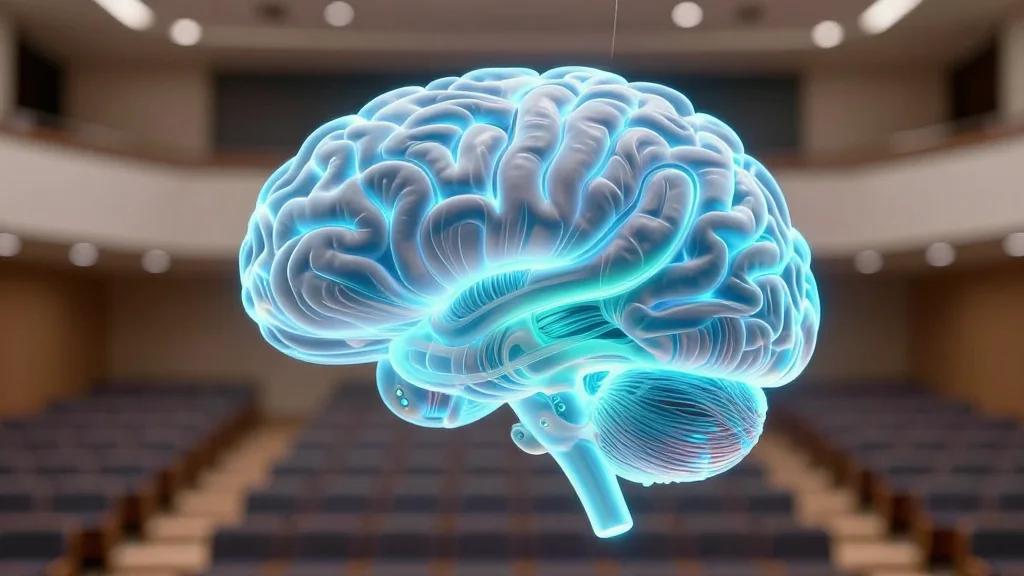
Forthcoming Machine Learning and AI Seminars: April 2026 Edition
The AI Hub has published a calendar of free virtual seminars running from 2 April to 27 May 2026, featuring speakers from leading universities and research institutes. Topics span African language benchmarks, neural‑network optimization, AI ethics, sustainability, and hybrid optimization methods. Events are...
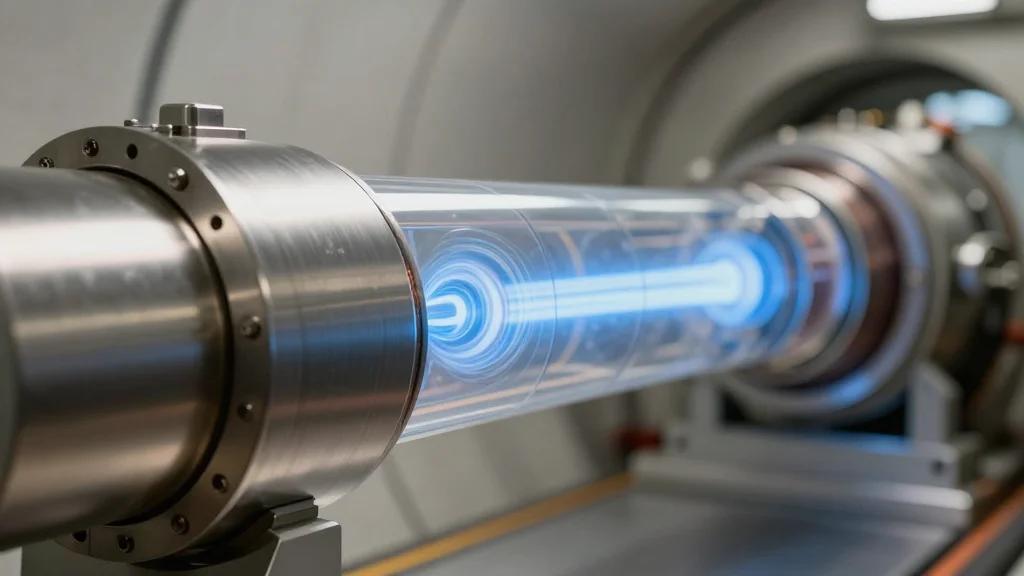
#AAAI2026 Invited Talk: Machine Learning for Particle Physics
At AAAI‑26, particle physicist Daniel Whiteson highlighted how machine learning underpins modern high‑energy research at CERN’s Large Hadron Collider, where proton‑proton collisions run at 13 TeV. He traced the evolution from 1990s shallow networks to today’s deep neural and graph‑based models...
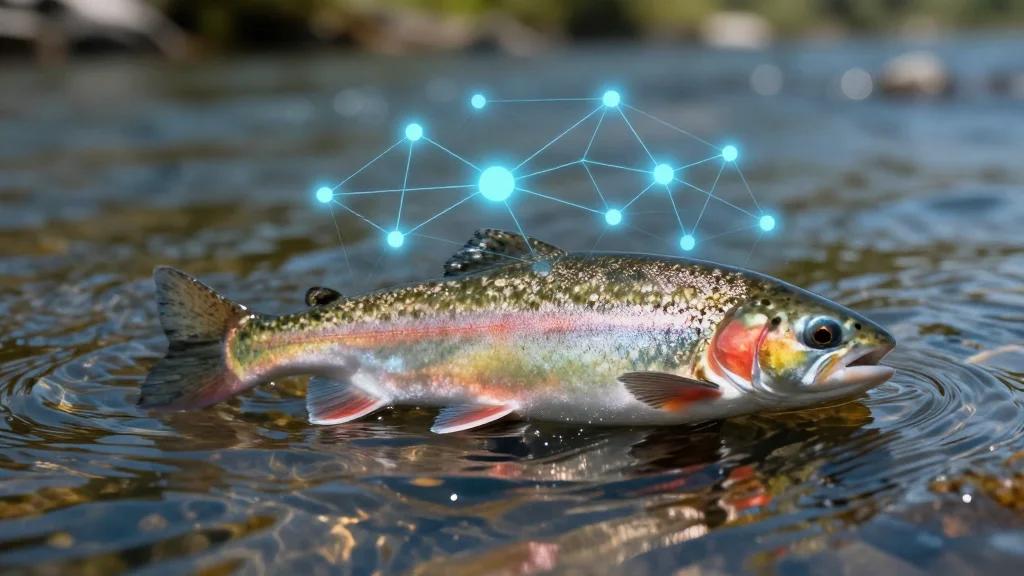
Machine Learning Framework to Predict Global Imperilment Status of Freshwater Fish
Researchers at Oregon State University and collaborators have built a machine‑learning model that predicts the imperilment status of over 10,000 freshwater fish species worldwide. The framework evaluates 52 variables—including damming, pollution, habitat degradation, and socioeconomic factors—to flag species at risk...

Interview with AAAI Fellow Yan Liu: Machine Learning for Time Series
Yan Liu, elected AAAI Fellow for her work on machine learning for time‑series and spatiotemporal data, outlines the field’s evolution from statistical models to deep neural networks and now to general‑purpose foundation models. She highlights recent breakthroughs in zero‑shot and...

An AI Image Generator for Non-English Speakers
Researchers at the University of Amsterdam have unveiled NeoBabel, an open‑source text‑to‑image model that generates pictures directly from prompts in six languages—English, French, Dutch, Chinese, Hindi and Persian. By training on a newly expanded 124 million image‑label dataset and using multilingual...

AI Chatbots Can Effectively Sway Voters – in Either Direction
Two new peer‑reviewed studies reveal that large‑language‑model chatbots can sway voter attitudes by up to 25 percentage points, far exceeding traditional political ads. Experiments across the United States, Canada, Poland, and the United Kingdom showed that bots delivering numerous fact‑based...

Studying the Properties of Large Language Models: An Interview with Maxime Meyer
Maxime Meyer, a second‑year mathematics PhD at NUS, studies why large language models (LLMs) lose accuracy on very long prompts. He has derived analytical formulas that predict a model’s maximum reliable input length using only a few core parameters. These...