
Fed's Bowman Willing to Look Through War-Driven Inflation Bump
Federal Reserve Vice Chair Michelle Bowman told an Iceland conference that the recent inflation spike, driven by higher energy prices and one‑off tariff effects from the Iran war, should be looked through. She emphasized using trimmed‑mean PCE rather than headline PCE to gauge core price pressures, which she says remain near the Fed’s 2% target once temporary factors are stripped out. Bowman’s view aligns with newly appointed Fed Chair Kevin Warsh and suggests a bias toward future rate cuts, even as several FOMC members warn inflation could stay elevated.

RBC Lowers Provisions, Even Amid Uncertainty From Tariffs and War
Royal Bank of Canada (RBC) lowered its Q2 credit‑loss provisions to CA$912 million (about $675 million USD), down from CA$1.4 billion a year earlier, while posting its second‑highest quarterly earnings on record. Net income surged 25% to CA$5.5 billion (~$4.1 billion USD) and revenue rose...

Report: Private Credit Opacity Poses Risk to Financial System
A Financial Stability Board report warns that the rapidly expanding private‑credit market, now valued between $1.5 trillion and $2 trillion, remains opaque and difficult for regulators to monitor. Banks have become critical nodes, financing private‑credit funds and holding CLOs, which creates complex...

CFPB Sued over New Rule that Would Weaken Fair-Lending Laws
The Consumer Financial Protection Bureau’s new Regulation B rule narrows the definition of discrimination, shielding lenders from liability for unintentional bias in automated credit models. The National Fair Housing Alliance and two compliance firms sued the agency, arguing the change violates...

BMO Says It's Finished Reconfiguration of U.S. Segment
BMO Financial Group announced that its six‑quarter reconfiguration of the U.S. banking segment is now complete. The overhaul, which shed low‑return portfolios and 138 Midwest branches, lifted U.S. return on equity to 8.6% in Q2 and targets 12% by 2027....

Webster Investors Approve $12 Billion Purchase by Santander
Webster Financial Corp.'s shareholders approved Banco Santander's $12 billion takeover, valuing the U.S. bank at about $73.49 per share. Santander will pay $48.75 in cash plus 2.0548 American Depositary Shares for each Webster share. The acquisition, part of Ana Botín’s strategy to...

The Largest Bank M&A Deals Are Now the Fastest to Close
Bank mergers and acquisitions valued at $500 million or more are closing in just 126 days on average this year. That pace is roughly one‑third of the 369‑day average in 2024 and far faster than the 211 days recorded in 2025....

Even JPMorgan Payments Feels Pressure to Compete with Fintechs
JPMorgan Payments, the United States’ largest credit‑card issuer and merchant acquirer, moves roughly $12 trillion in transactions each day, peaking at $15‑$16 trillion. Facing new payment rails like blockchain and stablecoins, the unit is reshaping its technology approach to mirror nimble fintechs....
Exclusive Research: Banks up AI Investment to Cut Costs
Banks are accelerating AI spending to streamline operations, boost employee productivity and trim costs. Survey data shows 74% of both national and community banks prioritize productivity gains, while 78% of community banks focus on workflow automation. Cost reduction is a...

Regions to Pay $4.9M for Allegedly Forgiving Ineligible PPP Loan
Regions Financial agreed to pay a $4.92 million civil penalty after the Justice Department alleged the bank improperly approved forgiveness for a single ineligible Paycheck Protection Program loan in 2021. The settlement covers one loan out of roughly 75,000 PPP loans...

As Inflation Rises, Fed's Waller Ready to Drop 'Easing Bias'
Federal Reserve Governor Christopher Waller called for stripping the FOMC’s forward guidance of any "easing bias," arguing the Fed should be equally ready to raise rates as to cut them amid rising inflation. He joined three regional Fed presidents who...

Crypto Firms Need to Get Serious About Consumer Safeguards
Crypto firms face a credibility hurdle because most consumer products lack built‑in safety nets. Users risk irreversible losses from phishing, lost devices, or forgotten passwords, a burden that traditional finance mitigates with fraud monitoring and deposit insurance. Industry leaders argue...

Mortgage Rates Surge to 9-Month High Amid Market Turmoil
Mortgage rates jumped to a 9‑month peak, with the 30‑year fixed‑rate hitting 6.51% in the week ending May 21, up 15 basis points from the prior week. The surge mirrors a rise in the 10‑year Treasury yield, which briefly topped 4.6%...
The Rumor of Cash's Death Is Greatly Exaggerated
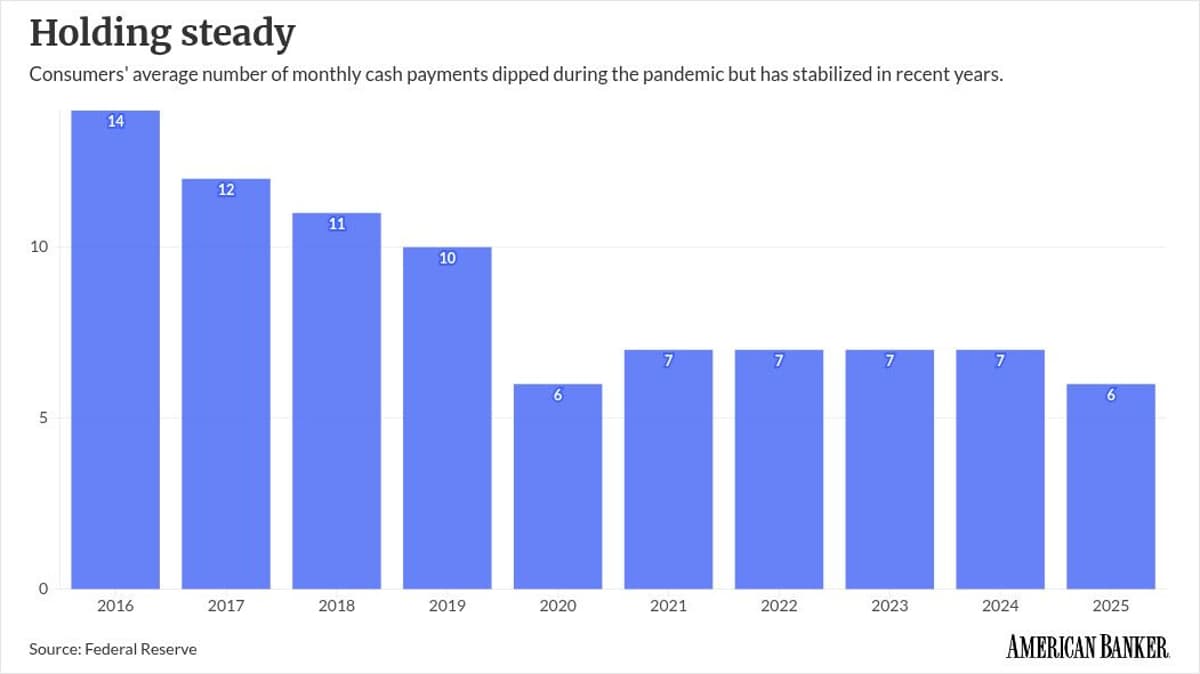
The Federal Reserve’s latest Diary of Consumer Payment Choice shows cash remains a staple, with 76% of Americans still carrying it in 2025 and averaging six cash transactions per month. While cash use has slipped from 14 payments per month...

Pressure, FOMO: Some Big Banks Are Rolling AI Out Too Fast
Large U.S. banks are accelerating generative‑AI rollouts despite internal warnings that the technology is not production‑ready. Engineers report code that only works under narrow conditions, leading to extensive rework and hidden debugging costs. Pressure from investors, private‑equity backers, and a...