
Why Are Huge Debit Card Issuers Still Paying Visa to Route Payments?
Bank of America, Chase and Wells Fargo control roughly a third of U.S. debit volume—$1.425 trillion in 2024—and earn about 49 basis points in interchange fees. New Durbin‑cap proposals and pending Supreme Court rulings threaten to cut that revenue to as low as 2 basis points, potentially costing the banks $4.7 billion. Capital One’s shift to Discover’s network shows how owning a debit rail can escape price controls and capture richer fees. Analysts argue the three giants should acquire existing debit networks to keep the entire fee pie in‑house and restore profitability.
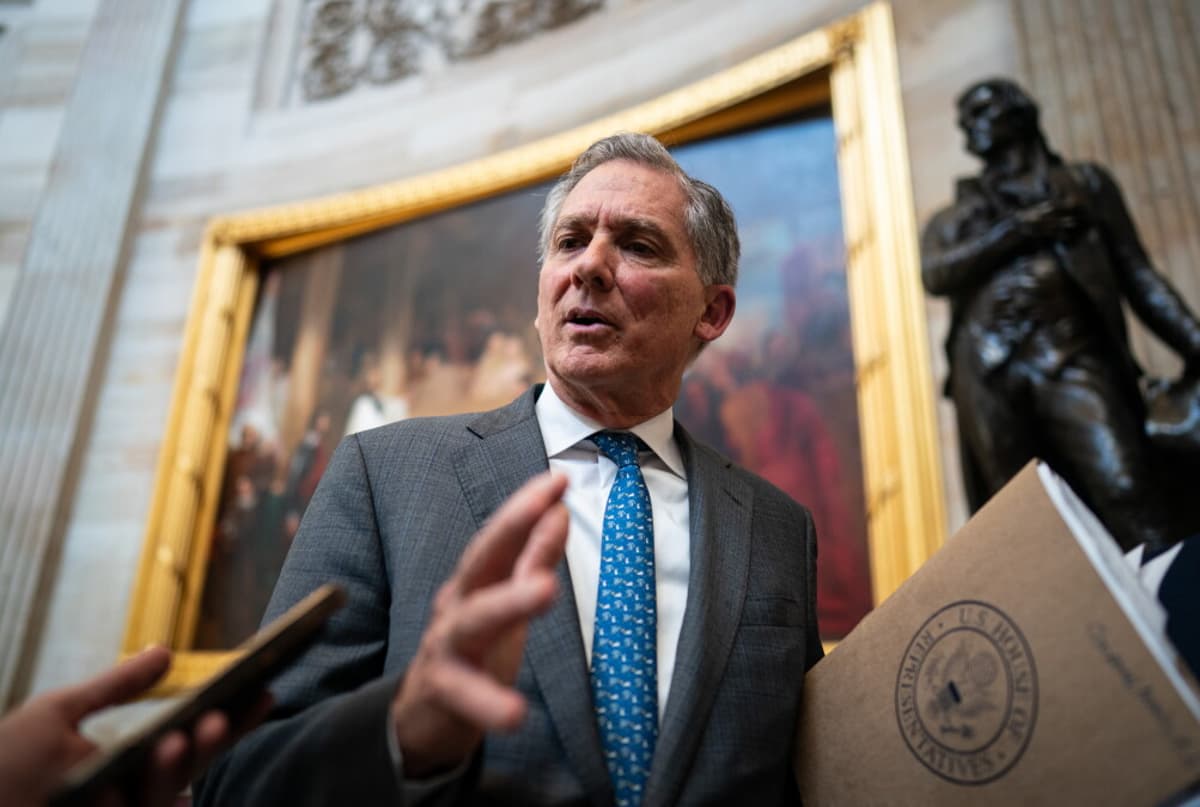
House Reworks Institutional Investor Ban in Housing Bill
The U.S. House passed a bipartisan version of the 21st Century Road to Housing Act, removing the Senate‑imposed ban on large institutional investors buying single‑family homes. The bill defines large investors as owners of 350 or more homes and adds...

The So-Called Stablecoin 'Yield Ban' Leaves Community Banks Vulnerable
Lawmakers advancing the CLARITY Act aim to ban explicit interest on stablecoins while still permitting activity‑based rewards. The compromise hinges on a semantic distinction, yet the underlying Treasury‑backed assets continue to generate returns that can be repackaged. Community banks, which...

ICBA Urges OCC to Halt Kraken Parent's Trust Charter Bid
The Independent Community Bankers of America (ICBA) has asked the Office of the Comptroller of the Currency (OCC) to halt its review of Payward’s application for a national trust charter, which would let Kraken’s parent offer federally regulated digital‑asset custody...

Corporate Card Fintech Parker Shuts Down without Warning
Parker Group, a Y Combinator‑backed corporate‑card fintech that raised $243.6 million, abruptly ceased operations in early May and filed for Chapter 7 bankruptcy in Delaware. The shutdown left customers unable to access funds and forced sponsor banks Piermont and Patriot to scramble for...

Energy Shock Drives Consumer Prices up 0.6% in April
U.S. consumer prices accelerated in April, with the CPI up 0.6% month‑over‑month and 3.8% year‑over‑year, driven largely by a sharp rebound in energy costs. Gasoline prices rose 5.4% after a 21.1% jump the prior month, keeping the energy index responsible...

As Payment Partnerships Proliferate, Here's How Bank Risks Are Changing
Banks are deepening partnerships with fintechs for payments, buy‑now/pay‑later, international transfers, stablecoins and other crypto services, but regulators are tightening oversight. A 2024 Alloy report shows 80% of sponsor banks struggle with compliance and 39% incurred losses of $250,000 or...

The Cost of Deposits and the Next Fed Chair
Deposit rates have been falling, allowing big banks to fund loans cheaply and fuel multi‑billion‑dollar stock buybacks. However, a potential escalation of the Iran‑driven oil shock could force the Federal Reserve to keep rates higher, raising banks' cost of deposits...

Fed Rate Pause May Rekindle Bank Deposit Competition
The Federal Reserve's decision to pause rate cuts has halted the recent decline in banks' funding costs, which fell to 2.26% in 2025 from 2.61% in 2024. Analysts warn that deposit competition is re‑emerging, with many institutions maintaining or raising...

Fed Flags Overheated Markets as Top Stability Risk
The Federal Reserve’s latest Financial Stability Report warns that market froth remains the top risk to financial stability. Asset valuations, especially equities, stay at the high end of historical ranges while equity volatility has risen since the November report. Treasury...

Automating Grunt Work Is Still Agentic AI's Sweet Spot
At SAS’s annual conference, financial‑services leaders emphasized that the near‑term value of agentic AI lies in automating high‑volume, low‑complexity back‑office work such as KYC onboarding, compliance documentation, and routine claims processing. JPMorgan Chase adopts a hybrid model—purchasing external AI models while...

Bitcoin's Overton Window of Opportunity Is Closing
Bitcoin’s original promise of a borderless, digital currency is fading as traditional banks adopt tokenization to modernize payments. Federal Reserve Governor Lisa Cook highlighted tokenization’s efficiency at a West African central‑bank conference, signaling institutional endorsement. Meanwhile, Illinois and Colorado are...

Treasury Meets with Life Insurers to Discuss Private Credit
U.S. Treasury Secretary Scott Bessent met with state insurance commissioners and the NAIC to examine life insurers' expanding exposure to private‑credit assets. Regulators are worried that the opaque, offshore‑heavy nature of the $2 trillion market could hide risks that threaten policyholder...

US Bank, CoBank, Rocket Share AI Use Cases at AWS Event
At Amazon Web Services’ Financial Services Symposium, U.S. Bank, CoBank and Rocket detailed how they are embedding generative AI into core operations. U.S. Bank rolled out Amazon Connect to give agents a unified view of customer interactions, aiming to stop callers from...

Exclusive: Warren Says OCC Rule Limits Oversight to 5 Banks
Senator Elizabeth Warren warned that the OCC's proposed rule would raise the asset threshold for heightened oversight from $50 billion to $700 billion, effectively limiting strict supervision to just five banks instead of the agency’s estimate of eight. The rule would allow...

Colorado House Passes Interchange Ban on Local Taxes
Colorado’s House of Representatives voted 45‑19 to pass the Swipe Fee Fairness and Consumer Safeguards Act, which would prohibit banks from charging interchange fees on the sales‑tax portion of card transactions. The measure would be the second state law of...

Bankruptcy Filing Ties Tieks CEO to Aspiration Scheme
A Los Angeles bankruptcy filing on April 20 adds Tieks CEO Kfir Gavrieli as an alleged recruiter of fake customers in the Aspiration Partners revenue‑fraud scheme. The motion, filed by his sister, claims Gavrieli signed sham letters of intent and received a...

Crypto Guidance Is a Step Forward, but only Congress Can Finish the Job
The SEC and CFTC issued joint interpretive guidance on digital assets in mid‑March, providing a taxonomy and clarifying how existing laws apply. The guidance narrows uncertainty around mining, staking and wrapped tokens but stops short of delivering statutory certainty. Industry...

Private Credit Making Itself at Home at Federal Home Loan Banks
Insurance subsidiaries owned by private‑credit firms have become the most active borrowers from the Federal Home Loan Bank (FHLB) system, a network originally designed to support affordable housing. Their heavy use of FHLB advances raises questions about whether the credit‑heavy,...

Fannie Mae's Portfolio Surge Is the Biggest in over a Decade
Fannie Mae’s retained portfolio surged to $168.74 billion in March, marking the largest monthly increase since 2009 and the highest level since the Great Financial Crisis. The $18.3 billion jump lifted combined GSE retained assets to $308.5 billion, a peak not seen since early 2021....

The Fincen NPRM Gets the Big Picture Right. Now Fix the Forms.
FinCEN’s April 7 notice of proposed rulemaking (NPRM) seeks to overhaul AML/CFT program requirements, moving the focus from sheer filing volume to demonstrable risk‑based outcomes and encouraging the use of AI, machine learning and blockchain analytics. While the proposal is widely...

The Myth of the Resilient Consumer
The article argues that the notion of a "resilient consumer" is a myth, emphasizing that credit, not innate spending stamina, fuels U.S. consumption. Total household debt now tops $18 trillion, with credit‑card balances soaring since the pandemic. Recent data from the...

Stablecoin Yield Debate Central in GENIUS Rule Comments
Comment letters to the OCC’s proposed rule implementing the GENIUS Act reveal a stark clash between banks and crypto firms over whether consumers may earn yield on stablecoins. Banks argue any economic benefit tied to custody should be treated as...

SEC Backs Trump's Idea of Allowing Semi-Annual Earnings Reports
The SEC has issued a 279‑page proposal, echoing former President Donald Trump’s push, to let public companies choose semi‑annual earnings reports via a new Form 10‑S instead of the traditional quarterly Form 10‑Q. Executives welcome the move, arguing it cuts time spent...

Fed's Barr Says Gas Prices Could 'Bleed' Into Inflation
Federal Reserve Governor Michael Barr warned that the ongoing Iran‑Israel conflict could push gasoline and fertilizer prices higher, potentially feeding broader inflation. He noted that U.S. natural‑gas markets are relatively insulated because they are not fully integrated into global markets,...

How Banks Reach for the 'Top of the Wallet'
Banks are confronting the rapid mainstream adoption of digital wallets, which now process over $15 trillion annually and serve more than 5 billion users. Executives from Barclays, Regions and Pinnacle note that cardholders using wallets spend four to five times more than...

Western Union Launches Its Own Stablecoin
Western Union has officially launched its USDPT stablecoin on the Solana blockchain, issuing the token through a partnership with federally chartered Anchorage Digital Bank. The digital dollar is embedded in Western Union’s payment infrastructure and supported by treasury‑management platform Fireblocks....

Customers Sue Chime over Alleged Iran-Linked Hack
Chime Financial’s mobile app outage on April 1 prompted the company to assure customers that their money and personal data remained secure. Within days, three class‑action lawsuits alleged that pro‑Iranian hacker group Team 313 breached Chime’s systems and stole Social Security numbers...

Small Bank Failure Drip Persists as FDIC Fast Tracks Sales
Two small U.S. banks—Metropolitan Capital Bank & Trust and Community Bank & Trust of West Georgia—failed in 2026, each holding under $300 million in assets. Community Bank’s $27 million of deposits exceeded FDIC insurance limits, prompting advance dividend payments to uninsured depositors....

Banks, Credit Unions Still Cool to BNPL
American Banker’s 2026 BNPL Tradeoff Survey of 186 banking professionals shows large, national banks are increasingly embracing buy‑now‑pay‑later (BNPL) as a revenue generator, while community banks and credit unions remain skeptical. About 58% of institutions that already offer BNPL say...

Banks Are Entering a $312 Billion Market They Don't Fully Understand
Banks are racing into a roughly $312 billion stablecoin market that they barely understand. Mastercard’s $1.8 bn purchase of BVNK marks the biggest stablecoin deal ever, positioning the payments giant in the B2C/B2B settlement layer. Meanwhile, JPMorgan’s internal stablecoin JPMD already moves...

Tillis, Alsobrooks Drop New Stablecoin Yield Compromise
Senators Thom Tillis and Angela Alsobrooks unveiled a bipartisan compromise to the crypto market‑structure bill that would bar stablecoin rewards that are "economically or functionally equivalent" to traditional bank deposits. The Treasury Department and CFTC would issue rulemaking to define...

Georgia Lender's Demise Marks Second Bank Failure This Year
On May 3, 2026, the FDIC closed Community Bank and Trust – West Georgia, a $288 million‑asset community bank, after it became insolvent. The agency arranged a same‑day purchase‑and‑assumption deal with Anchor Bank, which took over all insured deposits and most...

Powell Is Staying at the Fed: What to Expect
Jerome Powell’s chairmanship ends on May 15, but he is expected to remain a Federal Reserve governor possibly through 2028, pending the release of an inspector‑general report on headquarters cost overruns. Kevin Warsh, President Donald Trump’s nominee, is poised to...

A Struggling Florida Bank Changes CEOs, Raises Capital
BayFirst Financial, a $1.2 billion asset community bank in Florida, announced an $80 million capital raise and a leadership change, naming consultant Al Rogers as its new CEO. The bank is grappling with a $159 million SBA 7(a) loan portfolio that has generated...

Judge's Ruling Is Likely to Scuttle San Diego Credit Union Merger
A San Diego County Superior Court judge denied California Coast Credit Union’s request for a preliminary injunction, effectively ending the planned merger with San Diego County Credit Union. The dispute stemmed from SDCCU’s attempt to rewrite the deal, including replacing...

Banks 'Fairly, but Not Totally' Satisfied with Basel Rule
Federal regulators have finalized a revised Basel III endgame capital proposal that banks view as a workable, more durable framework. Industry leaders say they are "fairly, but not totally" satisfied and are pushing for targeted tweaks, especially around double‑counting and G‑SIB...

Paystand Aims a Stablecoin at Lingering Holes in Business Automation
Paystand announced plans to launch its own B2B stablecoin, USDb, by the end of 2026. The token will be fully USD‑backed on a blockchain built with Blockstream and Rootstock, targeting enterprise‑resource‑planning, accounts payable/receivable, payroll and cross‑border settlements. Paystand, which has...

Powell Is Right to Stay at the Fed; the Central Bank Needs Continuity
Jerome Powell announced he will remain on the Federal Reserve Board after his chairmanship ends on May 15, citing ongoing legal threats and political pressure. The move breaks the usual tradition of stepping down to preserve continuity amid a Justice...

Why Bankers Should Read NY's Uphold Settlement Closely
The New York Attorney General Letitia James secured a $5 million settlement with cryptocurrency platform Uphold, requiring the firm to pay harmed investors and register as a broker for promoting the CredEarn yield product without authorization. The settlement is the first...

Santander Pulls in US Deposits While Waiting for Deal to Close
Banco Santander’s U.S. digital platform Openbank has amassed $11 billion in deposits since its October 2024 launch, helping the bank lower funding costs by roughly $150 million. In Q1, U.S. loans rose 5% year‑over‑year and return on tangible equity climbed to 11.6% from...

Western Union Posts Weak Earnings; Visa Expands Stablecoin Tests
Western Union reported flat Q1 revenue of $982.7 million and a 48% drop in GAAP net income, missing analysts’ expectations. CEO Devin McGranahan said remittance corridors are stabilizing, but pressure from foreign‑exchange weakness remains. Visa expanded its stablecoin settlement pilot to nine...

How a Payments Fintech Uses AI to Battle Tariff Refund Chaos
Tipalti has upgraded its AI platform with agentic tools that automate reporting, tax‑form processing, purchase‑request creation, and payee onboarding. The enhancements aim to help businesses navigate the surge in tariff‑related complexities, including eligibility for refunds on roughly $166 billion of shipments...

SoFi Reports Record Revenue and Loan Origination
SoFi posted a record $1.1 billion net revenue in Q1 2026, a 43% year‑over‑year jump, driven by a 68% surge in loan originations to $12.2 billion. The company kept its full‑year revenue outlook unchanged, citing an expected Fed rate‑freeze and broader macro...

Interest Rates Are the Most Certain Thing About FOMC Meeting
The Federal Open Market Committee is expected to keep the federal funds rate unchanged at 3.5%‑3.75% during its April 28‑29 meeting, marking a third consecutive hold. The decision comes amid heightened uncertainty from the Iran‑Russia war, which is pushing energy...

Much-Maligned Small-Business Data Rule Close to Finish Line
The Consumer Financial Protection Bureau is set to finalize the long‑delayed Section 1071 small‑business data rule, a "significant" regulatory action that triggers an OIRA review due to its $100 million‑plus annual impact. The Trump‑appointed acting director Russell Vought scaled back the proposal,...

Flagstar Pares Back Earnings Outlook Amid Elevated CRE Payoffs
Flagstar Bank lowered its 2026 and 2027 earnings outlook after a $1.6 billion reduction in its commercial‑real‑estate (CRE) loan book, driven by $1.1 billion in par payoffs, many on substandard loans. The guidance cut trims diluted adjusted EPS by five cents this...
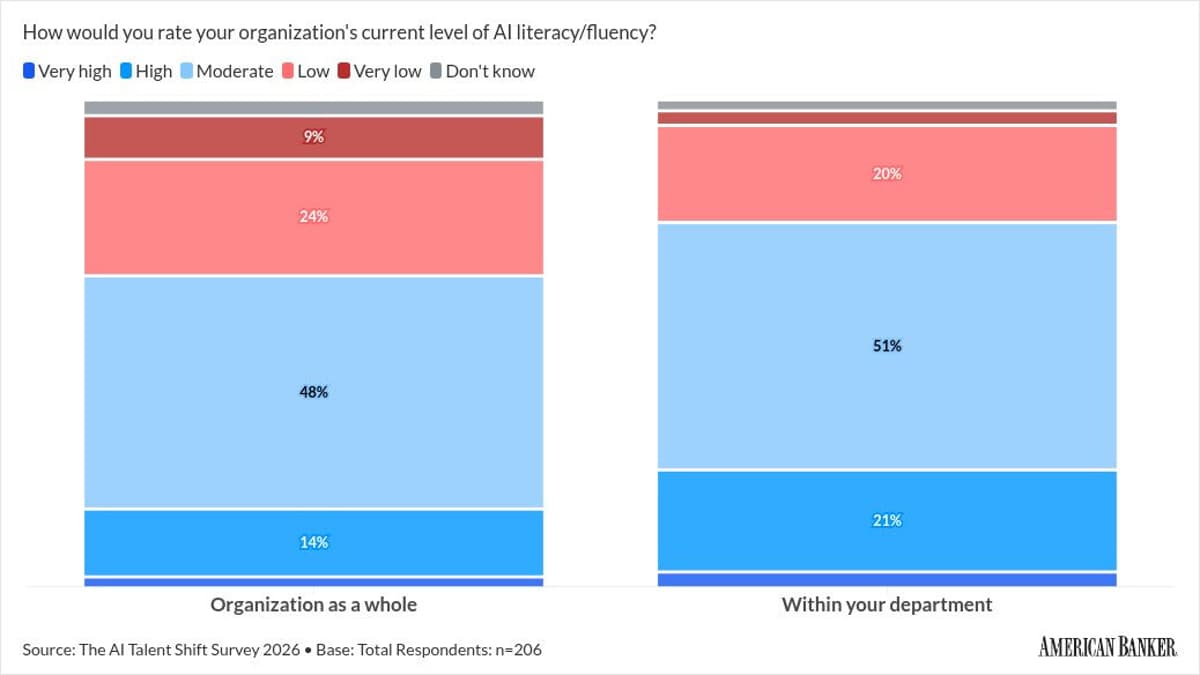
Bankers Say They're AI Fluent, but Measurement Is 'Ad Hoc'
Banks poured billions into AI in 2025, yet most view workforce fluency as only moderate. In American Banker’s AI Talent Shift survey, 48% of 206 banking professionals rated their firm’s AI literacy as moderate, while just 16% said it was...

Banks Question Basel Omission of PMI in Mortgage Weights
U.S. regulators are reviewing the Basel III end‑game proposal, which currently leaves private mortgage insurance (PMI) out of the risk‑weight formula for single‑family loans. The Federal Reserve has opened a comment period, ending June 18, to assess whether PMI should lower capital...

DOJ Rescheduling Medical Cannabis May Reignite Bank Interest
The Department of Justice issued a final order moving FDA‑approved and state‑approved medical cannabis products to Schedule III, marking the first step toward fully rescheduling the plant. The move eliminates the Section 280E tax restriction for Schedule III substances, allowing cannabis companies to...