
Aave Now Has a Regulated Path From Bank Accounts to DeFi Lending – The Hard Part Is Keeping Users There
Aave Labs secured FCA registration for its UK entities, Push Labs Ltd. and Push Virtual Assets Ltd., adding a regulated crypto‑exchange layer to its existing Electronic Money Institution status. Coupled with the MiCAR CASP licence obtained in Ireland, Aave now operates under a dual‑permission framework across the UK and the EEA. The Push platform is designed as a zero‑fee fiat‑to‑stablecoin gateway that feeds directly into Aave’s lending protocol, potentially unlocking new deposit inflows for the protocol’s $14 bn total value locked. The initiative’s success will depend on converting payment traffic into genuine Aave‑native activity.

UK Treats Crypto Network Like a Sanctioned Bank After Claims It Processed $90B for Russia
The UK’s Foreign, Commonwealth & Development Office sanctioned 18 crypto‑related entities, including exchange HTX, by invoking Regulation 17A—previously reserved for banks—effectively treating crypto platforms as sanctioned financial institutions. The move targets the Kremlin‑backed A7 network, which the UK alleges processed more...

The US Says It Grabbed Iran’s Crypto in a $1B Seizure – Will It End up in Trump’s Bitcoin Reserve?
Treasury Secretary Scott Bessent announced the United States seized roughly $1 billion in Iranian crypto assets, but he provided no details on the specific tokens or wallets involved. The publicly confirmed component is a $344 million USDT freeze, leaving about $656 million unaccounted...

The US Debt Machine Is Getting Harder to Stabilize – So Where Does Bitcoin Fit In?
The U.S. Treasury market, now over $30 trillion in outstanding debt, faces mounting stress as $3 trillion of securities mature in 2025 and traditional buyers thin out. Hedge funds have amplified the strain with more than $1 trillion in short Treasury futures positions...

Crypto Walked so Banks Could Run
The piece argues that institutions will adopt crypto not as a belief system but as core infrastructure. Banks can replicate blockchain code, yet they cannot duplicate the rapid, high‑stakes iteration that the public web3 ecosystem provides. Recent moves—BlackRock’s BUIDL tokenised...

Bitcoin Miners’ Real Prize Is Power as AI Reshapes Mining
Bitcoin miners are turning their power‑intensive campuses into AI‑hosting assets, highlighted by Cipher Mining’s $5.5 billion, 15‑year lease of 300 MW with AWS and IREN’s $9.7 billion, five‑year GPU cloud agreement with Microsoft. Fidelity’s May 2026 analysis shows AI hosting can become a...

Bitcoin Avoided an Inflation Shock, Now It Has to Prove the Rally Isn’t Over
The BEA’s April PCE report showed headline inflation at 3.8% YoY and core inflation at 3.3%, matching expectations and removing a potential macro shock for Bitcoin. The cryptocurrency slipped below $75,000, now hovering in a $73k‑$75k support zone, while spot...

New Lawsuit Claims Satoshi Nakamoto’s Bitcoin Is “Lost Property” Worth Under $10 per Wallet
A New York lawsuit filed by a pseudonymous plaintiff, Noah Doe, and two Wyoming entities seeks legal ownership of 39,069 dormant Bitcoin addresses, including wallets linked to Satoshi Nakamoto. The addresses contain roughly 3.8 million BTC—about 18% of the total supply—valued...

Have AI Agents Made the Entire $148 Billion DeFi Sector Unsafe?
AI coding agents are dramatically speeding up smart‑contract vulnerability discovery, prompting OpenZeppelin co‑founder Manuel Aráoz to urge investors to exit DeFi positions. Over the past year hacks have cost more than $1.1 billion, driving total value locked from $172 billion to $148 billion....

Central Bank-Backed Tokenization Pilot Exposes Settlement Problem Assets Alone Cannot Solve
Australia’s Reserve Bank and the Digital Finance Cooperative Research Centre completed Project Acacia, a wholesale‑scale pilot that examined how tokenised assets settle across four money forms – traditional RBA exchange settlement accounts, a pilot wholesale CBDC, tokenised commercial‑bank deposits and...

Stablecoins Were Supposed to Bypass Credit Cards, but Now Visa Is Winning Crypto Card Payments
Crypto‑card spending has surged to roughly $600 million per month, with $7.2 billion in cumulative on‑chain volume across 24 million transactions. About 90 % of these transactions are settled through Visa, and USDT alone represents 62.5 % of the volume. Jupiter Global’s USDC‑backed card saw...

DeFi’s Automated Yield Protocols Were Built for Retail, Now They Just Add Another Layer of Risk
Automated yield vaults like Stake DAO’s vsdCRV promised one‑click exposure to Curve’s boosted returns, but a breach on Arbitrum allowed an attacker to mint 5.4 trillion counterfeit vsdCRV tokens and swap about 43.8 ETH (≈$88 k) before liquidity caps limited the haul. The...

Bitcoin Slips Below $74,000 for the First Time Since April as On-Chain Data Shows Momentum Stalling
Bitcoin slipped below $74,200 on May 27, marking the second breach of the $75,000 level in May and the first sub‑$74k close since April. The dip follows a wave of spot ETF outflows that have drained roughly $2.26 billion in two...
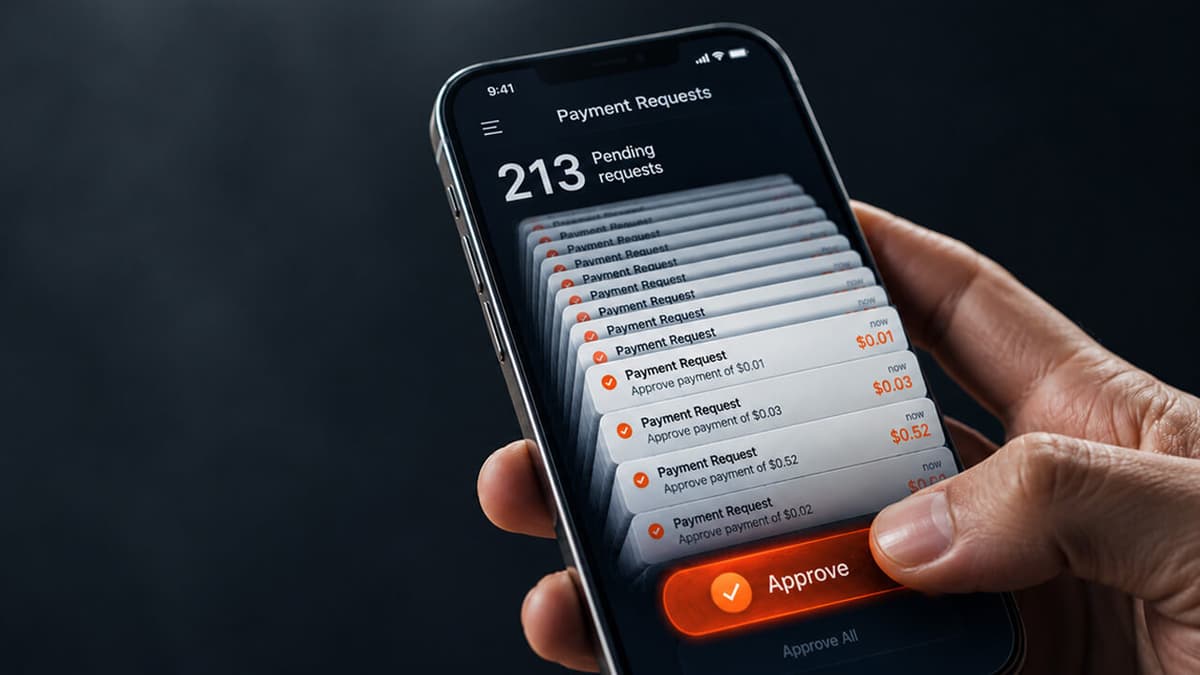
Tiny X402 Payments Expose the Approval Gap Holding AI Agents Back
The agentic payment protocol x402 saw its adjusted volume plunge 77% from $5.15 million to $1.19 million, while transaction count fell 41% before rebounding to 2.89 million in May 2026, averaging $0.52 per payment. The market now runs on high‑frequency, sub‑dollar API and...

Stablecoins Just Hit a Record $322 Billion – and the Bank-Run Warnings Are Getting Louder
The global stablecoin market has surged to a record $322 billion, cementing US‑dollar‑pegged tokens as a mainstream settlement layer. A duopoly of Tether (USDT) and Circle’s USDC now controls over 80% of supply, fueling cross‑border remittances, merchant payments and corporate cash...