

Should the United States Try to Ramp up Its Manufacturing Sector?
The video examines whether the United States should deliberately expand its manufacturing base to curb growing trade dependencies. Over the past half‑century, U.S. manufacturing has slipped from the world’s largest producer to second place behind China, while imports of manufactured goods now total roughly $3 trillion annually, with a quarter of those items classified as critical and sourced from geopolitically distant, concentrated suppliers. To assess the feasibility of reshoring, the analysts introduce a "ramp‑up factor" that quantifies the extra domestic output required to replace imports. A factor below one indicates existing factories could meet demand, as with transport equipment, potentially shrinking the trade deficit and creating jobs. Conversely, a factor above one—seen in laptops, smartphones, and semiconductors—signals the need for substantial new capacity, capital investment, and a sizable workforce. The report highlights that while some sectors can be quickly domesticated, others demand massive infrastructure builds and advanced automation. It cites transport equipment as a low‑hanging fruit, whereas high‑tech electronics would require new factories and skilled labor pipelines. The authors stress that any ramp‑up must balance resilience against cost, emphasizing technology upgrades, automation, and workforce training as essential components. Ultimately, the analysis concludes that bolstering U.S. manufacturing is vital for national security and competitive advantage, but the approach must be selective. Policymakers will need to prioritize sectors, allocate resources strategically, and foster a skilled talent pool to achieve a resilient, future‑proof supply chain.
Move First or Fall Behind: How AI Is Rewriting the Rules of Banking
The podcast with McKinsey senior partner Eyal Segev examines how artificial intelligence is fundamentally reshaping banking and why institutions must decide quickly whether to lead or lag. Segev outlines three strategic questions banks face – speed of technology evolution, potential P&L...
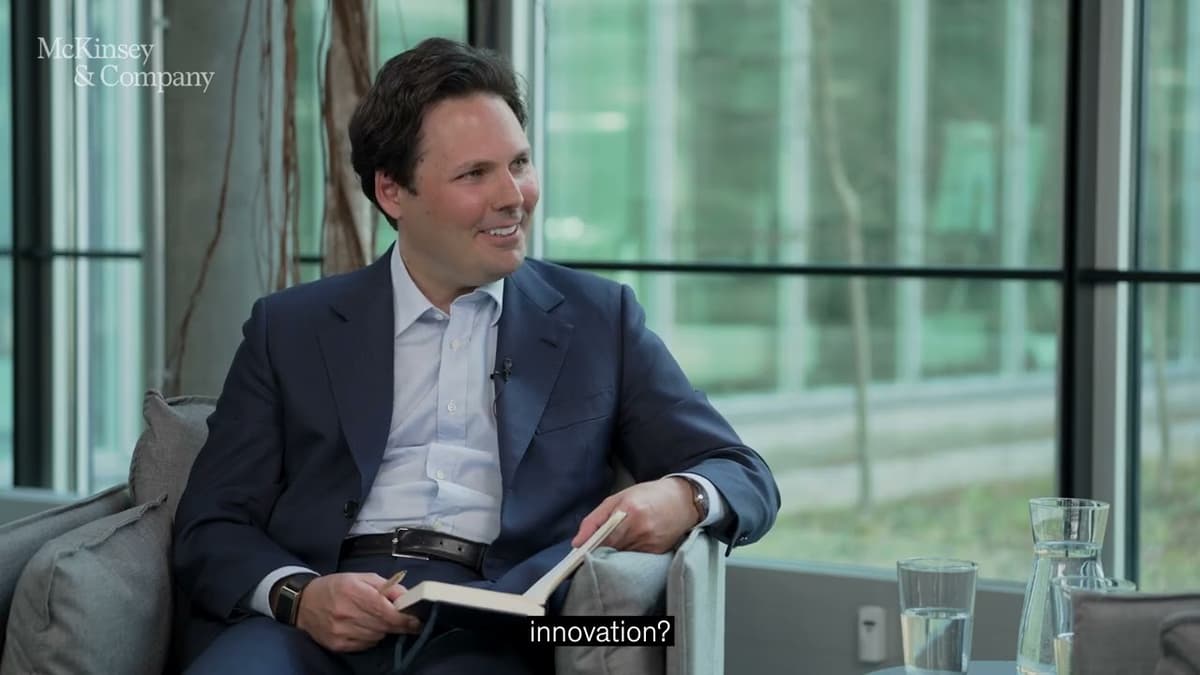
Europe on the Move: A Conversation with Hitachi Energy’s CEO
In a candid interview, Hitachi Energy chief Andreas Schierenbeck framed Europe’s energy transition as an "unstable trilemma" of security, affordability and decarbonisation. He argued that cheap, reliable power is the foundation of economic competitiveness, yet the continent’s fragmented grid and reliance...
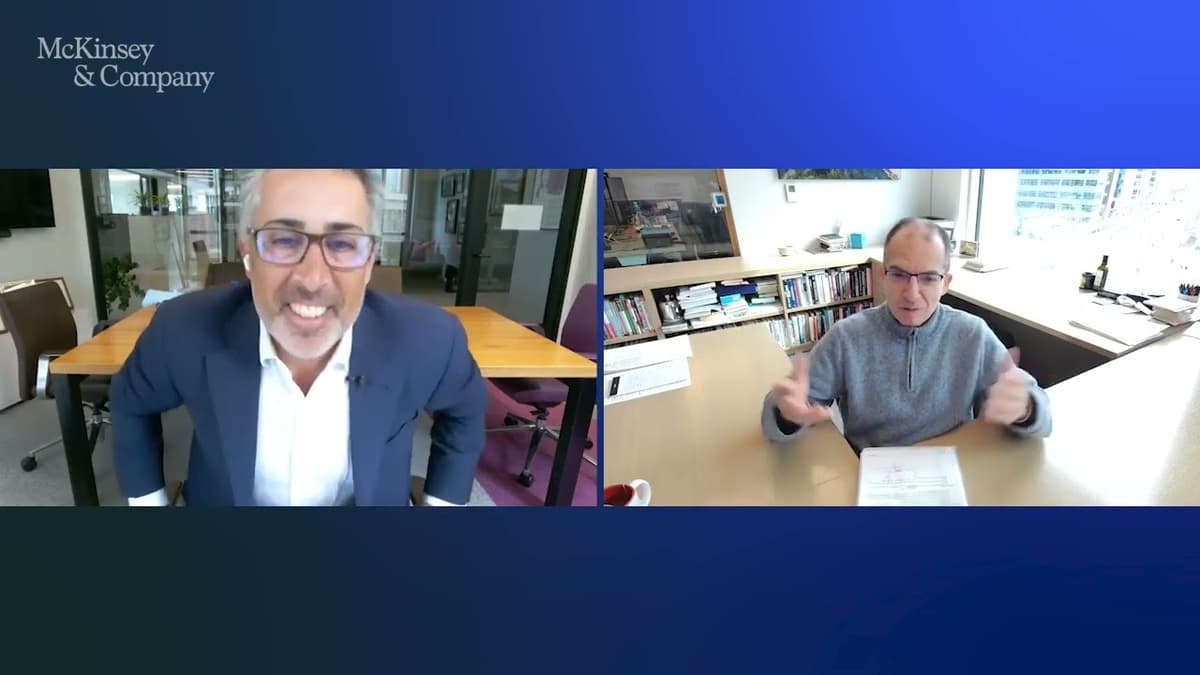
The Next Era of Healthcare Is Personal
The Mackenzie podcast episode spotlights Madna’s vision of a personal, information‑driven healthcare era. CEO Stefan Benell explains how the company’s mRNA platform treats DNA as an information molecule, allowing rapid design of vaccines, cancer immunotherapies, and treatments for rare genetic...

Leading Through Transformation: Bob Sternfels on Leadership, AI, and the Next Generation at McKinsey
The video features Bob Sternfels, McKinsey’s global managing partner, in a candid conversation about personal habits, leadership philosophy, and the firm’s evolving culture as it celebrates its centennial. Sternfels shares how his daily routines—early‑bird wake‑ups, morning workouts, and analog note‑taking—shape...
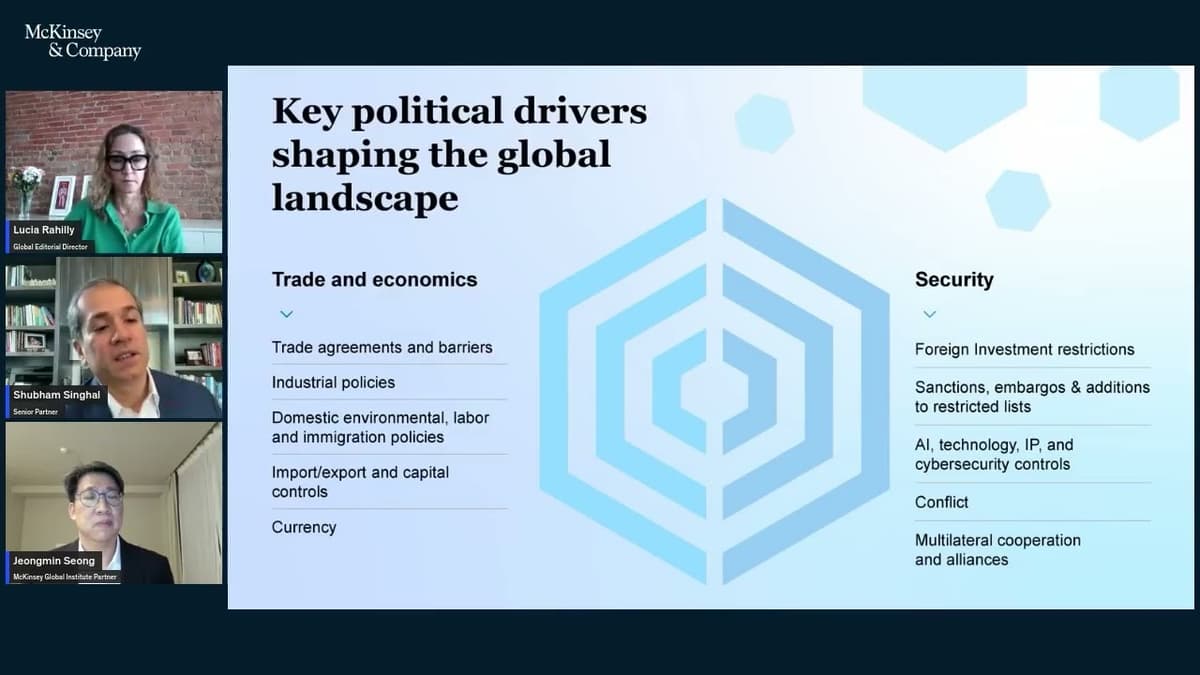
The New Geometry of Trade: How Leaders Can Respond to Structural Shifts
The Mackenzie Live session titled “The New Geometry of Trade” examined how shifting geopolitical forces, tariff spikes and emerging technologies are reshaping global commerce and what executives must do in 2026. Speakers Shubam Singal and Jong Min highlighted that, contrary...

Building a World of Plenty: A Bold Vision for Global Prosperity by 2100
The February "McKinsey Unpacked" session introduced the firm’s new book, *A Century of Plenty*, which sketches an ambitious roadmap for global prosperity by 2100. Authors Sven Smith and Cherylyn Chen argue that an 8.5‑fold expansion of the world economy...
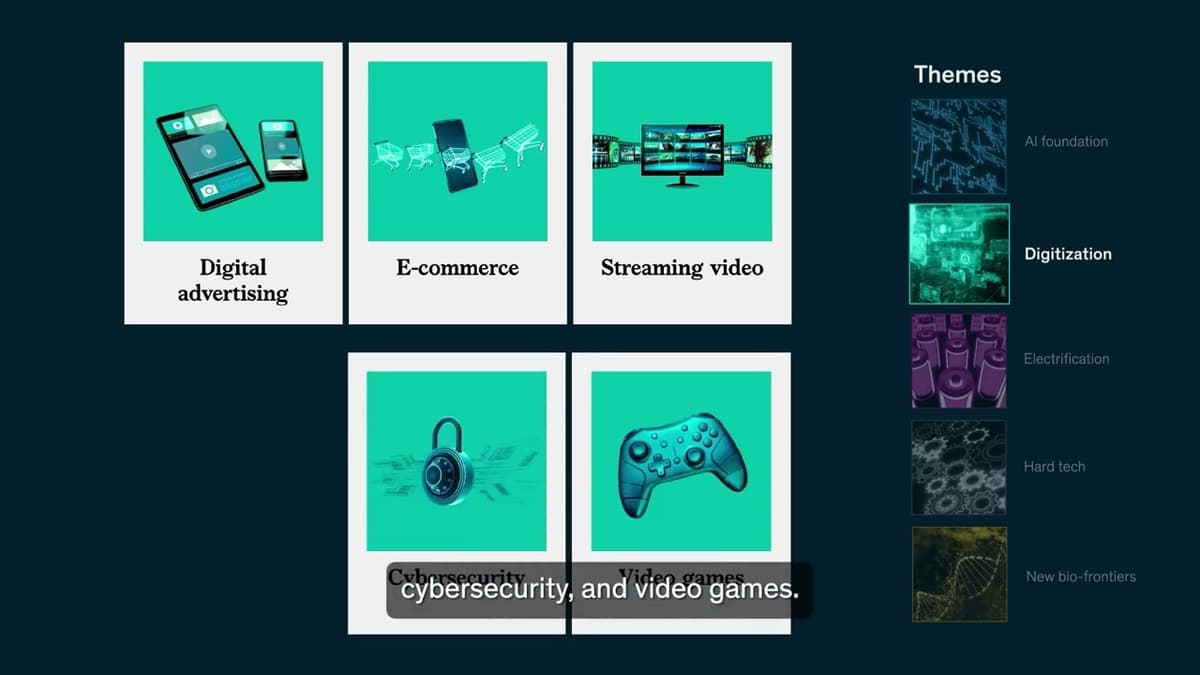
MGI Minute: The Race Takes Off in the Next Big Arenas of Competition
The McKinsey Global Institute’s new report spotlights 18 "future arenas" that have collectively added nearly $18 trillion in market capitalisation and $1.4 trillion in revenue over the past three years. These arenas span AI foundations, digital platforms, electrification, hard‑tech, and bio‑frontiers,...

Mastercard Tech Transformation
Mastercard has taken a page from its tech playbook, applying agile methodology to its human‑resources function. The experiment began with a minimum‑viable‑product (MVP) pilot in St. Louis, rolled out over 16 weeks. The rapid cycle proved that agile sprints could compress...

Helping Santiago Thrive Across the Lifespan
Santiago, Chile’s bustling capital of over 7 million, faces a stark mental‑health crisis: roughly 80 % of those needing care lack access. Municipalities Providencia and Renca, together with the McKinsey Health Institute and CETA, have forged a public‑private partnership that leverages task‑sharing...
The Rise of the Human–AI Workforce
The McKinsey podcast unpacks the firm’s Global Institute report on the rise of a human‑AI workforce, emphasizing a partnership model where AI augments rather than replaces workers. It frames AI deployment as a universal interaction shift, akin to using...

MGI Minute: Geopolitics and the Geometry of Global Trade: 2026 Update
The McKinsey Global Institute’s 2026 update, presented by senior fellow Tiago Devesa, examines how global trade performed amid the largest tariff shock in a century. Despite heightened protectionism, total trade volume still grew faster than the world economy in 2025. AI‑related...

150 Years Strong: How Campbell’s Is Investing in Leadership to Drive Growth and Innovation
Campbell Soup Co., celebrating 150 years, announced a strategic overhaul of its leadership pipeline, partnering with McKinsey & Company to embed a purpose‑built development program across the enterprise. The initiative treats leadership as a skill set that can be taught, replacing...

Inside the Business Analyst Role: Starting a Career at McKinsey
The video is a candid walkthrough of McKinsey’s business analyst recruiting cycle, hosted by veteran recruiters Marie and Blair. They explain how the firm’s structured "McKinsey Unpacked" series demystifies the day‑to‑day reality of a BA role, from the high‑stakes responsibilities...

The Next Chapter of American Economic Competitiveness: A CEO and Board Agenda
The Mackenzie Live session examined the "next chapter of American economic competitiveness," featuring McKinsey partners Eric Kutcher and Olivia White. Drawing on their new Global Institute report, they highlighted that the United States, on the brink of its 250th anniversary,...